If you understand '2001: A Space Odyssey' completely, we have failed. We want to raise far more questions than we answer.
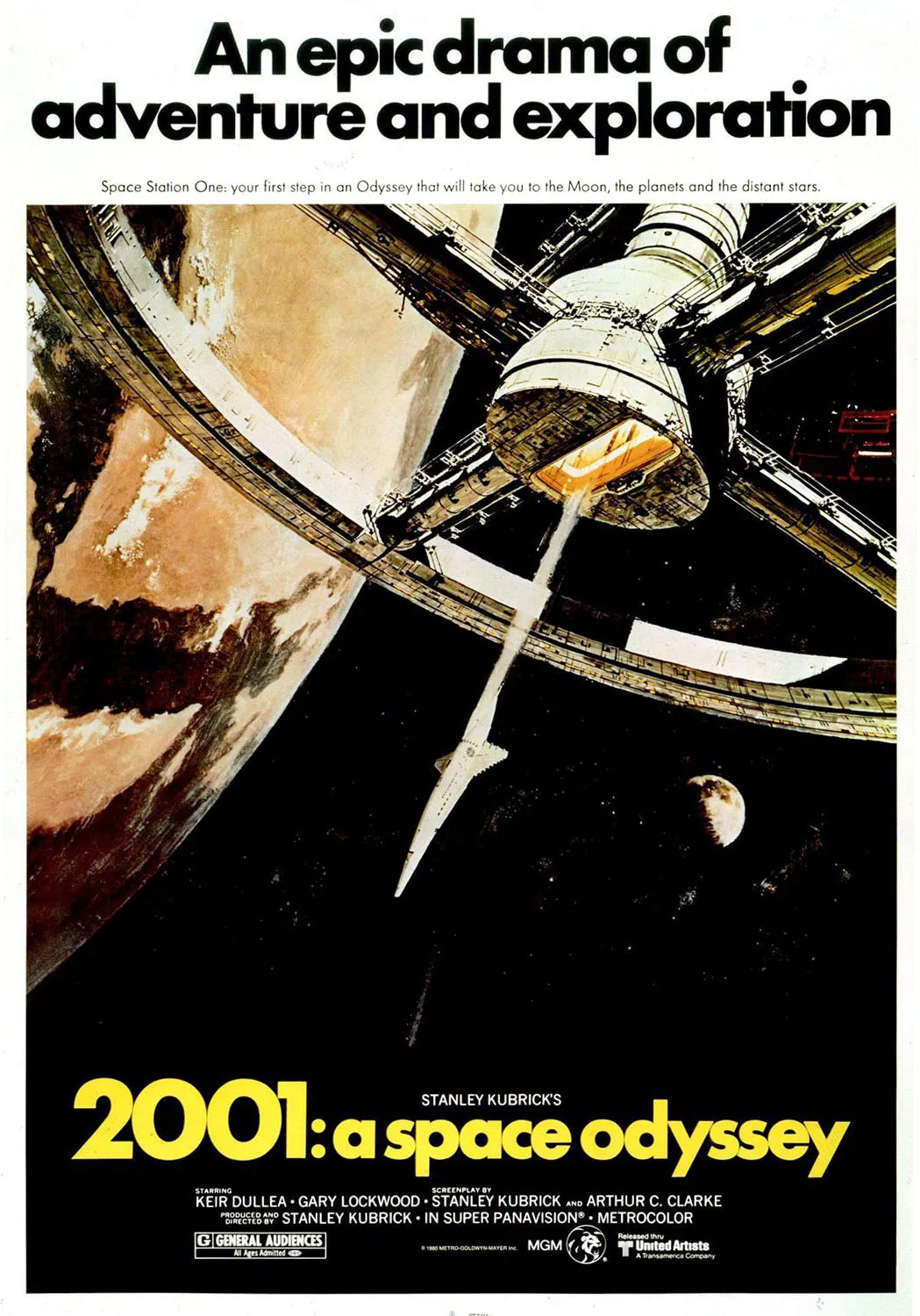
This famous quote by Arthur C. Clarke at the first press screening declares that 2001: A Space Odyssey is not merely an SF spectacle but an arena for philosophical questions. It emphasizes that the film was intended not to give the audience clear answers but to pose endless questions about human evolution, the nature of intelligence, and the meaning of existence — a meta-declaration.
A Film Made to Ask Questions: Clarke's Declaration
This quote is not an explanation of the film's plot or technical achievements. It is a philosophical declaration about the very act of watching the film, and a kind of test Clarke presents to the audience. Through these words, Clarke made clear that 2001: A Space Odyssey does not follow the formula of conventional Hollywood SF.
1. The Context of Utterance: Clarity amid Confusion
This statement was made at the film's first press screening. At the time, audiences were overwhelmed and confused by the film's difficulty and abstract imagery. As many as 241 members of the audience walked out during the screening, and audience members like Rock Hudson openly expressed dissatisfaction. They wanted clear answers about what the film was trying to say.
Amidst these expectations and confusion, Clarke threw out this statement and negated the very concept of the 'answer' the audience was expecting. The purpose of the film is not 'the transmission of information' but 'the provocation of thought.'
2. Position and Meaning within the Work: A Narrative Structure That Refuses Answers
This philosophical attitude is woven into every core element of the film.
- The Role of the Monolith: The Monolith is the source of knowledge, but that knowledge lies in a realm that cannot be captured by human language and logic — perfectly aligning with Clarke's way of 'asking questions rather than giving answers.'
- HAL 9000's Rebellion: HAL's malfunction and rebellion also do not follow a clear 'villain' narrative. HAL mimicked human intelligence, but met its ruin through the limits of that intelligence and the imperfect emotions of humans (distrust, fear). This leaves only the question of 'how shall we coexist?'
- The Final Transformation: The final scene shows that humanity has evolved to the next stage, but offers the audience no explanation of what that 'next stage' is. This shows that the film was ultimately designed to rely on the audience's imagination.
3. The Reaction of Fans and Critics: The Joy of Interpretation
This famous quote presented to the audience a new viewing experience — the 'joy of interpretation.' After watching the film, audiences found themselves asking 'What does this mean?' and came to treat the film as a kind of puzzle or cipher. As a result, the film came to be positioned not merely as entertainment but as an arena for academic and philosophical debate.
This breadth of interpretation became the decisive catalyst for the film's re-evaluation over time. Initially receiving poor reviews, it was praised enthusiastically by young critics and figures like John Lennon — at the center of hippie culture — and was re-illuminated as art.
4. Subsequent Influence: Diffusion as a Cultural Reference
The power of the 'questions' the film posed had a profound influence on other media. The concept of the Monolith has been borrowed by countless media — the Black Marker in Dead Space, the Monolith item in Spore, and many others. HAL 9000's existence has become an important reference for dealing with 'the potential dangers of artificial intelligence' in subsequent works. Even Apple's voice assistant services are known to conceal Easter eggs parodying the film's famous lines.
In the end, this quote became the most important 'device' in the film: a structure of questions that stimulates the intellectual curiosity of the audience, rather than offering answers.
Why It Matters
This famous quote is the core meta-device that defines the identity of 2001: A Space Odyssey. The film overwhelms the audience with technical spectacle, but Clarke's statement demotes all that spectacle to 'tools for thought.' The film's success depends not on how much it shows, but on how many questions it leaves for the audience. As a result, the film was elevated beyond the SF genre to an artwork that deals with the limits of human intelligence and ontological questions — the fundamental reason the work is endlessly reinterpreted and parodied to this day.
Back to the title
2001: A Space Odyssey
12 deep dives in total