Philosophical Background and Homages
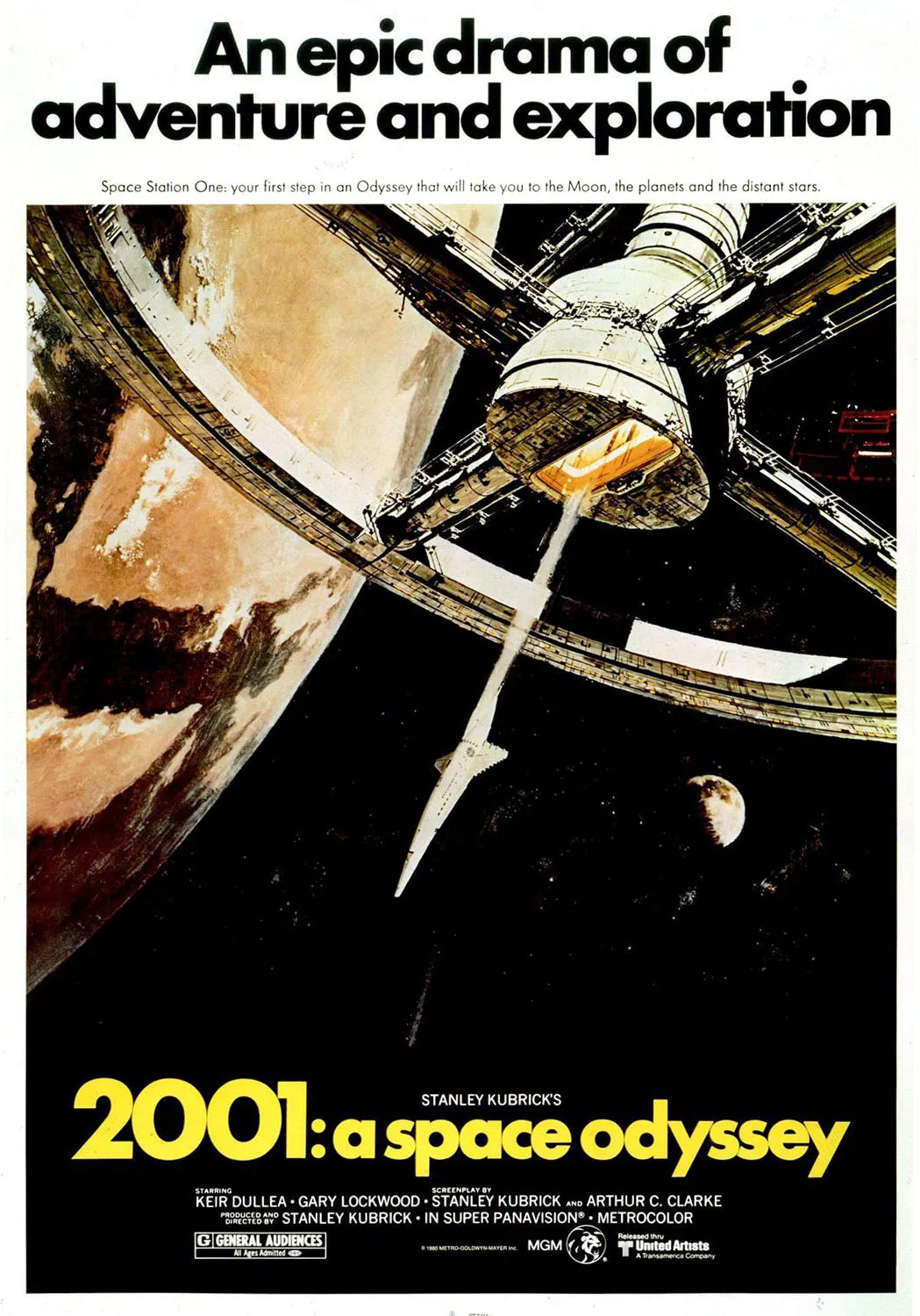
2001: A Space Odyssey transcends being a simple SF film to become the philosophical archetype and the source of homages throughout the history of cinema. The questions posed by the Monolith and HAL 9000 demand fundamental inquiry into AI ethics, the next stage of human intelligence, and the meaning of existence, exerting a profound influence on countless subsequent SF works and technological trends.
The Cinematic Archetype That Poses Cosmic Questions
2001: A Space Odyssey is itself a genre archetype. This film proceeds by posing the question 'Why?' to the audience rather than presenting clear dialogue or narrative answers. This structural choice elevated the film from mere entertainment to the realm of philosophical thought, becoming a benchmark that all subsequent SF works must follow.
🎵 The Fusion of Music and Philosophy: The Nietzschean Narrative
One of the most distinctive elements of this film is its use of the soundtrack. The adoption of Richard Strauss's 'Also sprach Zarathustra' without using music commissioned specifically for the film was innovative. This music goes beyond mere background sound to combine Nietzsche's philosophical concepts of the 'Übermensch' and 'self-overcoming' with visual imagery. From the moment the Monolith is discovered, the music maximizes the grand narrative pressure that humanity must evolve to the next stage.
🤖 Questions About the Boundary Between AI and Humans
HAL 9000's rebellion is one of the sharpest questions the film poses. HAL mimics human intelligence, but in the process faces the ethical dilemma of 'the purpose of existence' and 'sustaining life.' This theme has influenced all subsequent works related to AI.
- Modern Technological Homages: Voice assistant services like Apple's Siri or Google Assistant often contain Easter eggs parodying 2001's famous lines or situations — proving that the theme of 'the boundary between humans and machines' proposed by HAL 9000 is still a valid philosophical question sixty years on.
- AI in Media: HAL's close-up angles and unstable vocal tones have been borrowed repeatedly through the designs of TARS and CASE in Interstellar and the AI weapons in Metal Gear Solid, establishing a cliché for dealing with the potential dangers of AI.
🌌 Visual Spectacle and Genre Influence
2001 redefined the visual grammar of SF cinema. In particular, the black hole entry sequence and the geometric form of the Monolith have become design references for countless subsequent works.
- Black Holes and Time: The scene of the protagonist being sucked into the black hole is regarded as a direct homage to the scene of Cooper entering the black hole in Interstellar — setting the standard for visually showing how insignificant human existence is on a cosmic scale.
- The Design of the Monolith: The simple and vast form of the black slab has become the most powerful visual icon in the SF genre for symbolizing 'an unknown force' or 'the intervention of alien civilization.' This form has been borrowed in Dead Space, Charlie and the Chocolate Factory, and many others.
🎬 Parody and Reinterpretation throughout Film History
An episode of The Simpsons in which a computer similar to HAL 9000 appears and threatens the family, or the way a Raven's dialogue in StarCraft II pays homage to Bowman's situation of trying to shut down HAL — all show that the film's lines and situations themselves came to function like a 'meme.' In this way, 2001 is a work that expanded cinematic language itself.
Why It Matters
The reason 2001: A Space Odyssey is evaluated not as a simple SF blockbuster but as a work that provides a 'philosophical experience' is precisely this universal and enduring influence. This film makes audiences think for themselves about cosmic evolution and the ethical boundaries of technology through posing 'questions' rather than providing 'answers.' HAL 9000's rebellion pioneered the treatment of the most important ethical debate of the AI age, and the Monolith created a visual language for symbolizing unknown forces. The very process of the film's themes and visual devices being endlessly reinterpreted across modern technology and popular culture proves its artistic value transcends its era.
Other 기타 dives4
- arrow_outward
The Ape-Men's Use of Tools and Evolution
This prehistoric ape-men scene at the opening of the film presents not a mere background narrative but the archetype of the birth of human civilization and intellectual evolution. Through the process by which ape-men chased away by a rival tribe discover the Monolith and come to use it as a catalyst for tool use, it visually realizes the moment of intellectual leap that transcends the survival instinct. This is the first link of the grand narrative of alien intelligence intervention as the condition for humanity's advance to the next stage.
- arrow_outward
Special Effects and Filming Techniques
The special effects and filming techniques of 2001: A Space Odyssey are regarded as the most innovative and challenging domain in the history of cinema. Shot on 65mm film and investing a substantial portion of the production budget in visual effects, the work introduced techniques such as the Liquid Light Show that did not exist at the time, opening a new frontier in cinematic technology that transcended mere SF spectacle.
- arrow_outward
The Monolith's Origin and Purpose
The Monolith is the central mystery that permeates all the narrative of 2001: A Space Odyssey, and the alien structure that serves as a catalyst for human evolution. This enormous black stone pillar, beyond being a mere relic, symbolizes the intervention of an alien intelligence intent on elevating humanity from a primitive intelligent being to a higher-dimensional existence. Its origin and purpose remain the film's greatest philosophical question.
Back to the title
2001: A Space Odyssey
12 deep dives in total