Non-linear time and the structure of the shell
The non-linear concept of time — the core philosophical pillar of Arrival — originates in the mode of thought and language structure of alien civilisation 'Heptapod.' Their temporal view, in which past, present, and future coexist simultaneously, shatters the limits of the linear time humans experience and poses to the audience a fundamental question about the nature of 'time' and 'communication.'
Non-linear Time: Heptapod Civilisation and the Structure of the Shell
In Arrival, the non-linear concept of time proposed by the alien civilisation Heptapod carries meaning beyond a simple SF setting. It is the core philosophical device running through their mode of existence, language structure, and even the purpose of their visit to Earth.
1. Defining the Setting: The Simultaneous Perception of Time
Humans perceive the flow of time as a linear, sequential structure: Past → Present → Future. The Heptapods, by contrast, are described as beings without a sense of tense who possess a 'simultaneous consciousness' that perceives all possible paths and moments at once. They understand the flow of time not as 'linear' but as 'circular.'
This mode of thought is directly reflected in their language. The Heptapods' language is expressed not in the alphabet or sentence structure we know, but in the form of circular logograms. These circular characters are a visual embodiment of the concept that there is no order, starting point, or endpoint in time.
2. The Physical Meaning of the Shell and Its Connection to Time
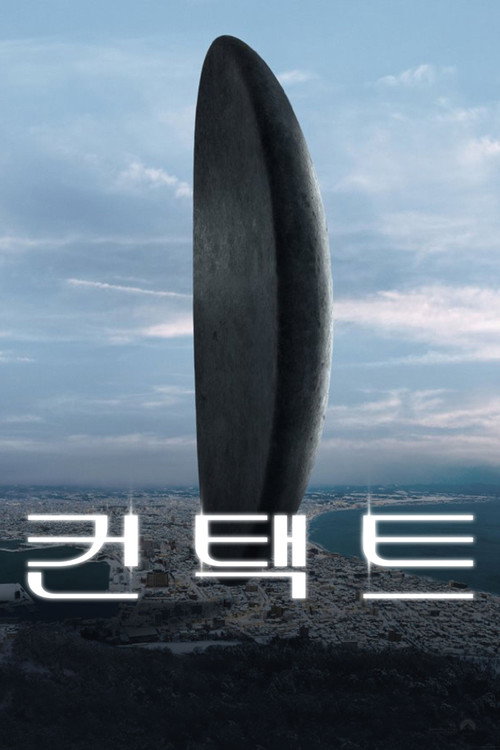
The twelve alien vessels — shells — appearing above key locations around the world are the device that physically embodies this non-linear concept of time. The shell functions not simply as the aliens' dwelling but as a 'boundary' and 'passage' through which humanity can make contact with their mode of thought.
- The number twelve: The number 12 alludes to the cyclicity or completeness of time, metaphorically emphasising the complexity of time — the film's theme.
- The 18-hour cycle: The regular cycle in which the shell's door opens from the bottom every 18 hours allows the contact with alien civilisation to proceed in a controlled manner through a 'cyclicity' and 'regularity' that humanity can understand. It is the device that enables a scientific approach in a chaotic situation.
3. Linguistic Collision: Linear vs. Circular
The process of Louise Banks communicating with the aliens shows the collision between 'the linguistic limits of humanity' and 'the Heptapods' mode of thought.' Louise tries to instil linear thinking (e.g., the beginning and end of a sentence) by teaching human language and script, but the Heptapods accept this through circular logograms while maintaining their own unique mode of thought.
This collision goes beyond a mere translation problem. It shows, maximally, the linguistic-deterministic perspective (the Sapir-Whorf Hypothesis) that 'the way humans perceive the world' itself is determined by language. As Louise learns more Heptapod script, her own mode of thought can be observed gradually escaping the constraints of linear time and assimilating to non-linear thinking.
4. The Interpretive Difference Between Novel and Film: Free Will and Fate
The source novel and the film show a subtle but important difference in how they handle the non-linear concept of time. In the novel, knowing the future is connected to abandoning free will, and it is portrayed as natural for a being who knows the future to submit to that fate. The film, by contrast, while maintaining this fatalistic structure, emphasises the human will of Louise choosing to hold on to the precious moments of the present even though she has perceived the future — the will to 'choose.' In other words, the knowledge of non-linear time shows humanity a 'fate,' but finding 'meaning' within that fate remains humanity's responsibility.
Why It Matters
The non-linear concept of time is the core identity that establishes Arrival as a philosophical SF work rather than a simple alien-invasion thriller. This setting makes audiences doubt the most fundamental premise they have taken for granted: 'the flow of time.' The Heptapods' circular language and the periodic appearances of the shells symbolise the limitation of human language and modes of thought being trapped in the linear flow of time. Through this setting, the film argues that 'communication' is not simply the act of exchanging words, but an intellectual and philosophical process of trying to understand the other's very mode of existence and fundamental cognitive system.
Other 설정 dives4
- arrow_outward
Fatalism and the choice of free will
The fatalism vs. free will debate — Arrival's core philosophical axis — unfolds through the experience of Louise Banks, who comes to perceive the non-linear flow of time through learning an alien language. This theme simultaneously presents the deterministic worldview (Laplace's demon) that everything in humans is determined under the laws of physics, while emphasising the active human will that 'chooses' the most valuable moments even knowing the future — posing a fundamental question to the audience.
- arrow_outward
Linguistic and physical background knowledge
The 'relationship between language and time' — the core philosophical device of Arrival — goes beyond mere communication with alien life forms to pose the fundamental question that human modes of thought are themselves trapped in the linear flow of time. The process of decoding the alien language's non-linear structure becomes the decisive opportunity for protagonist Louise Banks to experience a 'simultaneous consciousness' that transcends the constraints of time.
- arrow_outward
The first attempt at communication and the discovery of names
This scene goes beyond simple language learning — it is the decisive symbolic moment in which humans and alien civilisation mutually recognise each other's existence at the level of 'individual.' The process in which Louise writes her name 'LOUISE' and the aliens respond by showing an altered character, then each alien is given an individual name, constitutes a key turning point elevating communication from the 'species' level to the 'individual' level.
Back to the title
Arrival
14 deep dives in total