Narrative as the Medium of Memory and Love
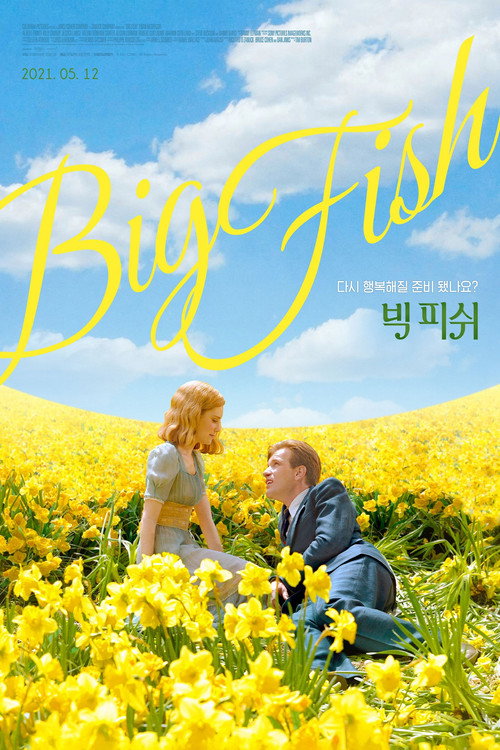
The central theme of Big Fish is exploring the essence of human love and memory at the point where the line between ‘objective truth’ and ‘subjective narrative’ dissolves. The film argues that the father’s extraordinary adventure tales are not mere boasting but the most beautiful form of ‘narrative’ — one through which the father completes his life and love, and passes it on to his son.
Narrative as the Medium of Memory and Love: Redefining ‘Truth’
In Big Fish, the adventure tales the father spins are not simple reminiscences or a braggart’s exaggerations. These narratives are the most powerful and tender love messages the father sends to his wife and son — reconstructing his life as one completed story, and in that process reaffirming himself. The film poses a fundamental question to the audience and to son Will Bloom: does what we call ‘truth’ mean only objective fact?
1. Son Will’s Pursuit of ‘Objective Truth’ and Its Frustration
Early in the film, Will confronts his father’s stories with strong skepticism. To Will, his father is nothing more than a ‘blowhard’ with the professional persona of a salesman, and figures like giants and witches remain squarely in the realm of impossible ‘lies.’ Will digs for evidence to uncover the ‘real’ Ed Bloom, trying to judge his father by the standard of ‘fact.’ This reflects the attitude of modern society, which regards ‘verifiable fact’ as the most important value in life.
But as the father’s illness worsens, the ‘objective facts’ Will was trying to hold onto become increasingly meaningless. The core of the father’s adventures is focused not on ‘what he did’ but on ‘what meaning those things gave to his son.’
2. Narrative Acceptance: ‘The Truth That Is Meaningful to Me’
The figures in the father’s tales (the witch, the giant, the werewolf circus ringmaster) all bypass Will’s critical gaze, finally entering Will’s heart through the filter of ‘story.’ The decisive turning point occurs when Will meets his father’s old friends. Through these encounters Will realizes the father’s stories were not complete lies — he had merely dressed real experiences in the clothing of ‘story’ and given them new shape.
This process shows that ‘truth’ is not a single fixed point. The fragments of the father’s life gather together, and the ‘narrative’ is completed by the projection of Will’s memories and affection. A loved one exists not as ‘objective fact’ but as a subjective narrative — ‘what meaning did they give me?’ — and cherishing that narrative is love.
3. Liberation at the River’s Edge: The Completion of Narrative
At the film’s climax, at the father’s funeral, Will brings all the adventure tales connected to the father’s death to closure through the medium of ‘water.’ When the father tries to tell his death story in relation to water, Will tells him that the father became a ‘great fish’ and swam away at a riverbank where every character from his adventure tales gathered to welcome him. This symbolizes the father’s life being completed as one grand story — and his peaceful liberation within it.
In the end, the father leaves his son not ‘truth’ but ‘the way of telling stories.’ The last adventure tale the father tells his son is a silent teaching: that the son, too, like his father, must make his own life into a beautiful narrative. Thus Big Fish, through the fantasy genre, completes its profound thematic consciousness — an exploration of human memory, love, and the meaning of existence.
Why It Matters
The reason Big Fish is regarded as a masterwork beyond a simple fantasy film lies precisely in this ‘narrative interpretation.’ The film demands that audiences redefine the concept of ‘truth.’ The image of a person we love cannot be defined solely by objective evidence like photographs or records. Rather, it exists as a subjective narrative — the countless memories and recollections, and the ‘meaning’ we assign to them. By depicting this process of narrative acceptance, the film argues that the most beautiful dimension of life depends not on factual accuracy but on how warmly we can embrace the story — establishing the work’s identity.
Other Reading dives1
Back to the title
Big Fish
13 deep dives in total