The Environmental Fatalism of Violence and Survival
City of God does not dismiss violence as a matter of individual vice or choice. Instead, the physical and social space called ‘City of God’ itself is presented as a massive environmental fatalism that inevitably breeds violence. It interprets gang brutality not as personal deviation but as the primal survival method forced upon residents by structural violence born of government neglect and extreme poverty — throwing sharp questions at the social structures that made violence possible.
The Environmental Fatalism of Violence: Structural Violence in City of God
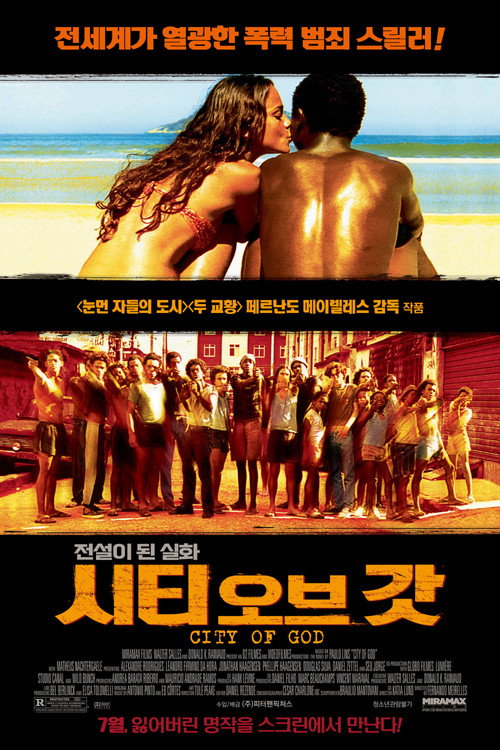
To understand City of God (Cidade de Deus) merely as a gangster film is to miss the most important question the work poses. The film does not explain violence solely through individual moral failure or deviation. Instead, the physical and social space of the 1960s–70s Rio de Janeiro favela called “City of God” is portrayed as a massive environmental fatalism that inevitably and necessarily breeds violence.
This perspective is maintained consistently throughout the film’s narrative. The brutality the gangsters exhibit is not simply a manifestation of evil — it is closer to the result of the most primal and violent survival method forced upon them by the structural violence of government neglect and pervasive poverty.
1. The Cycle of Violence Born from Poverty and Neglect
In the film, violence is not an isolated incident but a constantly recurring cycle. The starting point of this cycle is deprivation. In a space where law and order do not function, favela residents create their own order to survive, and in doing so they use violence.
- Economic deprivation: Gang activity is depicted as the most reliable means of maintaining a livelihood. Robbery is not simply crime — it sits on a continuum with economic activity for survival.
- Absence of government: External law enforcement (police) fails to penetrate the favela properly — or, corrupted, becomes itself a perpetrator of violence. This vacuum grants gangs autonomous governance and expands the legitimate domain of violence.
2. Questions About the Perpetrators and Victims of Violence
The film does not focus solely on perpetrators (gang members). It maintains a deeply critical perspective, throwing questions at the very social structures that make violence possible. At this juncture, the concept of justice becomes blurred.
- Knockout Ned’s corruption: Knockout Ned originally holds the principle that he will not kill innocent people. But consumed by vengeance, he ultimately commits crimes in the very way he despised, and his just principles crumble. This is the most dramatic example showing that environmental fatalism cannot be controlled by individual will or morality alone.
- Li’l Zé’s ambition: Li’l Zé is violent, but his actions are grounded in the survival instinct of wanting to become the boss. He is not simply evil because he is evil — he uses violence as the most efficient tool to become the most powerful entity in this environment.
3. Rocket’s Gaze: The Camera Observing the Street
The gaze of protagonist Rocket serves as a camera lens recording all these tragedies. He is not a direct perpetrator — he is an observer and recorder. His photographs, beyond simply recording events, visually prove how chronic and structural the violence is.
Rocket’s act of taking photographs is like an evidence-collection process proving that this violence is not a one-time event but a continuing state. By recording the perpetrators of violence, he is recording the system that is the backdrop of that violence.
Why It Matters
This interpretation is the core axis that elevates City of God beyond a mere crime thriller into the realm of socially critical realism. If the film had treated violence only as individual choice, audiences would have merely classified gang members as villains. But through the lens of environmental fatalism, audiences come to recognize the complex causal relationship between the perpetrators of violence and the social structures — poverty, government neglect, absence of capital — that made that violence possible. This maximizes the film’s artistic depth and social message, establishing its identity as an epic that poses questions about survival.
Other Reading dives1
Back to the title
City of God
12 deep dives in total