Zé Pequeno (Li’l Zé)
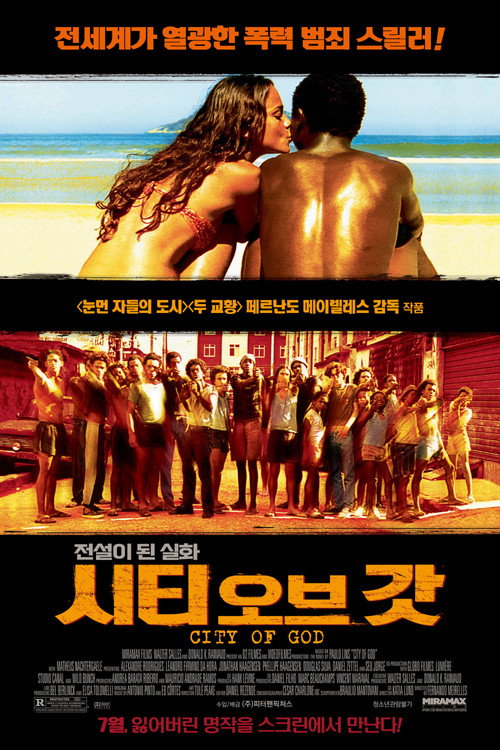
Li’l Zé (Zé Pequeno) symbolizes the most extreme survival instinct born of poverty and violence — going far beyond a simple gangster. Starting as a junior member of the Tender Trio in childhood, he seizes Rio de Janeiro’s favela drug routes and rules the city as its de facto master. His life ends tragically within the very cycle of violence and ambition he created.
The Genealogy of Violence: From Dadinho to Li’l Zé
The narrative of Li’l Zé is not simply the success story of a gangster. It is a grand genealogy showing how violence is inherited and how ambition transforms into the driving force of violence within the special environment of Rio de Janeiro’s favela. His early name, Dadinho (Li’l Dice), appears in the film’s opening acts as a lackey of the Tender Trio — already hinting at the violent impulses and unreasonable ambitions lodged within him.
1. In the Shadow of the Tender Trio (Early Violence)
In the film’s opening, the Trio commit robberies, but their violence still stays within the realm of crime. But Dadinho, failing to gain recognition for his own leadership, plans and executes the motel robbery, crossing the boundaries of violence. This incident is the decisive catalyst showing he has grown beyond a mere gang member into a being with his own rules and logic of violence.
2. Systematizing Violence: The Birth of Li’l Zé
As time passes, Dadinho renames himself Li’l Zé, and his violence crosses from impulsive robbery into the realm of a systematic business. During this period, he receives a blessing from a Candomblé shaman, gains power, and attacks drug dealers across the gang’s territory, establishing his own domain. Through this process he positions himself as the core villain who seizes the city’s drug routes.
The most important development begins when he touches the territory of rival Cenoura. Initially he left Cenoura alone because Cenoura was Benny’s friend, but Benny’s death planted a personal grudge, triggering full-scale war. This war proves that Li’l Zé is not merely a gangster — he has the ambition of a boss who wants to dominate the entire city.
3. Ambition Racing Toward Catastrophe and Downfall
Li’l Zé’s violence ultimately becomes an uncontrollable cycle. In an attempt to eliminate Cenoura, after being rejected trying to seduce a woman, he rapes her in anger and then massacres her boyfriend’s family — demonstrating extreme violence. This signifies that he has completely demolished all moral boundaries in pursuit of his ambition.
As the war drags on and drug money runs dry, he resorts to seizing weapons from arms dealers — his foundations increasingly threatened. His downfall is dramatic. Stripped of everything by police, he ultimately dies riddled with bullets in the street, shot by the very young lackey gang he so terrified. This final scene is the most ironic and devastating conclusion — the history of his violence returning to him.
Why It Matters
Li’l Zé is the film’s most powerful symbolic axis. He embodies the most extreme human form that the favela — the space combining poverty and violence — can produce. His character arc transcends simple good-versus-evil to cut through the theme of inherited violence. He achieves success through violence, but because he failed to resolve the fundamental causes of that violence (poverty, neglect), he is ultimately destroyed by his own hands. His existence asks the audience: when can this cycle of violence end, and what form will that end take?
Other Character dives4
- arrow_outward
Cabeleira (Shaggy)
Cabeleira was a core member of the Tender Trio who dominated City of God in the 1960s, embodying the gang’s spirited and jovial atmosphere. He represents an era when crime in the favela still felt manageable, and his tragic death becomes the pivotal moment that first draws Rocket’s attention to a camera lens — the decisive catalyst for the film’s central theme of recording violence.
- arrow_outward
Buscápe (Rocket)
Buscápe is far more than a simple photographer — he is the witness and the very camera lens recording the violent history of Rio de Janeiro’s favela. His gaze cuts through all crime and survival instinct in City of God across the 1960s–70s, throwing at the audience questions about the recording of violence and the moral limits of humankind.
- arrow_outward
Sandro Cenoura (Carrot)
Sandro Cenoura (Carrot) symbolizes the existing power order of City of God. Leading a gang composed mainly of white members in an overwhelmingly Black favela, he is the leader of the entrenched forces confronting Li’l Zé’s radical violence. His actions oscillate between loyalty as a virtue and cold survival instinct, showing how the logic of violence is inherited and transformed across the power structure.
Back to the title
City of God
12 deep dives in total