Sandro Cenoura (Carrot)
Sandro Cenoura (Carrot) symbolizes the existing power order of City of God. Leading a gang composed mainly of white members in an overwhelmingly Black favela, he is the leader of the entrenched forces confronting Li’l Zé’s radical violence. His actions oscillate between loyalty as a virtue and cold survival instinct, showing how the logic of violence is inherited and transformed across the power structure.
The Guardian of the Existing Order: Cenoura’s Position and Symbolism
Sandro Cenoura goes beyond a simple gangster rival — he symbolizes the “existing order” of City of God in the 1960s and 70s. The very fact that he led a gang composed mainly of white members in an overwhelmingly Black favela shows that he held a particular position and influence within the area’s power structure. He was the leader of the forces that most powerfully opposed Li’l Zé’s violent expansion.
Cenoura’s character operates between two contradictory values: loyalty and survival. He shows an important side to loyalty — providing cocaine when a friend urgently needs money — yet in the scene where he kills that same friend on his superior’s orders when the debt goes unpaid, he follows the cold logic of survival. This duality emphasizes that he is not a figure guided by moral standards, but a product of violence who prioritizes his own territory and survival above all else.
Decisive Moments: The Process of Power Redistribution
Cenoura’s character arc reveals his strength alongside his fatal flaw through several key incidents.
1. Benny’s Death and the Elimination of Neguinho
One of the most dramatic moments comes in the aftermath of Benny’s death. When Neguinho accidentally kills Benny and begs Cenoura to hide him, Cenoura kills Neguinho without hesitation. This action clearly shows he is not swayed by emotional fluctuations or compassion. He is an extremely calculating and brutal leader who instantly eliminates anyone who threatens his territory and order.
2. Recruiting Knockout Ned
As the war between Li’l Zé and Cenoura intensifies after Benny’s death, Cenoura recruits Knockout Ned, who burns with personal vendetta. This shows he is not merely a power maintainer who relies on brute force — he is an intelligent power player who uses the emotional weaknesses and grudges of opponents to build his forces.
What Cenoura Symbolizes: The Fall of the Old Order
Cenoura is the champion of an old order that faces Li’l Zé’s violent new order. Unlike the jovial and unpredictable violence of the Tender Trio, Cenoura’s gang employs a more systematic business violence grounded in money and territory. He tries to maintain order through violence, but ultimately this order too collapses within the uncontrollable cycle symbolized by Li’l Zé.
In the final confrontation, Cenoura’s faction appears to deal a crushing blow to Li’l Zé’s side — but even this victory is incomplete. Ultimately all this violence ends through police intervention and the bullet of the most innocent victim. Cenoura’s final arrest delivers the tragic verdict that no matter how powerfully an order is built, it cannot resolve the fundamental causes of violence: poverty, neglect, and violence itself.
Why It Matters
Cenoura symbolizes the dynamics of power within City of God — going beyond merely being Li’l Zé’s rival. The existing gang order he represents had rules and territory, but those were ultimately maintained by the driving forces of violence and greed. Li’l Zé’s violence is unpredictable and emotional; Cenoura’s is calculating and structural. The collision of these two types of violence is itself the process of seeking an answer to the core question the film poses: what is true order in this favela? Cenoura’s downfall drives home the cold reality that in an age of violence, no order can be eternal.
Other Character dives4
- arrow_outward
Cabeleira (Shaggy)
Cabeleira was a core member of the Tender Trio who dominated City of God in the 1960s, embodying the gang’s spirited and jovial atmosphere. He represents an era when crime in the favela still felt manageable, and his tragic death becomes the pivotal moment that first draws Rocket’s attention to a camera lens — the decisive catalyst for the film’s central theme of recording violence.
- arrow_outward
Buscápe (Rocket)
Buscápe is far more than a simple photographer — he is the witness and the very camera lens recording the violent history of Rio de Janeiro’s favela. His gaze cuts through all crime and survival instinct in City of God across the 1960s–70s, throwing at the audience questions about the recording of violence and the moral limits of humankind.
- arrow_outward
Bené (Benny)
Benny, a member of the Tender Trio who grew up alongside Li’l Zé, maintained a relatively intact character even within the violent City of God. He tries to mediate conflicts between gangs, and his death becomes the decisive catalyst that shatters the gang’s moral balance — far beyond a mere incident. Benny’s existence symbolizes the human connection that glimmers faintly within the cycle of violence.
Back to the title
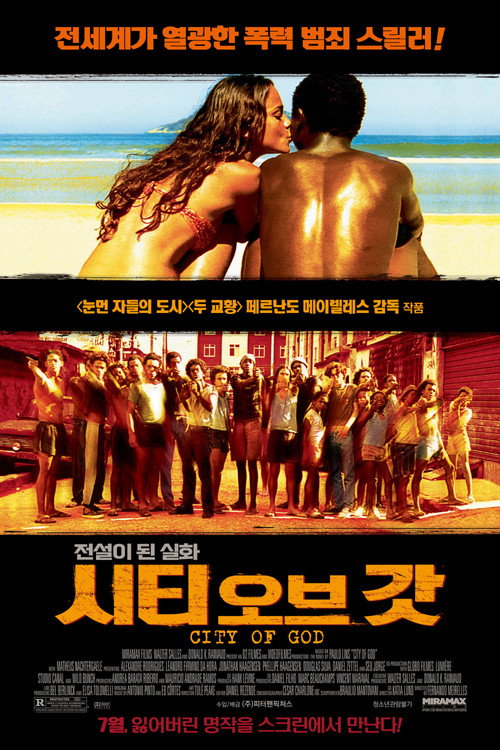
City of God
12 deep dives in total