The Essence of Education: Rote Knowledge vs. Spontaneous Passion
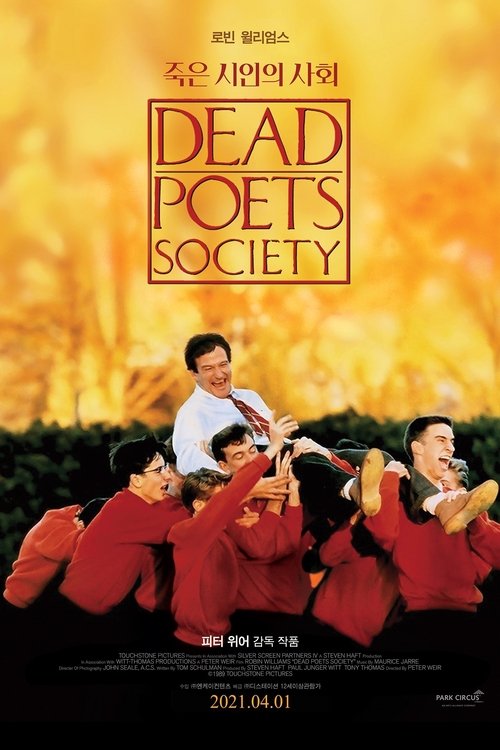
Dead Poets Society goes beyond literary inspiration to pose the fundamental question: 'What is the purpose of education?' The film argues against the rote-learning system that forces a single goal of 'success' upon students, and makes the case for spontaneous passion — the importance of individuals thinking and questioning for themselves, allowing their own buds to bloom.
The Essence of Education: Rote Knowledge vs. Spontaneous Passion
The most powerful message Dead Poets Society delivers to its audience is a fundamental redefinition of the purpose of education. The schooling symbolized by Welton Academy homogenizes students toward a single, enormous goal — 'success' — and disregards individual diversity. The system instills four principles — Tradition, Honor, Discipline, Excellence — and its purpose is fixed entirely on Ivy League admission.
The arrival of John Keating creates a crack in this solid wall. Keating's teaching focuses not on transmitting knowledge but on helping students think for themselves, ask their own questions, and let 'their own buds bloom.' Innovation in ways of thinking matters more than the accumulation of knowledge.
📚 Resistance to Suppressed Knowledge: Tearing the Textbook Page
One of Keating's most symbolic acts is tearing out a specific page of the textbook. This is not a prank — it symbolizes the critical view that existing knowledge systems possess an illusion of 'perfection' yet cannot contain the living passion or emotional truth of students. Tearing the page tells students 'this is not all there is,' demanding a shift from passive receivers to active thinkers.
✨ Carpe Diem: The Courage to Live the Present
The 'Carpe Diem' spirit Keating instills is the film's core philosophy. It expands beyond 'enjoy the present' to mean: 'Concentrate fully on this moment, and act in accordance with your passion.'
- Finding One's Own Voice: When Neil Perry is about to abandon his dream under the weight of his father's expectations, Keating encourages him to assert his truth rather than capitulate to external pressure.
- A Secret Community: The Dead Poets Society exists outside the school's official framework — a safe space for pure passion and voluntary learning.
- Liberation Through Art: Todd Anderson climbing onto a desk to call out 'O Captain! My Captain!' is the moment when the most introverted character shows the greatest courage — visually proving that true growth comes from internal, voluntary impulse.
💔 The Tragic Ending: How Passion Gets Crushed
Neil Perry's suicide does not end as a single student's tragedy. It is a warning showing how easily 'individual passion' can be crushed by 'parental expectation' and 'social success.' Neil's death is the inevitable consequence of the school and parents treating students not as independent persons but as tools for realizing parental desires.
In the end, the students stand on their desks against the school's pressure — a mise-en-scène signifying that they have grasped the most human value of 'free will' rather than succumbing to collective conformity.
Why It Matters
The reason this film is regarded as a classic beyond a simple school drama is that it deconstructs 'education' as a social institution from the philosophical perspective of individual self-realization. Welton Academy symbolizes the 'efficient human resource' demanded by capitalist society, and Keating's teaching is the most beautiful and dangerous resistance to that system. The film argues that 'how to think' matters far more than 'what to learn,' and that true education is ultimately the process by which an individual fights against social expectation and finds their own unique voice. This remains the most important question the film puts to all educational agents across all generations.
Other Reading dives2
- arrow_outward
The Collision of Parental Expectation and Self-Actualization
The core theme of this film is a critique of the danger of parents viewing their children not as independent persons but as proxies for their own desires. Neil Perry's tragic end shows how external coercive expectations and social discipline destroy genuine self-actualization, and argues that true education means listening to the inner voice.
- arrow_outward
Carpe Diem: The Courage to Live in the Present
The 'Carpe Diem' in the film is not a light slogan to 'enjoy the present.' It signifies the courage to be honest with oneself in this very moment, representing the process by which individuals reject the framework of socially prescribed success and discover their true passion. The theme functions as the most powerful engine driving the awakening of suppressed souls.
Back to the title
Dead Poets Society
14 deep dives in total