Carpe Diem: The Courage to Live in the Present
The 'Carpe Diem' in the film is not a light slogan to 'enjoy the present.' It signifies the courage to be honest with oneself in this very moment, representing the process by which individuals reject the framework of socially prescribed success and discover their true passion. The theme functions as the most powerful engine driving the awakening of suppressed souls.
Carpe Diem: The Courage to Discover Emotional Truth in the Present
The 'Carpe Diem' in this film carries an ontological dimension that transcends its literal Latin meaning of 'seize the day.' The message John Keating delivers to his students is not a casual invitation to engage in romantic activities or savour the present moment. It is closer to a powerful demand for self-confession: Do not turn away from the truest feelings and passions deep within you, here and now.
This theme connects directly to the identity crisis students experience within Welton Academy's perfectly controlled system. Welton offers students a single clear, safe path — the 'successful future' — and in doing so makes the very act of asking 'what do I actually want?' a taboo.
1. Liberation of Suppressed Emotion: The Role of the 'Dead Poets Society'
The 'Dead Poets Society' that Keating revives functions as a sanctuary where this suppressed emotion is set free. In that space, the students break away from external gazes — the knowledge of their textbooks, the expectations of their fathers — and immerse themselves exclusively in what they truly love: poetry, theater, free thought. This is an experience of living the life they actually want right now, and that experience itself becomes the most vital process of self-discovery.
2. Each Character's Realization of Carpe Diem
This theme emerges most vividly through the dramatic transformation of specific individuals.
- Todd Anderson: The most timid and introverted student, Todd confronts himself with Keating's help. His change is the quietest yet most powerful. In the final scene, his act of climbing onto his desk and calling out "O Captain! My Captain!" symbolizes that he is no longer a passive student bowing to external pressure, but a subject making a public declaration of his own convictions.
- Charlie Dalton: He is the first to translate Keating's message into action. Advertising the Dead Poets Society in the school newspaper, or staging a comic stand-off against the principal's authority — his behaviour is the most instinctive form of defiance against the wall of 'discipline.' He temporarily disrupts the school's order by remaining faithful to his own feelings.
- Neil Perry: Neil's story is the most tragic and powerful evidence of this theme. Torn between his father's expectation and his own passion for theater, he is ultimately crushed by coercive control. His tragic end shows how much courage 'being honest with oneself in this moment' demands — and how sometimes that courage can exact an unbearable price.
3. The Mise-en-Scène of Collective Resistance
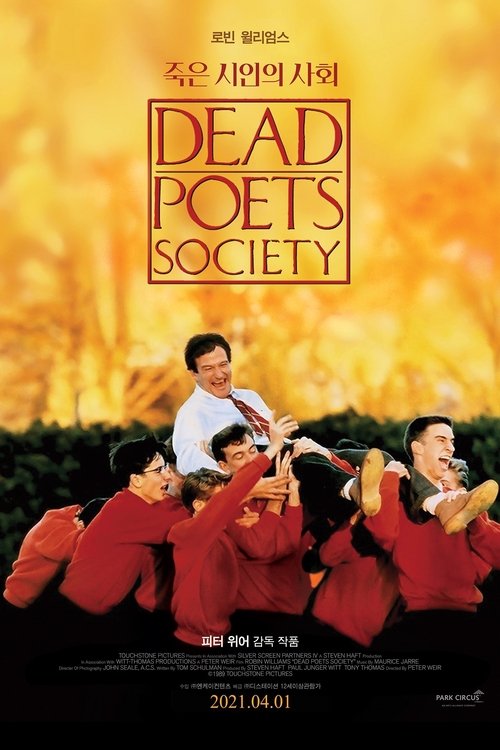
At the film's climax, after Keating has left, students stand one by one on their desks in front of Principal Nolan. This scene is not a simple farewell. It is a collective declaration of having chosen free will rather than the pressure of the majority or the inertia of convention. They pay a final tribute to preserve the value of moments of genuine education they have experienced. This tableau visually proves that the light of an individual soul can overcome the darkness of the institution.
Why It Matters
The Carpe Diem of this film goes beyond its function as a device in a coming-of-age drama to pose a fundamental question about the definition of 'success' that modern society imposes on individuals. What Welton Academy symbolizes is not simply a school — it is the 'ideal life blueprint' that parents and society project onto their children. The film shows how uniform and violent that blueprint can be, and argues that living by one's own feelings and passions is the most human and beautiful way to live. This theme is therefore the core philosophical pillar that elevates the film's artistic value.
Other Reading dives2
- arrow_outward
The Essence of Education: Rote Knowledge vs. Spontaneous Passion
Dead Poets Society goes beyond literary inspiration to pose the fundamental question: 'What is the purpose of education?' The film argues against the rote-learning system that forces a single goal of 'success' upon students, and makes the case for spontaneous passion — the importance of individuals thinking and questioning for themselves, allowing their own buds to bloom.
- arrow_outward
The Collision of Parental Expectation and Self-Actualization
The core theme of this film is a critique of the danger of parents viewing their children not as independent persons but as proxies for their own desires. Neil Perry's tragic end shows how external coercive expectations and social discipline destroy genuine self-actualization, and argues that true education means listening to the inner voice.
Back to the title
Dead Poets Society
14 deep dives in total