Characterarrow_outward
Albert Speer
Albert Speer, as Nazi Germany's architect and Reich Minister of Armaments, was a central figure who designed the grand vision of the Third Reich. Yet the film probes the theme of the collapse of power and the individual's moral choice with great depth, through the process by which he — despite being Hitler's closest friend — refuses the inhumane Nero Decree on the eve of defeat and ultimately departs from Hitler's side.
Quotearrow_outward
Ich will meinen Sohn. Und zwar lebend.
"Ich will meinen Sohn. Und zwar lebend." transcends simple paternal love — it is the most primal and powerful declaration of resistance to protect an individual life in the face of the great violence of war. In the midst of the grandiose propaganda logic of Nazi Germany, this line — delivered through the most private and human of voices — symbolically condenses the fall of the Third Reich and the tragedy of war.
Readingarrow_outward
The Illusion of Power and Psychological Collapse
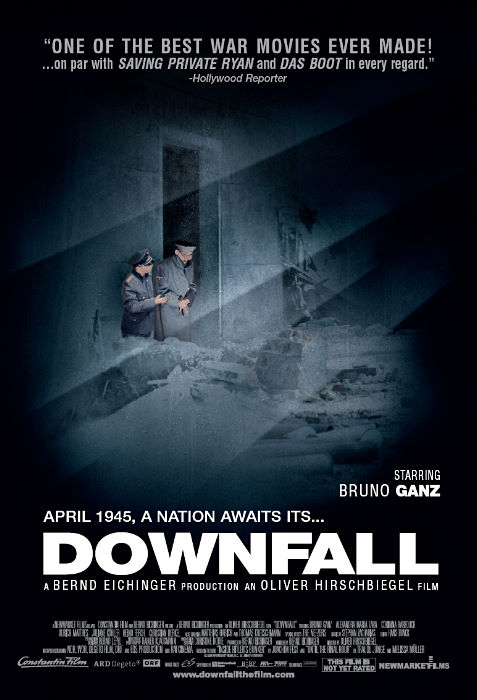
Downfall minimizes depictions of the physical battlefield and closely tracks the process of psychological collapse among the Nazi high command, trapped in Berlin's underground bunker on the eve of defeat. This film is a tragic allegory revealing how vulnerable a psychological structure absolute power is truly built upon — deeply exploring the madness of humans unable to accept defeat and the final desperate attempt to preserve their 'honor.'
Readingarrow_outward
Historical Record and the Narrator's Perspective
Downfall deals with the grand historical event of the Third Reich's collapse, but records it through the 'observer's perspective' of narrator Traudl Junge rather than through dramatic re-enactment. This objective, sober gaze is the key device that prevents audiences from emotionally sympathizing with the tragedy of the Nazi high command — instead guiding them to coolly reflect on the effect that the collapse of power has on human ethics and morality.
Cardarrow_outward
Hitler's Delusional Orders and Psychology
This entry deals with the process of psychological collapse experienced by Adolf Hitler and the Nazi high command in the final moments of the Third Reich, in Berlin's underground bunker. When the defeat of the war situation is recognized as reality, rather than issuing military orders, the leaders display bizarre and unrealistic behavior to maintain their authority and existence — this is the core device showing the madness of the collapse of a totalitarian regime upon the individual soul.
Cardarrow_outward
Hitler and Göring's Final Conversation
This scene symbolically reveals the power struggles among the Nazi high command and the psychological collapse on the eve of defeat. Even though the war situation is hopeless, Göring aims for the Führer's seat and asserts power, but is dismissed by Hitler as a 'morphine addict' — the process of being rendered powerless is a pivotal iconic scene showing that Nazi leaders were unable to acknowledge reality and obsessed only with preserving power and the regime.
Cardarrow_outward
The Final Fates and Suicides of the Nazi Leadership
This entry deals with the psychological collapse and final fates of the Nazi high command on the eve of defeat. The film dryly records the collapse of the regime and its ideals — not the terror of the battlefield — leading to the psychological disintegration of the leaders. Their suicides are portrayed not simply as defeat, but as a symbolic ritual in the process of the ideology of the Third Reich collapsing, exploring with great depth the effect that the collapse of power has on the individual soul.
Cardarrow_outward
Tragic Everyday Life Inside the Bunker
The underground bunker in the film is not merely a shelter, but a psychological prison that compressively reveals the process by which a vast ideology called the Third Reich collapses. This space is the stage where last preparations for survival are made, while the Nazi high command confronts their own crimes and guilt — experiencing the hollowness of power. The sealed space of the bunker acts as a device that maximizes the characters' psychological collapse and tragic fates.
Cardarrow_outward
The Cremation Ritual of Hitler and His Wife
The cremation ritual of Hitler and Eva Braun in the film transcends simple disposal of remains — it is the tragic and desperate final ritual that officially declares the end of an era called the Third Reich. This act, carried out in the bunker on the eve of defeat, functions as a symbolic device showing how the collapse of power seeks to erase the very existence of the individual.
Characterarrow_outward
Adolf Hitler
In the film Downfall, Adolf Hitler was a dictator who spread terror across all of Europe, but the film focuses on the process of his collapse and his psychological disintegration on the eve of defeat. Hitler, trapped in Berlin's underground bunker in 1945, reveals the image of a helpless human issuing mad orders — not the terror of the battlefield but the terror of losing power — and his final fate, beyond being a mere historical event, symbolizes the hollowness of power.
Characterarrow_outward
Hermann Göring
Hermann Göring was the number two man in Nazi Germany and Reichsmarschall of the Luftwaffe, but in the film his existence symbolizes the themes of the collapse of power and betrayal. He attempts to seize national command in the face of the worsening war situation, but ultimately confronts and is frustrated by the collapse of the communications system and Hitler's fury. His story is a tragic record showing how individual ambition and belief are destroyed when a vast totalitarian regime collapses.
Characterarrow_outward
Schutzstaffel
The Schutzstaffel was once among the most trusted confidants of Hitler, but is a tragic figure who falls due to the worsening war situation and Hitler's irrational orders. Initially showing loyalty by trying to persuade Hitler to escape, he is ultimately dismissed after communicating surrender intentions to the Western Allies, is captured by Allied forces, and takes his own life — symbolically showing the collapse of the Nazi regime and individual fate.
Characterarrow_outward
Goebbels
Goebbels was an intellectual responsible for Nazi Germany's agitation and propaganda — the 'genius of incitement' who symbolizes the final moments of the Third Reich. In the film, he inherits the office of Reich Chancellor upon Hitler's death, but is consumed by a madness that cannot acknowledge the worsening war situation and the reality of defeat. His ultimate fate — killing his family and dying alongside his wife in a suicide pact — is a tragic record showing how ideology destroys the individual soul in the process of a vast totalitarian regime collapsing.
Characterarrow_outward
Traudl Junge
Traudl Junge is not merely a secretary, but the most important witness and narrator who observed the fall of the Third Reich firsthand. Her journey — as an ordinary citizen thrust into the surreal space of Hitler's bunker, undergoing psychological change, and ultimately surviving the madness to escape Berlin — is the medium that conveys most intimately to audiences the collapse of power and the human survival instinct that this film explores.