The Illusion of Power and Psychological Collapse
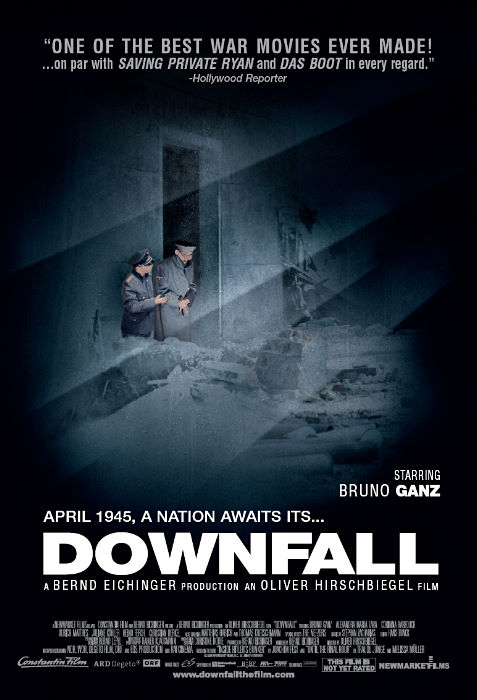
Downfall minimizes depictions of the physical battlefield and closely tracks the process of psychological collapse among the Nazi high command, trapped in Berlin's underground bunker on the eve of defeat. This film is a tragic allegory revealing how vulnerable a psychological structure absolute power is truly built upon — deeply exploring the madness of humans unable to accept defeat and the final desperate attempt to preserve their 'honor.'
The Illusion of Power: The Mechanism of Psychological Collapse in the Bunker
The way Downfall handles historical events is far removed from the typical war film. The film's main stage is not the front line, but the closed and stifling Berlin underground bunker. This bunker, beyond its physical space, serves as a psychological prison where Nazi leaders deny their own collapse and are consumed by madness. The film captures the tragedy born from the gap between the objective reality of defeat and the subjective psychology unable to acknowledge that reality.
1. The Denial of Reality and the Logic of Madness
The behavior exhibited by the Nazi high command is a continuous 'denial of reality' that is emotional and fanatical rather than logical and tactical. Even though the war situation has already turned, they cling to unrealistic and mythical concepts like 'hereditary force' or 'another world,' searching for their own worth. This is a grand tragic allegory revealing how vulnerable a psychological structure absolute power is truly built upon.
- The repetition of delusional orders: Hitler's delusional orders have no tactical meaning. This reveals that the leader is no longer a battlefield commander but a figure projecting his own anxiety and fear outward. As the war situation worsens, his orders transform increasingly into illogical and emotional outbursts.
- The symbolic preservation of power: Core figures like Göring and the Schutzstaffel attempt to replace the loss of physical military strength with the preservation of their position and 'honor.' These are desperate struggles to maintain 'symbolic authority' rather than actual power.
2. The Deepening of Hierarchical Collapse and Betrayal
The characters inside the bunker experience the collapse of hierarchy differently depending on their positions and roles. In this process, 'betrayal' approaches as an issue of psychological survival beyond mere political act.
- The dilemma of the Schutzstaffel: Initially portrayed as the most 'conscientious' character, but ultimately chooses suicide after wavering between Hitler's orders and reality. This symbolizes the human tragedy of being torn between loyalty and the survival instinct.
- Goebbels' changing role: Initially attempting to maintain the regime as a propaganda genius, after Hitler's suicide he inherits the office of Reich Chancellor — shrinking from 'agitator' to 'final administrator,' exposing the illusion that his power always was.
- The helplessness of experts: Speer, despite being Hitler's 'friend,' calmly confesses that he defied the Nero Decree in their final meeting and takes his leave. This shows that even the most central figures are powerless before the collapse of a vast system when conscience is pitted against it.
3. The Final Choice: Honor and Suicide
In the film, suicide is not mere death. It is simultaneously an admission of defeat and a final desperate attempt to preserve 'honor,' a last struggle against the system.
- Collective suicide: The scenes of the Goebbels couple and of Krebs and Burgdorf shooting themselves are portrayed as rituals to preserve 'collective identity' beyond individual survival.
- The narrator's gaze: Traudl Junge's gaze 'equably' records all this madness and tragedy, presenting all these events as objective 'records' and guiding audiences themselves to interpret the meaning of that tragedy.
Why It Matters
The reason Downfall possesses artistic value beyond simple historical re-enactment is precisely because it focuses on this 'psychological interpretation.' The film endlessly questions the psychological motivation behind why Nazi leaders acted as they did. As a result, audiences witness not the physical outcome of victory or defeat on the battlefield, but how the human soul collapses in the face of extreme terror and the disintegration of power. This is a powerful tragic message showing that the essence of power is sustained not by external enemies but by internal anxiety and illusion — the central axis defining the film's identity.
Other Reading dives1
Back to the title
Downfall
14 deep dives in total