Historical Record and the Narrator's Perspective
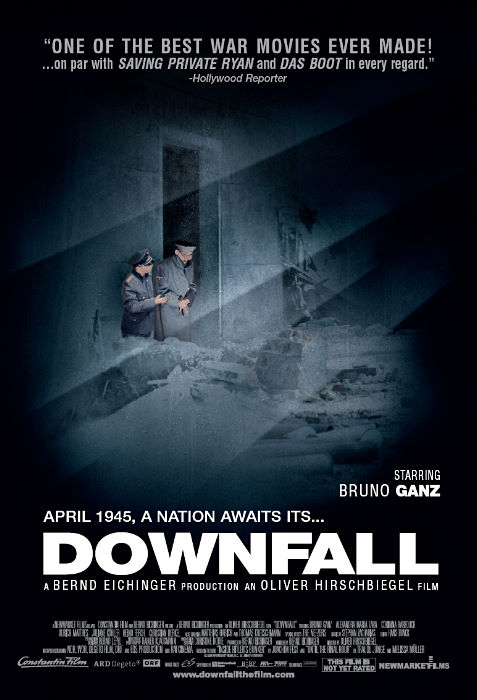
Downfall deals with the grand historical event of the Third Reich's collapse, but records it through the 'observer's perspective' of narrator Traudl Junge rather than through dramatic re-enactment. This objective, sober gaze is the key device that prevents audiences from emotionally sympathizing with the tragedy of the Nazi high command — instead guiding them to coolly reflect on the effect that the collapse of power has on human ethics and morality.
The Observer's Distance: The Gaze That Records History
The greatest reason Downfall resists classification as a simple war film is that, rather than focusing on the spectacle of events themselves, it focuses on the very act of recording those events. The film is set in the sealed space of Berlin's underground bunker in 1945 and follows the final fourteen days of the Nazi high command — those who had spread terror across all of Europe. In so doing, the film succeeds in maintaining a dry, objective gaze closer to documentary than to dramatic narrative.
At the heart of this gaze stands the protagonist Traudl Junge. She functions not merely as a secretary, but as the 'Narrator' and 'Witness' of this tragedy. Junge's perspective minimizes emotional involvement, transmitting the delusional orders, betrayals, and final ends of the Nazi leaders with equanimity — as if a historian were documenting events on the scene. This prompts audiences to ask the historical question, "Why did they behave this way?" and resists emotional sympathy.
The Contrast Between Everyday Life in the Bunker and the Tragedy
To maximize the tragic nature of the Nazi leaders' situation, the film captures with precision 'everyday life inside the bunker' rather than the terror of the great battlefield. Even as the war has already turned and defeat looms at hand, the high command is still consumed by petty, human desires to maintain their positions and power.
- Preserving power: Goebbels argues that the Volkssturm must "hold on through sheer willpower" even as they die without weapons — revealing how strong a psychological defense mechanism it is to maintain their ideological framework.
- Petty conflicts: Trivial disagreements among the high command, or the power struggles over who should receive the Führer's last will — these symbolize 'the collapse of the individual soul' taking place within the grand tragedy of an entire nation crumbling.
The repetition of such 'petty details' paradoxically proves that the Nazi system was ultimately nothing more than an illusion woven from the anxieties and arrogance of countless human beings.
The Ethics of Record: The Power of Observational Distance
The film's maintenance of 'observational distance' is an ethical stance beyond mere aesthetic choice. If the film led audiences to emotionally immerse themselves in the leaders' suffering, there would be a risk of viewers accepting their actions as 'tragic fate.' But Junge's gaze does not present them as 'tragic figures' — it simply records them as 'the agents of historical failure.' This poses the following questions to the audience:
- Historical responsibility: What must we record, and what must we remember?
- Human nature: In extreme circumstances, what ethical choices does a person actually make?
These questions elevate the film beyond simple historical re-enactment into a philosophical text that demands reflection on human ethics and morality.
Conclusion: The Record Itself Becomes Art
Downfall places its weight on 'how it was recorded' more than on 'what happened.' The objective gaze realized through narrator Traudl Junge exerts the power to make audiences not 'experience' historical fact, but 'analyze' it. This is the film's most original and powerful artistic device — the central axis that defines the work's identity.
Why It Matters
This 'observational distance' is the single most important element that determines Downfall's artistic identity. If the film had overflowed with emotion or led viewers to sympathize excessively with particular characters, the work would have remained a simple war drama. But by adopting a perspective that 'records' history through Traudl Junge, the film anatomizes the vast evil system of Nazism from the microscopic viewpoint of individual psychological collapse. This prompts audiences to simultaneously reflect on two grand themes — 'historical fact' and 'human nature' — and elevates the film beyond mere historical re-enactment into a work posing profound philosophical questions about human ethics.
Other Reading dives1
Back to the title
Downfall
14 deep dives in total