Schutzstaffel
The Schutzstaffel was once among the most trusted confidants of Hitler, but is a tragic figure who falls due to the worsening war situation and Hitler's irrational orders. Initially showing loyalty by trying to persuade Hitler to escape, he is ultimately dismissed after communicating surrender intentions to the Western Allies, is captured by Allied forces, and takes his own life — symbolically showing the collapse of the Nazi regime and individual fate.
The Paradox of Loyalty: The Fall of the Schutzstaffel
The Schutzstaffel was the core power organization of Nazi Germany — originally derived from the Stormtroopers, it expanded its enormous influence by creating new organizations such as the Order Police (Ordnungspolizei), Security Service (SD), and State Secret Police (Gestapo). The SS went beyond a simple security organization, intervening in various administrative committees and military affairs, harboring ambitions to create an army loyal solely to the Führer. Against this backdrop, the Schutzstaffel established itself as one of Hitler's closest confidants.
His existence provides an important key to understanding the power structure of the Nazi regime. The SS applied extremely strict criteria — demanding genealogical investigation back to 1800 for soldiers and to 1750 for officers, plus proof of pure German blood — to solidify its own superiority. This background shows just how deeply he depended on Hitler.
Dismissal and Betrayal: The Narrative of Fall
The Schutzstaffel's narrative shows a sharp transformation from 'loyalty' to 'betrayal.' Early in the film, he actively performs his role — trying to persuade Hitler to escape Berlin. But his efforts are frustrated before Hitler's stubbornness and irrational decisions.
As the war situation deteriorates sharply, the Schutzstaffel escapes Berlin and takes a decisive action — communicating surrender intentions to the Western Allies through the mediation of Count Bernadotte in Lübeck. This was considered an official 'betrayal' of the Nazi regime, and Hitler becomes greatly enraged and dismisses him. This scene emphasizes that he was not merely a soldier, but a figure moved by belief in the regime.
When the surrender ultimately falls through and he attempts to flee, he is captured by Allied forces and realizes there is no more hope. His end is recorded as suicide by poison after capture — condensing the collapse of the vast system he belonged to into a personal tragedy.
Between the Nazi Regime and Individual Fate
The Schutzstaffel's story shows that the fall of Nazi Germany was not simply military defeat. It was a process of psychological collapse experienced by leaders as they faced the choice between their beliefs and survival.
The extreme loyalty and ambition for power that the SS demonstrated is ultimately rendered powerless before the great reality called the war situation. The 'surrender intentions' he showed were the result of an individual survival instinct and a cold-eyed recognition of reality — that the Nazi regime could no longer be maintained. This paradoxically proves that the Nazi leaders suffered more greatly from the psychological confusion and betrayal on the eve of defeat than from the terror of the battlefield.
Why It Matters
The Schutzstaffel's character is the device that most dramatically demonstrates the theme the film addresses — 'the collapse of power.' He was Hitler's most trusted subordinate, yet is first to question the regime and take action in the face of the external pressure of changing war circumstances. His dismissal and suicide symbolize that, no matter how powerful and loyally-bound an organization, it is powerless before the great currents of history and the reality of defeat. This prompts reflection beyond the mere fate of a historical figure, into the collision point between human belief and the survival instinct.
Other Character dives5
- arrow_outward
Albert Speer
Albert Speer, as Nazi Germany's architect and Reich Minister of Armaments, was a central figure who designed the grand vision of the Third Reich. Yet the film probes the theme of the collapse of power and the individual's moral choice with great depth, through the process by which he — despite being Hitler's closest friend — refuses the inhumane Nero Decree on the eve of defeat and ultimately departs from Hitler's side.
- arrow_outward
Adolf Hitler
In the film Downfall, Adolf Hitler was a dictator who spread terror across all of Europe, but the film focuses on the process of his collapse and his psychological disintegration on the eve of defeat. Hitler, trapped in Berlin's underground bunker in 1945, reveals the image of a helpless human issuing mad orders — not the terror of the battlefield but the terror of losing power — and his final fate, beyond being a mere historical event, symbolizes the hollowness of power.
- arrow_outward
Hermann Göring
Hermann Göring was the number two man in Nazi Germany and Reichsmarschall of the Luftwaffe, but in the film his existence symbolizes the themes of the collapse of power and betrayal. He attempts to seize national command in the face of the worsening war situation, but ultimately confronts and is frustrated by the collapse of the communications system and Hitler's fury. His story is a tragic record showing how individual ambition and belief are destroyed when a vast totalitarian regime collapses.
Back to the title
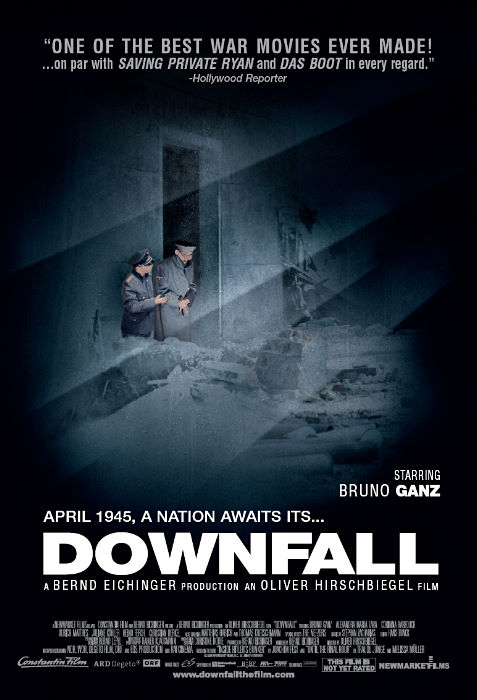
Downfall
14 deep dives in total