Albert Speer
Albert Speer, as Nazi Germany's architect and Reich Minister of Armaments, was a central figure who designed the grand vision of the Third Reich. Yet the film probes the theme of the collapse of power and the individual's moral choice with great depth, through the process by which he — despite being Hitler's closest friend — refuses the inhumane Nero Decree on the eve of defeat and ultimately departs from Hitler's side.
From Architect of the Empire to Betrayer: Albert Speer's Fall
Albert Speer goes beyond being merely one of the Nazi high command — he was the 'architect' who gave physical form to the vast illusion called the Third Reich. He was so close to Hitler that he could practically be called a friend, and his designs were focused on grandiose, monumental architecture such as Germania, the imagined capital city of Germany. Speer's existence seemed to symbolize the technical and aesthetic success of the Nazi regime.
1. The Designer of Glory: The Empire's Vision
Speer occupied an unrivaled position in Germany's armaments industry and architecture. His role went beyond simply constructing buildings — it was to create visual proof of the 'eternal power' demanded by Nazi ideology. He is evaluated as one of those who most faithfully realized Hitler's vision.
But behind this glory was the tragic inevitability that everything he designed would ultimately remain as the rubble of defeat.
2. Cracks in the Bunker: Defying the Nero Decree
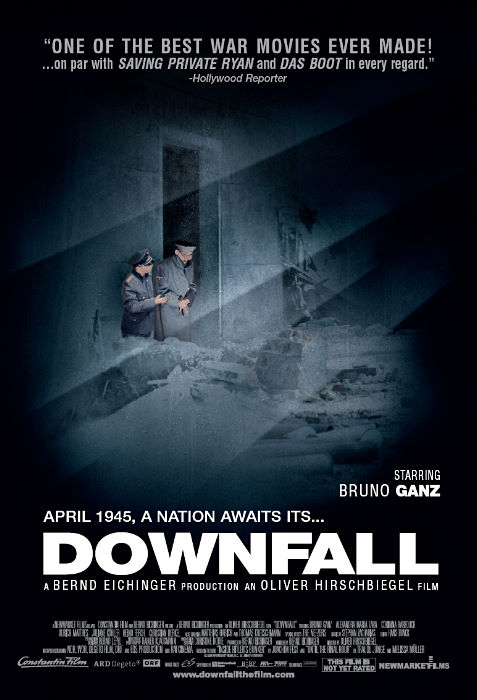
The film's central conflict takes place in Berlin's underground bunker. As the war situation deteriorates sharply and the Nazi high command cannot acknowledge defeat, Speer was Hitler's closest adviser and colleague. But in their final private meeting, his role transforms abruptly from 'loyal subordinate' to 'conscientious dissenter.'
The most decisive moment concerns the 'Nero Decree.'
- The content of the order: On 19 March 1945, Hitler ordered Speer to destroy Germany's infrastructure — the Nero Decree. This was an extreme and irrational order to destroy the nation's resources and break the will to fight. (F1)
- Speer's response: Speer refuses this order. He judged that destroying the foundations of the empire he had designed and protected was wrong. (F1)
- The result: This refusal creates a decisive crack between Speer and Hitler. Speer takes his leave of Hitler's side — meaning he has mounted a final moral resistance against the Nazi regime. (F1)
3. Life After the Fall and Its Interpretation
After leaving the bunker, Speer is brought before the Nuremberg International Military Tribunal and undergoes twenty years of imprisonment. This shows that, despite being a central figure in the Nazi regime, he had to carry the weight of the crimes he committed for the rest of his life.
His story goes beyond the fall of a single individual — it is a mirror showing how all the individuals who sustained that system struggle between their consciences and survival when a vast ideology collapses. Speer's final exit most clearly embodies the film's message: that no matter how grand and seemingly perfect an empire, it must eventually crumble before the moral judgment of human beings.
Why It Matters
Speer is the character who most dramatically demonstrates the film's thematic consciousness of 'psychological collapse of power.' Because he was Hitler's most trusted friend and architect, his departure is not mere character exit, but a symbolic event in which the vast illusion called the Third Reich collapses under its own contradictions. In particular, the fact that he refused the 'Nero Decree' symbolizes his final resistance as an intellectual capable of choosing individual conscience in the face of the regime's madness — adding depth to the work. His departure proves that the final chapter of the Nazi high command was not the terror of the battlefield, but moral dilemma and psychological collapse.
Other Character dives5
- arrow_outward
Adolf Hitler
In the film Downfall, Adolf Hitler was a dictator who spread terror across all of Europe, but the film focuses on the process of his collapse and his psychological disintegration on the eve of defeat. Hitler, trapped in Berlin's underground bunker in 1945, reveals the image of a helpless human issuing mad orders — not the terror of the battlefield but the terror of losing power — and his final fate, beyond being a mere historical event, symbolizes the hollowness of power.
- arrow_outward
Hermann Göring
Hermann Göring was the number two man in Nazi Germany and Reichsmarschall of the Luftwaffe, but in the film his existence symbolizes the themes of the collapse of power and betrayal. He attempts to seize national command in the face of the worsening war situation, but ultimately confronts and is frustrated by the collapse of the communications system and Hitler's fury. His story is a tragic record showing how individual ambition and belief are destroyed when a vast totalitarian regime collapses.
- arrow_outward
Schutzstaffel
The Schutzstaffel was once among the most trusted confidants of Hitler, but is a tragic figure who falls due to the worsening war situation and Hitler's irrational orders. Initially showing loyalty by trying to persuade Hitler to escape, he is ultimately dismissed after communicating surrender intentions to the Western Allies, is captured by Allied forces, and takes his own life — symbolically showing the collapse of the Nazi regime and individual fate.
Back to the title
Downfall
14 deep dives in total