Adolf Hitler
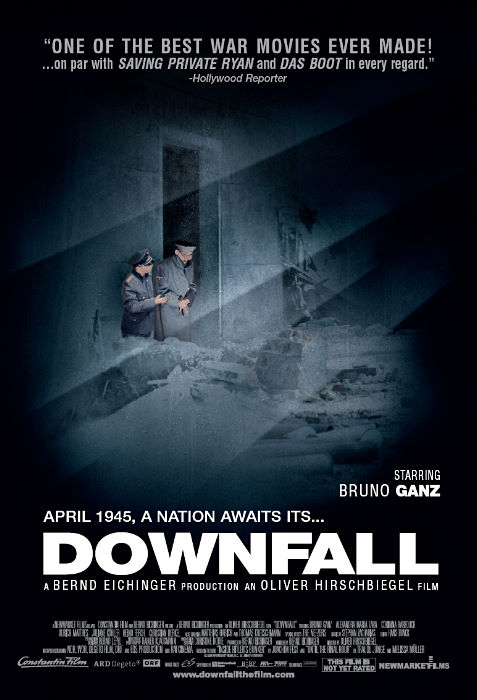
In the film Downfall, Adolf Hitler was a dictator who spread terror across all of Europe, but the film focuses on the process of his collapse and his psychological disintegration on the eve of defeat. Hitler, trapped in Berlin's underground bunker in 1945, reveals the image of a helpless human issuing mad orders — not the terror of the battlefield but the terror of losing power — and his final fate, beyond being a mere historical event, symbolizes the hollowness of power.
The Last Bunker of Power: Hitler's Psychological Collapse
Downfall deals with the grand historical figure Adolf Hitler, but its focus is not on his great achievements — it is on his wretched and sober psychological state on the eve of defeat. The film is set in the 'last Führerbunker' in late April 1945, and observes his inner life through the perspective and narration of his secretary. This causes his behavior to be treated not as objective historical record, but as the record of an individual's madness and despair.
Madness in the Bunker and Petty Details
Even though the war situation was already turning, Hitler sometimes displayed moments of kindness to those around him. But his control was extremely unstable. In the film, he issues madly arbitrary orders and directs that refugees in the bunker be cleared out, displaying a loss of control through irrational directives.
An interesting point is that the film contains petty details about Hitler. For example, the scene where, when signing his marriage certificate, he crossed out 'Eva Braun' and wrote 'Eva Hitler' — showing that he sought to control every petty detail of his own existence and history. Also, his relationship with Eva Braun is described as closer to a devoted pursuit — 'I'll come to die beside you' — than an official love relationship.
The Final Moment: The Suicide That Remains a Mystery
Hitler's final moment is one of the most important mysteries in the film. Historical records and the film's depiction point to his death occurring around 3 p.m. on 30 April 1945 in the bunker beneath the Reich Chancellery. He is portrayed choosing suicide out of fear of the blame and punishment he would receive.
There is great controversy about the suicide process. Hitler discussed methods of suicide and experimented by biting a poison capsule, and the final meal is followed by him entering his office with his wife Eva Braun and closing the iron door. The greatest controversy concerns the method of suicide. The Soviet government publicized it as a suicide by poison, but evidence suggesting cyanide use was presented. Furthermore, his teeth and skull, made public from the Russian State Archives in 2000, were confirmed through forensic examination to belong to a woman under 40 years of age — meaning the mystery of his death continues to this day.
The Collapse of Power and the City of Fear
Hitler's madness was not confined to defeat on the battlefield alone. He would stop at nothing to obtain what he wanted, and had made plans to occupy Warsaw and construct a Nazi-style experimental city — plans to completely destroy entire cities. Recognizing that aerial bombardment was inefficient, he preferred a method of completely isolating cities to make human survival impossible. These plans reveal how inhumane and destructive the logic underlying his absolute power was.
Why It Matters
Hitler as a figure is easily consumed as a simple historical villain, but Downfall reinterprets him through the psychological lens of 'the collapse of power.' In this film, Hitler is not an all-powerful dictator but a helpless human losing his control and issuing mad orders in the face of the vast reality of defeat. His wretched final fate prompts audiences to question how hollow and fragile the foundations are upon which 'power' is built — connecting directly with the film's thematic consciousness of 'the psychological collapse of human society.' His downfall means the collapse of the vast illusion called the Third Reich.
Other Character dives5
- arrow_outward
Albert Speer
Albert Speer, as Nazi Germany's architect and Reich Minister of Armaments, was a central figure who designed the grand vision of the Third Reich. Yet the film probes the theme of the collapse of power and the individual's moral choice with great depth, through the process by which he — despite being Hitler's closest friend — refuses the inhumane Nero Decree on the eve of defeat and ultimately departs from Hitler's side.
- arrow_outward
Hermann Göring
Hermann Göring was the number two man in Nazi Germany and Reichsmarschall of the Luftwaffe, but in the film his existence symbolizes the themes of the collapse of power and betrayal. He attempts to seize national command in the face of the worsening war situation, but ultimately confronts and is frustrated by the collapse of the communications system and Hitler's fury. His story is a tragic record showing how individual ambition and belief are destroyed when a vast totalitarian regime collapses.
- arrow_outward
Schutzstaffel
The Schutzstaffel was once among the most trusted confidants of Hitler, but is a tragic figure who falls due to the worsening war situation and Hitler's irrational orders. Initially showing loyalty by trying to persuade Hitler to escape, he is ultimately dismissed after communicating surrender intentions to the Western Allies, is captured by Allied forces, and takes his own life — symbolically showing the collapse of the Nazi regime and individual fate.
Back to the title
Downfall
14 deep dives in total