Hitler and Göring's Final Conversation
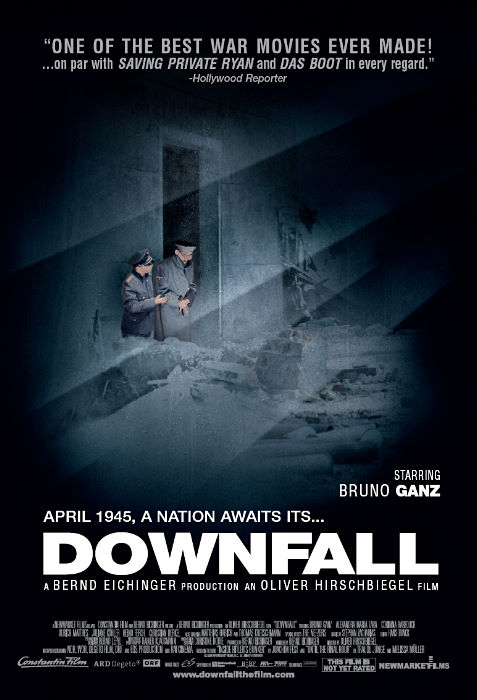
This scene symbolically reveals the power struggles among the Nazi high command and the psychological collapse on the eve of defeat. Even though the war situation is hopeless, Göring aims for the Führer's seat and asserts power, but is dismissed by Hitler as a 'morphine addict' — the process of being rendered powerless is a pivotal iconic scene showing that Nazi leaders were unable to acknowledge reality and obsessed only with preserving power and the regime.
The Power Game on the Eve of Defeat: Hitler and Göring's Final Conversation
One of the central psychological portrayals in Downfall is the final conversations among Nazi leaders — focusing not on the terror of the battlefield but on the 'psychological collapse on the eve of defeat.' In particular, the conversation between Hitler and Göring symbolically reveals how power operates and how it is rendered powerless in the process of the Third Reich collapsing.
1. Watches and Telegrams: An Attempt to Reaffirm Power
Göring appears sitting opposite Hitler, gazing at his watch. This symbolizes the realistic pressure of time passing — concrete evidence that defeat is imminent. When Hitler announces he will remain in Berlin, Göring sends a telegram declaring that, as the number two man, he will become the Führer — attempting to reaffirm his position. This shows that for the Nazi high command, no matter how hopeless the war situation, 'position' and 'power' were the most important values for survival.
But Hitler flatly refuses Göring's attempt. He denounces Göring as a 'morphine addict' and strips him of all authority. This moment transcends a simple quarrel — it reveals how easily Hitler could neutralize those around him, and the process by which that control ultimately crumbles before the vast reality of defeat.
2. Despair and Denial: The Collective Psychology Refusing Surrender
Behind these power struggles lies a backdrop of reports about the military situation at the front and a sense of despair. The characters constantly reference the enemy's advance, recognizing that the war situation has already turned. One character expresses despair by saying the situation is 'verloren' (lost), while others still try not to let go of hope. (F3)
The most central theme of the conversation is a resistance to 'surrender' (kapitulieren). They claim they absolutely cannot allow Hitler to surrender, emphasizing the duty of loyalty to the leader. (F4) They deny the situation as 'unmöglich' (impossible), trying to avoid facing reality. (F5) Conversely, others point out that 'opportunities are being missed,' urging realistic action. (F5)
This psychological conflict shows that the greatest threat the Nazi high command faced was not enemy forces at the front, but 'the reality of having to acknowledge defeat' itself.
3. The Collapse of Power and Its Aftermath
Göring ultimately receives a death sentence by hanging at the Nuremberg trials and dies by poison. This means he was defeated not only in power struggles, but by the very currents of history itself. All the authority and status he possessed ultimately crumbled before the great force of psychological collapse.
This scene records in great depth that the final chapter of the Nazi high command ended not simply with military defeat, but with the tragic process by which their 'beliefs' and 'lust for power' could not withstand the weight of reality and destroyed themselves.
Why It Matters
This iconic scene is the pivotal device proving that *Downfall* is not merely a war film, but a psychological drama dealing with 'the psychology of power.' The conversation between Göring and Hitler shows that the Nazi leaders faced not tactical failure but an 'existential crisis.' No matter how powerful a military position they held, their psychology is rendered powerless before the single reality of 'surrender.' This scene symbolically shows that the Nazi regime collapsed not only due to external enemies, but due to the psychological fractures within power and internal betrayal — connected with the film's deep thematic consciousness.
Other 명장면 dives4
- arrow_outward
Hitler's Delusional Orders and Psychology
This entry deals with the process of psychological collapse experienced by Adolf Hitler and the Nazi high command in the final moments of the Third Reich, in Berlin's underground bunker. When the defeat of the war situation is recognized as reality, rather than issuing military orders, the leaders display bizarre and unrealistic behavior to maintain their authority and existence — this is the core device showing the madness of the collapse of a totalitarian regime upon the individual soul.
- arrow_outward
The Final Fates and Suicides of the Nazi Leadership
This entry deals with the psychological collapse and final fates of the Nazi high command on the eve of defeat. The film dryly records the collapse of the regime and its ideals — not the terror of the battlefield — leading to the psychological disintegration of the leaders. Their suicides are portrayed not simply as defeat, but as a symbolic ritual in the process of the ideology of the Third Reich collapsing, exploring with great depth the effect that the collapse of power has on the individual soul.
- arrow_outward
Tragic Everyday Life Inside the Bunker
The underground bunker in the film is not merely a shelter, but a psychological prison that compressively reveals the process by which a vast ideology called the Third Reich collapses. This space is the stage where last preparations for survival are made, while the Nazi high command confronts their own crimes and guilt — experiencing the hollowness of power. The sealed space of the bunker acts as a device that maximizes the characters' psychological collapse and tragic fates.
Back to the title
Downfall
14 deep dives in total