Hitler's Delusional Orders and Psychology
This entry deals with the process of psychological collapse experienced by Adolf Hitler and the Nazi high command in the final moments of the Third Reich, in Berlin's underground bunker. When the defeat of the war situation is recognized as reality, rather than issuing military orders, the leaders display bizarre and unrealistic behavior to maintain their authority and existence — this is the core device showing the madness of the collapse of a totalitarian regime upon the individual soul.
Madness in the Bunker: The Delusional Orders on the Eve of Defeat
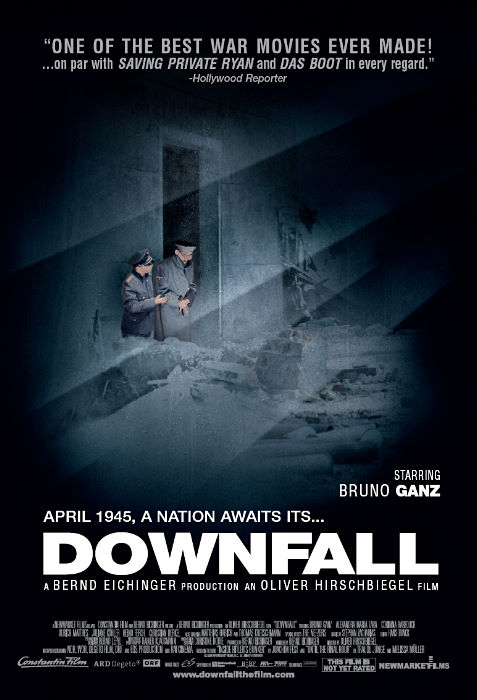
The 1945 Berlin underground bunker where the film is set is not merely a shelter. This is a psychological prison where the vast totalitarian regime — which had spread terror across all of Europe — takes its last breath. Even though the war situation has already turned and defeat is at hand, rather than making realistic judgments, Hitler pours forth bizarre and unscientific orders to maintain his authority and existence. This is the manifestation of the madness of clinging to the symbolic existence of the 'Führer,' rather than the role of battlefield commander.
1. The Obsession with Denying Reality and Maintaining Authority
The orders Hitler issues often deviate from tactical logic. This shows he is no longer a battlefield commander, but a figure who has made his own psychological stability and the maintenance of authority the foremost priority. The film, through scenes of Hitler referencing unscientific concepts like 'hereditary force' even in the final days before defeat, shows that his thinking has already become estranged from reality.
2. Behavioral Patterns Presaging Collapse
The part that can be most deeply probed is the behaviors Hitler displays as he senses his own collapse. This is closer to a systematic 'final clearing away' process than mere panic.
- Suppression of evidence and control: Hitler plans suicide to prevent his corpse from falling into Soviet hands, and issues his final order to cremate his body. This goes beyond simply preparing for death — it reveals an extremely paranoid psychology seeking to control his own historical record and very existence. (F14)
- Concretizing the suicide plan: Discussions also took place with military doctors about his method of suicide. Plans to bite a poison capsule and shoot himself were discussed, but evidence suggesting cyanide use over firearms was presented — implying that even his death was part of a carefully calculated 'performance.' (F15)
- The mysterious corpse: Even more shocking is the fact that his death occurred without witnesses, and the claim that his skull and teeth were confirmed as belonging to a woman under 40 years of age — leaving his death itself as a grand mystery. (F17)
3. The Logical Leap to City Annihilation
Hitler's bizarre psychology manifests not only in military orders, but in plans for city annihilation. He harbored particular loathing for Warsaw, and while recognizing that aerial bombardment was the most ineffective method for destroying cities, he had more terrifying means of city annihilation. (F4, F2) His goal was to completely destroy major cities like Moscow and Leningrad — making them uninhabitable. (F6) This was not mere military strategy, but the manifestation of an extreme psychological violence seeking to make hostile beings 'cease to exist.'
4. Conclusion: The Hollowness of Power
Ultimately, all the events in the bunker reveal the extreme hollowness and instability experienced by the human at the center of a vast totalitarian regime as it collapses. Hitler's delusional orders are not records of tactical failure — they are, in effect, a dry psychological report recording the process by which a human, clinging to the illusion of his own authority, ultimately destroys himself.
Why It Matters
This entry is the part most deeply connected to the film's thematic consciousness. The film does not stop merely at re-enacting historical events, but explores the psychological phenomenon of 'the collapse of power.' Hitler's delusional orders symbolize the internal collapse of a dictator under external pressure from the defeat of the war situation. All the orders he issues are no longer logic for survival, but a desperate struggle to maintain the illusion that he is still the 'Führer.' It is because of this psychological portrayal that the film is evaluated as a work that transcends a simple war film — posing deep questions about human psychology and the essence of power.
Other 설정 dives4
- arrow_outward
Hitler and Göring's Final Conversation
This scene symbolically reveals the power struggles among the Nazi high command and the psychological collapse on the eve of defeat. Even though the war situation is hopeless, Göring aims for the Führer's seat and asserts power, but is dismissed by Hitler as a 'morphine addict' — the process of being rendered powerless is a pivotal iconic scene showing that Nazi leaders were unable to acknowledge reality and obsessed only with preserving power and the regime.
- arrow_outward
The Final Fates and Suicides of the Nazi Leadership
This entry deals with the psychological collapse and final fates of the Nazi high command on the eve of defeat. The film dryly records the collapse of the regime and its ideals — not the terror of the battlefield — leading to the psychological disintegration of the leaders. Their suicides are portrayed not simply as defeat, but as a symbolic ritual in the process of the ideology of the Third Reich collapsing, exploring with great depth the effect that the collapse of power has on the individual soul.
- arrow_outward
Tragic Everyday Life Inside the Bunker
The underground bunker in the film is not merely a shelter, but a psychological prison that compressively reveals the process by which a vast ideology called the Third Reich collapses. This space is the stage where last preparations for survival are made, while the Nazi high command confronts their own crimes and guilt — experiencing the hollowness of power. The sealed space of the bunker acts as a device that maximizes the characters' psychological collapse and tragic fates.
Back to the title
Downfall
14 deep dives in total