Cardarrow_outward
The Reverse-Order Memory Erasure
The structure in which the memory-erasure process proceeds in reverse chronological order in Eternal Sunshine transcends a mere sci-fi device — it is the core mechanism for exploring human existential pain and love. Within this reverse flow of time, protagonist Joel feels the terror of his happiest memories disappearing, resists desperately to preserve them, and ultimately comes to understand how to embrace even the pain.
Cardarrow_outward
The Color-Coded Point-of-View Device
Eternal Sunshine uses a color-coded point-of-view system to visually imprint on the audience how subjective and malleable memory itself is. The shifts between green, orange, and blue go far beyond background decoration — they serve as the film's core visual language, functioning as a crucial metaphor for the characters' psychological states and the evolution of their relationship.
Cardarrow_outward
The Night Outing on the Frozen Charles River
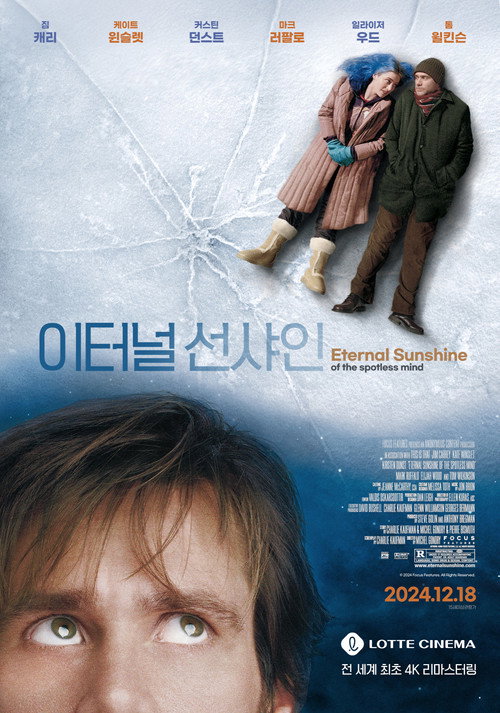
The night-outing scene on the frozen Charles River is far more than a simple recreation of a memory — it is the pivotal turning point in the film's exploration of love's true nature through the sci-fi premise of memory erasure. By re-staging the language and emotion of a letter Joel once wrote to Clementine, the scene amplifies the most beautiful and most painful moment the two shared. This meeting is a ritual of confirming each other's existence, and a paradoxical device that, within the very memory being erased, causes love to be rediscovered.
Cardarrow_outward
The Cyclical Ending of the Original Script
The 'cyclical ending' that existed in early drafts of the screenplay was an attempt to symbolically portray the fateful, repeating patterns of love and loss that define human life. Yet the final film abandons this grand cyclical structure and instead chooses an 'imperfect present' — embracing even pain and flaws — thereby emphasizing that love's true nature is not fate but a continuous act of choice.
Cardarrow_outward
Foreshadowing the Nature of Memory and Love
Through the sci-fi premise of memory erasure, this film paradoxically proves that even the painful memories we suffer through are an indispensable part of our existence. Love, it argues, is not simply a sequence of happy moments, but a philosophical question about 'existence itself' — an existence that embraces even the small sensory traces and pains surrounding those moments.
Characterarrow_outward
Joel Barish
Joel Barish begins as a melancholy, introverted figure desperate to erase his memories, yet the erasure process itself provides his greatest opportunity for psychological growth. He tries to flee from pain, but ultimately, within the dissolving fragments of memory, he discovers that suffering and imperfection are the very elements that make him whole.
Characterarrow_outward
Clementine Kruczynski
Clementine Kruczynski ignites Joel's life with her vivacious, impulsive charm. She is not portrayed as a simple 'free spirit' — she shares the loneliness and anxiety of her childhood, revealing a profound vulnerability. Through the sci-fi premise of memory erasure, her existence paradoxically proves that imperfect memories — those that carry pain and contradiction — are the true core of human existence, more than any perfectly purified memory ever could be.
Characterarrow_outward
Patrick
Patrick is a technical assistant at the memory-erasure clinic Lacuna, performing the role of an 'outside observer' who intervenes in Joel and Clementine's relationship. More than merely witnessing events, he secretly pilfers objects filled with the couple's shared memories or directly approaches Clementine — functioning as the catalyst that forces to the surface the emotional truths the protagonists were trying to avoid.
Characterarrow_outward
Mary Svevo
Mary Svevo is Lacuna's receptionist, yet far from a mere background figure — she is the character who provides the most crucial clues about the nature of memory and emotion. Through her past romance with director Howard, she exposes the system's fatal flaw, and ultimately distributes the truth-bearing tapes to patients, becoming a symbol of the 'emotional truth' that cannot be erased.
Characterarrow_outward
Howard Mierzwiak
Howard Mierzwiak, director of the memory-erasure clinic Lacuna, is the pivotal figure who shows that the act of erasing memory is not a simple medical procedure. Through his past romance with receptionist Mary Svevo, he paradoxically proves that even our most painful memories are an indispensable part of our existence, completing the film's central theme.
Characterarrow_outward
Stan Fink
Stan Fink is the senior technician at the memory-erasure clinic Lacuna, and more than a mere equipment operator — he is a character who shares the film's deepest secrets. As a 'witness' who knows the truth of the past romance between receptionist Mary and director Howard, his knowledge becomes the decisive catalyst for intervening in Joel's erasure process and transmitting the truth to Clementine.
Quotearrow_outward
Please let me keep this memory, just this one...
'Please let me keep this memory, just this one...' is Clementine's desperate cry — a cry that, through the sci-fi device of memory erasure, paradoxically awakens us to the truth that our most painful memories are the most important part of our existence. Beyond the simple wish to preserve a memory, this line condenses the film's core philosophy: that only by embracing even pain and wounds can we remain a whole 'self.'
Readingarrow_outward
The Necessity of Memory: Why We Cannot Erase the Pain
Through the sci-fi premise of memory erasure, Eternal Sunshine of the Spotless Mind argues that our most agonizing memories are the very elements that define our existence. Joel's resistance during the erasure process is a journey toward understanding that life's true essence lies not in the pursuit of perfect happiness, but in embracing the contradictory, imperfect 'present.' The film paradoxically rediscovers the nature of love through the pain of loss.
Readingarrow_outward
The Nature of Love: Existence Itself, Beyond Memory
Eternal Sunshine of the Spotless Mind defines love not as the reconstruction of perfectly beautiful memories, but as 'empathy in the present' — the willingness to hold even each other's flaws and imperfections. The memory-erasure process that Joel and Clementine undergo paradoxically proves that even the painful memories we suffer through are an indispensable part of our existence, expanding love's nature to a question of 'existence itself, beyond memory.'