The Color-Coded Point-of-View Device
Eternal Sunshine uses a color-coded point-of-view system to visually imprint on the audience how subjective and malleable memory itself is. The shifts between green, orange, and blue go far beyond background decoration — they serve as the film's core visual language, functioning as a crucial metaphor for the characters' psychological states and the evolution of their relationship.
A Color-Mapped Geography of Memory: The Visualization of Subjective Time
In Eternal Sunshine of the Spotless Mind, color goes beyond mere mise-en-scène to become the most important visual device that defines the subjectivity of time and memory as experienced by the audience. The film appropriates the sci-fi premise of memory erasure, yet what runs through its narrative is a sensory coding system: 'color.' This device prevents audience confusion while constantly reminding viewers how arbitrary and manipulable memory's fragments truly are.
1. How Color Coding Works
The film connects specific colors to specific time periods or emotional states, providing the audience with a kind of 'memory map.' This color code performs the following psychological functions:
- Green: Primarily symbolizes the memory of the 'starting point' — the first meeting. It conveys the fresh, tender emotions of an early stage that has yet to carry deep wounds.
- Orange: Symbolizes the period when the relationship reached its peak — passionate and at its height. The brightest, most intense color represents the golden age of love, a visual space in which the most memories are concentrated.
- Blue: Represents the 'present' after the erasure process is complete — or the 'purified state.' This color can feel cold and empty at times; it is the neutral color of distance from past passion, yet simultaneously hints at a new beginning.
- Red: Often represents fantasy, or moments of the most violent and painful emotion — the visualization of the moment when memory manifests most intensely, the moment one most desperately wants to hold on to.
2. Clementine's Changing Hair Color: A Metaphor for Time
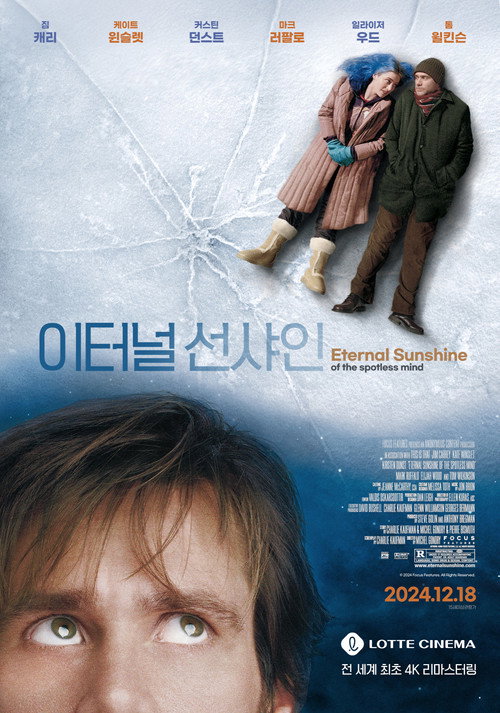
This color coding is maximized through the changes in the characters themselves. The shifting color of Clementine Kruczynski's hair is the most intuitive device showing the passage of time and psychological change. Her hair begins as a melancholy green, transforms to passionate orange at the height of the relationship, and ultimately converges to blue through the process of memory erasure. This progression visually compresses the emotional roller coaster she experiences — a journey from 'innocence → passion → emptiness.'
3. The Subjectivity of Memory and the Role of Color
The color device poses the following philosophical question to the audience: Is what we call 'memory' truly an objective record of fact? Or is it a subjective experience, filtered and reconstructed by the emotional color of that moment?
The process of Joel erasing his memories is not simply the loss of the past — it is like losing, one by one, the palette of colors he believed most beautiful. Every moment in which he struggles to reclaim those memories is a resistance to the erasure of that color, and ultimately the process of growth in which he accepts even the pain of those colors as a part of himself.
Why It Matters
The color-coding system is this film's most distinctive mechanism and the core device directly connected to its thematic consciousness. This is not simply a romance film about 'the pain of love' — it is a sci-fi drama that poses the philosophical question 'What is memory?' The color coding constantly reminds the audience that memory is not objective data but a subjective experience reassembled through the filter of emotion. Thanks to this visual device, the audience does not simply receive Joel and Clementine's separation as sorrow, but understands it on the intellectual level of 'the subjectivity of memory.' This is the defining role that elevates the film from simple romance to an artistic and contemplative masterpiece.
Other 떡밥 dives4
- arrow_outward
The Reverse-Order Memory Erasure
The structure in which the memory-erasure process proceeds in reverse chronological order in Eternal Sunshine transcends a mere sci-fi device — it is the core mechanism for exploring human existential pain and love. Within this reverse flow of time, protagonist Joel feels the terror of his happiest memories disappearing, resists desperately to preserve them, and ultimately comes to understand how to embrace even the pain.
- arrow_outward
The Night Outing on the Frozen Charles River
The night-outing scene on the frozen Charles River is far more than a simple recreation of a memory — it is the pivotal turning point in the film's exploration of love's true nature through the sci-fi premise of memory erasure. By re-staging the language and emotion of a letter Joel once wrote to Clementine, the scene amplifies the most beautiful and most painful moment the two shared. This meeting is a ritual of confirming each other's existence, and a paradoxical device that, within the very memory being erased, causes love to be rediscovered.
- arrow_outward
The Cyclical Ending of the Original Script
The 'cyclical ending' that existed in early drafts of the screenplay was an attempt to symbolically portray the fateful, repeating patterns of love and loss that define human life. Yet the final film abandons this grand cyclical structure and instead chooses an 'imperfect present' — embracing even pain and flaws — thereby emphasizing that love's true nature is not fate but a continuous act of choice.
Back to the title
Eternal Sunshine of the Spotless Mind
14 deep dives in total