The Film's Cult Reevaluation
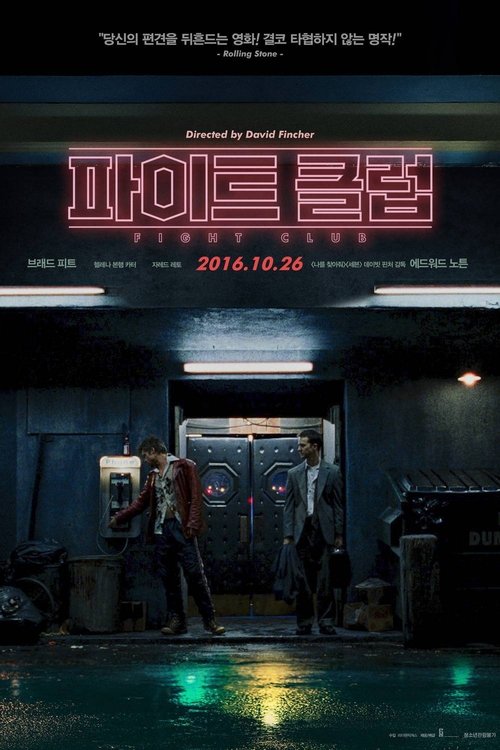
*Fight Club*—met with critical derision and box-office disappointment upon its 1999 release, surviving Roger Ebert's attacks—sold over six million DVD copies, spawned an obsessive fan following that excavated its every detail, and was reborn as an unparalleled cult text that penetrates the heart of modern capitalism.
A $63 Million Gamble and the Stigma of 'Fascism'
When Fight Club was first screened at the 1999 Venice Film Festival, it opened to audience jeers. Despite a $63 million budget, its US box-office gross barely reached around $37 million—classifying it as a commercial failure. Prominent critic Roger Ebert, the most influential voice of the era, gave the film two stars and called it "cheerfully fascist," while TV host Rosie O'Donnell famously spoiled the twist on her talk show and urged a boycott. This initial reception testifies to just how jarring the film's violence and anti-social message were to mainstream society at the time.
The 'Second Chance' of DVD and the Legend of Six Million Copies
But after its theatrical run, Fight Club staged an extraordinary reversal in the secondary market. The two-disc special-edition DVD—painstakingly assembled by director David Fincher himself—made public the film's hidden details and production secrets, rallying a devoted fan base. The DVD sold over six million copies worldwide; fans began tracking down the 1/24-second subliminal cut (Tyler Durden's brief flash on screen) themselves and dissecting the film frame by frame. This blossomed into 'the pleasure of interpretation' that went far beyond simple viewing, and the film began to function as a kind of 'cultural cipher' rather than mere entertainment.
#12 on IMDb: A Philosophical Text Ahead of Its Time
Over time the film's standing only grew more entrenched. Scenes that at release were dismissed as 'irresponsible violence' were, by the late 2000s, re-evaluated as prophetic insight into 'the emptiness of modern capitalism' and 'the crisis of masculinity.' Today Fight Club consistently ranks in the top 12 all-time on IMDb, scoring significantly higher on Rotten Tomatoes and other major review aggregators than it did on release. This is the most powerful evidence that the film's vitality was completed not merely through its creators' intentions, but through the active reinterpretation and era-spanning resonance of its audience.
Why It Matters
This entry explains the mechanism by which *Fight Club* ascended from a mere thriller genre to a 'cultural text.' It shows how the film's value was not fixed by initial box-office performance or critical reception, but was continuously reproduced through the medium of DVD and active fan interpretation. This demonstrates the typical survival pattern of a cult film—completed through interaction with its audience—and is a prime example of how a message ahead of its time can be rediscovered long after the fact.
Other 기타 dives7
- arrow_outward
How the Film's Ending Differs from the Novel
*Fight Club* chose the audacious ending of Project Mayhem's success—diverging from Chuck Palahniuk's source novel, where a detonator malfunction and the protagonist's institutionalization conclude with a cynical reality. David Fincher turned the system's collapse into a visual catharsis, completing a cinematic reinterpretation of whether rebellion can succeed.
- arrow_outward
The Thermostat Color Detail in the Boss Confrontation
During the scene in which the Narrator assaults himself and threatens his boss, a thermostat in the background alternates between white and black with each cut—a precise mise-en-scène device that visualizes the protagonist's fractured self and distorted perception of reality.
- arrow_outward
The Symbolism of Paper Street
'Paper Street' in *Fight Club* refers to a ghost road that exists on maps but not in reality—a core foreshadowing device and symbolic instrument that runs through Tyler Durden's non-existence and the hollow identity of modern people.
Back to the title
Fight Club
17 deep dives in total