Robin Williams's Ad-Lib Line
The line Robin Williams delivers at the film's closing—'Son of a bitch, he stole my line'—is more than mere humor: it is the film's deepest behind-the-scenes story and a symbolic device. This ad-lib implies that the bond between Will and Sean has not truly ended, and playfully concludes the theme of 'sharing inspiration' that arises in the creative process.
🎬 The Film's Final Device: A Farewell Completed by Ad-Lib
The film's final scene symbolizes a 'complete farewell'—Will Hunting setting out toward a new life with his friends. Will accepts Sean's advice, sets the direction of his life, and makes a new start. This scene is the therapeutic climax in which Will finally resolves to spread his talent before the world.
But at this moment of seemingly perfect farewell, the audience encounters an unexpected, delightful reversal: Sean Maguire's line 'Son of a bitch, he stole my line.' This is interpreted not as a simple joke but as the film's deepest behind-the-scenes story—a device hinting that the relationship between Will and Sean has not 'completely ended.'
💡 The Background of the Ad-Lib's Birth
This line was Robin Williams's spontaneous improvisation. Originally, the scene was planned as a quiet, contemplative one—Sean reads the letter Will left and walks inside with a serene expression, an emotionally restrained ending.
But the moment Williams delivered this line, it is said that all the staff—including Matt Damon and director Gus Van Sant—nearly cried out in surprise at the unexpected delight. This line, erupting spontaneously, layered a light, warm 'human imperfection' over the film's serious narrative, leaving a lasting impression on the audience.
🎭 Narrative Interpretation: Sharing Inspiration and Continuing Connection
This ad-lib can be interpreted on multiple levels:
- The continuity of the relationship: Sean's feeling that Will 'stole' his line is an act of Sean acknowledging that he himself has been deeply influenced by Will—seeing Will go into the world carrying the enlightenment gained through their sessions.
- Artistic metaphor: Will carries the comfort and enlightenment he received from Sean—the 'line'—and now completes the 'work' that is his own life. Sean sees Will take his inspiration and step out onto a greater stage, feeling simultaneously a kind of 'author's pride' and 'mentor's satisfaction.'
- A delightful conclusion: Because the entire film dealt with heavy themes of trauma and psychological defense, this playful ad-lib extends to the audience a 'comfort within sorrow,' leaving unforgettable emotional afterglow.
Ultimately, this line serves as the perfect closing credit—declaring that Will and Sean's parting is not an ending but a 'continuing connection' in which they remain in each other's lives forever.
Why It Matters
This ad-lib completes the film's thematic consciousness of 'healing and growth' in the most human and delightful way. The relationship between Will and Sean is formed through intellectual enlightenment and emotional comfort, but this final line reminds us that all of it ultimately originates from the most primal emotion: 'the connection between people.' Sean's joke implies that Will has begun writing his own story, carrying the comfort and courage he learned from Sean. This symbolically shows that not intellectual gifts but sincere human connection is the most powerful force for transforming a person.
Other 비화 dives4
- arrow_outward
MIT Janitor and the Equation on the Blackboard
The series of events in which Will Hunting, working as a janitor at MIT, writes equations on the blackboard is the decisive trigger that forcibly exposes his genius to the outside world. This incident creates a structural tension between Will's defense mechanism of hiding his talent and the outside authority (Professor Lambeau) that discovers it—securing the film's core narrative momentum.
- arrow_outward
Matt Damon and Ben Affleck's Screenplay Involvement
The personal backgrounds and creative struggles of co-writers Matt Damon and Ben Affleck are the deepest behind-the-scenes story of Good Will Hunting. They participated as more than just writers, and the revision process of the early screenplay—even the controversial scenes and decisive lines in the film—were born through the twists and turns of production.
- arrow_outward
Sean's 'It's Not Your Fault' Comfort
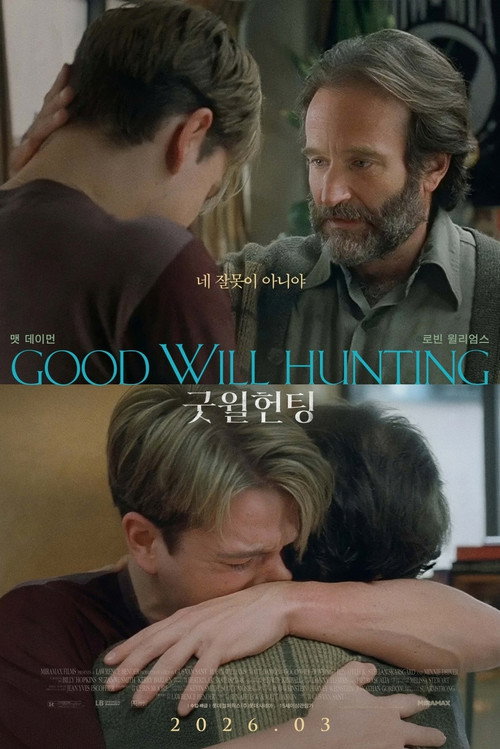
Sean Maguire's comfort 'It's not your fault,' which crowns the film's climax, goes beyond simple reassurance—it is the healing language that dismantles the guilt and responsibility Will Hunting has imposed on himself all his life. This scene symbolizes the decisive moment when Will's intellectual defense mechanism crumbles, he confronts his childhood trauma, and finally enters the realm of human emotion.
Back to the title
Good Will Hunting
14 deep dives in total