Cardarrow_outward
The Healing Process and Support System
The healing process in the film Hope is not merely a matter of time passing or emotions exploding, but is a psychological rebuilding process that takes place gradually through a surrounding support system. This essay deeply analyzes how So-won's overcoming of her trauma — through the systematic help of counselor Jung-sook and the continuous support of family and friends — recovers toward the everyday life called 'hope.'
Cardarrow_outward
Production Background and Artistic Intent
Hope is a work of high artistic and ethical value in that, despite taking a highly sensitive real-life incident — the Cho Doo-soon case — as its motif, it obtained the consent of the actual victim's family and underwent ethical monitoring by psychological experts during filming. Going beyond simply depicting the crime, it has presented a high ethical standard in Korean cinema for handling sensitive subject matter by delicately capturing the healing process of those who have experienced trauma.
Cardarrow_outward
Courtroom Testimony and Social Message
The courtroom testimony scene in the film Hope is the most symbolic and emotionally explosive moment running through the entire film. This scene gives enormous courage and meaning to the act of 'testimony' itself — a victim speaking aloud her most painful experience in the public domain — going far beyond the performance of legal procedure. It warmly and sensitively conveys the film's core message that it is more important how the victim and her family heal and recover toward everyday life, rather than anger or desire for revenge.
Characterarrow_outward
So-won (Lee Re)
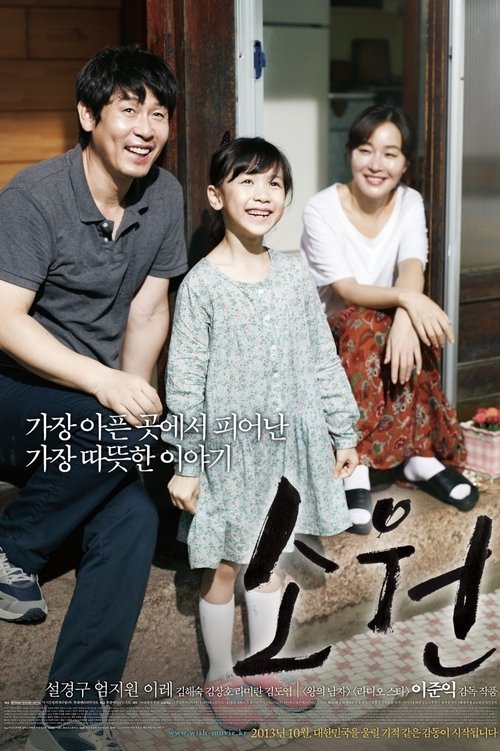
So-won is the victim of the terrible trauma of child sexual violence and the central axis of the film Hope. Her journey goes beyond the simple retrial of the incident — it is the healing process itself, confronting physical and psychological wounds and, through the support of those around her and psychological therapy, gradually finding 'hope.' So-won's recovery emphasizes the importance of a victim-centric narrative and conveys a warm message of seeking return to ordinary life rather than anger and revenge.
Readingarrow_outward
A Narrative of Healing That Transcends Anger
Hope occupies its singular narrative position because, while it deals with the deeply violent and infuriating subject of child sexual crime, it refuses to provide the traditional crime thriller catharsis of 'revenge' or 'retribution.' Instead, the film unfolds its narrative around the 'recovery' experienced by the victim and her family, and this process itself forms the work's core theme. It demonstrates that trauma is overcome not through a single incident but through gradual healing via social support networks and psychological care, and that the healing process itself is the most powerful narrative force.
Characterarrow_outward
Mi-hee (Um Ji-won)
Mi-hee is a character who is strong-willed and prickly but, going through So-won's trauma, gradually experiences her own healing. Her character arc runs from anger and suspicion, through trusting those around her, and ultimately to bringing the family's recovery to fruition by giving birth to a second child, So-mang. This delicately captures not merely motherly love but how a human being who has endured a painful incident finds the hope called everyday life again.
Characterarrow_outward
Dong-hoon (Sol Kyung-gu)
Dong-hoon symbolizes the father who is both closest to and farthest from So-won in the wake of her accident-induced deep trauma. Rather than anger or direct consolation, he approaches indirectly — through the Cocomong mascot costume, bypassing So-won's psychological defenses — and redefines his role as a father, healing his daughter's heart.
Characterarrow_outward
Jung-sook (Kim Hae-sook)
Jung-sook goes beyond the simple role of counselor to be the core figure who guides So-won through the healing process as a survivor who has experienced her own deep wound — the loss of her daughter. The combination of her personal experience of loss and pain with professional knowledge acts as the key support that breaks down the deepest wall in So-won's inner life and leads her gradually back to the everyday life called hope.
Quotearrow_outward
Do you have any idea how old my child will be in twelve years!!
Mi-hee's courtroom cry 'Do you have any idea how old my child will be in twelve years!!' goes beyond a simple outburst of rage — it is a core line symbolizing the weight of time and the permanence of trauma, which no legal verdict can ever measure. This cry imprints on the audience that the wound inflicted on the victim was not an event that ended in the past but one that stripped away the entirety of the present and future life, maximizing the healing perspective the film pursues.
Characterarrow_outward
Gwang-sik (Kim Sang-ho)
Gwang-sik is a figure who symbolizes external support and a sense of justice for So-won's family. Going beyond merely being a friend, he actively participates in the healing process, and in particular, through his anger at the injustice displayed in court, reminds the audience of the importance of justice. His presence is an important axis showing how the community can support and restore victims beyond individual pain.
Quotearrow_outward
You… I’m so glad you were born.
'You… I’m so glad you were born.' is more than simple praise — it is the most powerful message of healing sent to So-won by her family and those around her, at a moment when she had denied her own worth in the wake of trauma. The line symbolizes that So-won's psychological recovery is taking place gradually within external support, and marks the decisive moment when discovering 'the value of existence itself' is revealed as the heart of healing rather than anger or revenge.
Quotearrow_outward
Would it feel like just an ‘accident’ if it happened to your kid?
"Would it feel like just an 'accident' if it happened to your kid?" is the sharpest resistance — beyond a simple outburst of rage — to how the legal system and social gaze attempt to dismiss and minimize the victim's pain. This cry, erupting at the apex of all hardships So-won's family endures in the public space of the courtroom, shows the film's thematic consciousness in concentrated form.
Readingarrow_outward
The Reconstruction of Family and the Power of Empathy
Hope goes beyond the simple framework of a crime thriller to examine, in depth, the 'reconstruction of relationships' experienced by So-won — a victim of the extreme trauma of child sexual violence — and her family. The film sensitively captures not merely So-won's individual healing, but the process by which each family member acknowledges loss and resentment, learns to empathize with one another, and ultimately recovers as a 'complete family,' underscoring the vital importance of relational restoration.
Cardarrow_outward
The Incident and Its Trauma
The core theme of the film Hope, 'the incident and its trauma,' goes beyond the simple crime thriller to delicately handle the complex psychological pain experienced by the victim and the healing process. The child sexual assault So-won experienced left indelible wounds on her body and mind, and this trauma even causes her to refuse her father's touch. The film focuses on how hope, called everyday life, is found again through the support of those around her and psychological therapy rather than anger or revenge.