You… I’m so glad you were born.
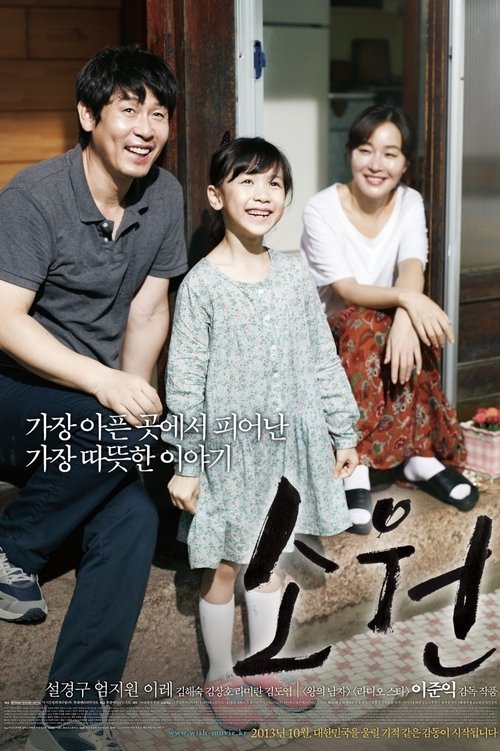
'You… I’m so glad you were born.' is more than simple praise — it is the most powerful message of healing sent to So-won by her family and those around her, at a moment when she had denied her own worth in the wake of trauma. The line symbolizes that So-won's psychological recovery is taking place gradually within external support, and marks the decisive moment when discovering 'the value of existence itself' is revealed as the heart of healing rather than anger or revenge.
The Void Created by Trauma and the Negation of Existence
The incident that struck So-won — child sexual violence — left more than physical wounds; it implanted a fundamental fear and negation of existence itself. The victim is placed in a state of extreme trauma that makes her refuse all male contact, even her own father's touch. In this state, So-won doubts her own worth and tries to sever her connection to the world.
The image of So-won in the film's first act is of a person who feels like a ghost, as though she does not belong to the world. Her inner life is filled with the void of 'I am a worthless being,' and filling that void becomes the entire healing arc of the film.
The Semantic Weight of "You… I’m so glad you were born."
This line symbolizes the 'recognition' So-won most needs. From her perspective, it is not mere praise but a 'certificate of existence' — confirmation that she has the right to be in this world. The context in which the line is spoken — to So-won while she plays with So-mang — is the moment she realizes that her existence is having a positive effect on others.
The line makes it clear that So-won's healing does not depend on external factors like 'the resolution of the incident' or 'the realization of legal justice.' Rather, it captures the moment in which So-won, within the psychological environment of unconditional support and love steadily provided by family, friends, and therapist, rediscovers her own value.
The Line as a Stage in Healing
The line marks an important turning point in So-won's psychological curve. So-won first responded with fear, anger, and avoidance; gradually, through the warm gaze and support of those around her, she regains 'the strength to live again.' In this process, her father's approach through the Cocomong costume and counselor Jung-sook's sensitive psychological therapy play important roles. All these supports gather to give So-won the power to return to herself, and to others, the message that 'you are precious.'
The line shows that So-won's recovery is not 'a cure' but 'coexistence.' The wounds remain, but discovering the 'hope' that life can continue even carrying those wounds is the ultimate message the line holds.
Why It Matters
This celebrated line is directly tied to the film's core identity — 'healing that transcends revenge and anger.' The reason Hope, despite handling the sensitive and violent subject of child sexual violence, escaped the melodrama trap and earned high artistic recognition lies precisely in this 'reaffirmation of existential worth.' For So-won, the line is not mere consolation; it is a psychological anchor that re-establishes the boundary of self lost to trauma. It prompts audiences to ask what genuine recovery looks like, adding another layer of depth to the film's artistry.
Other Quote dives2
- arrow_outward
Do you have any idea how old my child will be in twelve years!!
Mi-hee's courtroom cry 'Do you have any idea how old my child will be in twelve years!!' goes beyond a simple outburst of rage — it is a core line symbolizing the weight of time and the permanence of trauma, which no legal verdict can ever measure. This cry imprints on the audience that the wound inflicted on the victim was not an event that ended in the past but one that stripped away the entirety of the present and future life, maximizing the healing perspective the film pursues.
- arrow_outward
Would it feel like just an ‘accident’ if it happened to your kid?
"Would it feel like just an 'accident' if it happened to your kid?" is the sharpest resistance — beyond a simple outburst of rage — to how the legal system and social gaze attempt to dismiss and minimize the victim's pain. This cry, erupting at the apex of all hardships So-won's family endures in the public space of the courtroom, shows the film's thematic consciousness in concentrated form.
Back to the title
Hope
14 deep dives in total