Do you have any idea how old my child will be in twelve years!!
Mi-hee's courtroom cry 'Do you have any idea how old my child will be in twelve years!!' goes beyond a simple outburst of rage — it is a core line symbolizing the weight of time and the permanence of trauma, which no legal verdict can ever measure. This cry imprints on the audience that the wound inflicted on the victim was not an event that ended in the past but one that stripped away the entirety of the present and future life, maximizing the healing perspective the film pursues.
The Cry That Asks the Weight of Time: "Do you have any idea how old my child will be in twelve years!!"
This line is the most powerful emotional climax running through the courtroom scenes of the film Hope. It symbolically shows the limits of what legal justice can reach, and the depth of the sense of loss experienced by victims.
1. Context of Utterance: Between Legal Justice and Human Loss
The situation just before Mi-hee delivers this cry is the moment the final verdict is delivered in the courtroom. A courtroom moves by objective evidence and legal logic. But the wound inflicted on So-won cannot be reduced to legal categories like a simple 'accident' or 'crime' — it is a deep rupture of life and soul.
When the verdict is handed down, Mi-hee immediately senses that it utterly fails to reflect the weight of So-won's lost time and the weight of her life. Her rage expands beyond anger at the perpetrator into a fundamental question about how insensitively this society's laws and system deal with the victim's pain.
2. Position Within the Film: Shifting the Focus of Rage to 'Time'
The placement of this line at this moment is deliberate. If Mi-hee had only expressed rage that 'the perpetrator is going unpunished,' this would have remained a cliché of the typical revenge drama. But Mi-hee does not attack the 'length' or 'severity' of the sentence itself; she points to the 'impact' that period will have on So-won's life.
"Do you have any idea how old my child will be in twelve years!!" contrasts legal time (time on the clock) with the victim's time (time of life). The figure of twelve years does not signify mere time but symbolizes the healthy years of growth, the days of innocence, and ordinary 'childhood' itself that were stolen from So-won. Through this question, the film prompts the audience to ask 'what is justice?' and redirects their gaze toward the human domain of healing that transcends legal justice.
3. Audience / Fan Response: Empathic Helplessness
This line gives the audience intense empathy and at the same time a profound sense of helplessness. Audiences expect the 'satisfying' realization of justice often seen in courtroom dramas, but Mi-hee's cry erupts at the point where that expectation is crushed. This becomes a conduit for collectively expressing the absurdity felt in daily life — the social problem that 'does not get solved even with effort.'
The line is not dismissed as a simple emotional explosion; it represents the characteristics of the 'chronic trauma' experienced by victim families. Because trauma does not disappear with the passage of time after the incident is over, but remains like a shadow in every moment of life, causing continuing pain.
4. Subsequent Effect: Healing Must Come From Within, Not Without
This cry reinforces the film's message in its second half. Because the external system of the courtroom has failed to fully realize justice, So-won's healing can only take place in the internal and private domain of 'support' from family, counselor Jung-sook, and those around her. The cry in the courtroom is the decisive device imprinting on audiences that 'true recovery is achieved not through legal judgments but through love and understanding' — the film's core theme.
Why It Matters
This line plays the core role in elevating the film Hope from 'crime thriller' to 'healing drama.' If the film had focused only on crime and punishment, this cry would have ended as a simple outburst of rage. But by pointing to the gap in legal justice, it shifts the film's focus from 'punishing the perpetrator' to 'restoring the victim.' Mi-hee's cry makes the audience focus on the most fundamental human pain — time and loss — that legal justice cannot resolve, and is the point that most powerfully symbolizes the value of 'recovery through support and love' that the film ultimately seeks to convey.
Other Quote dives2
- arrow_outward
You… I’m so glad you were born.
'You… I’m so glad you were born.' is more than simple praise — it is the most powerful message of healing sent to So-won by her family and those around her, at a moment when she had denied her own worth in the wake of trauma. The line symbolizes that So-won's psychological recovery is taking place gradually within external support, and marks the decisive moment when discovering 'the value of existence itself' is revealed as the heart of healing rather than anger or revenge.
- arrow_outward
Would it feel like just an ‘accident’ if it happened to your kid?
"Would it feel like just an 'accident' if it happened to your kid?" is the sharpest resistance — beyond a simple outburst of rage — to how the legal system and social gaze attempt to dismiss and minimize the victim's pain. This cry, erupting at the apex of all hardships So-won's family endures in the public space of the courtroom, shows the film's thematic consciousness in concentrated form.
Back to the title
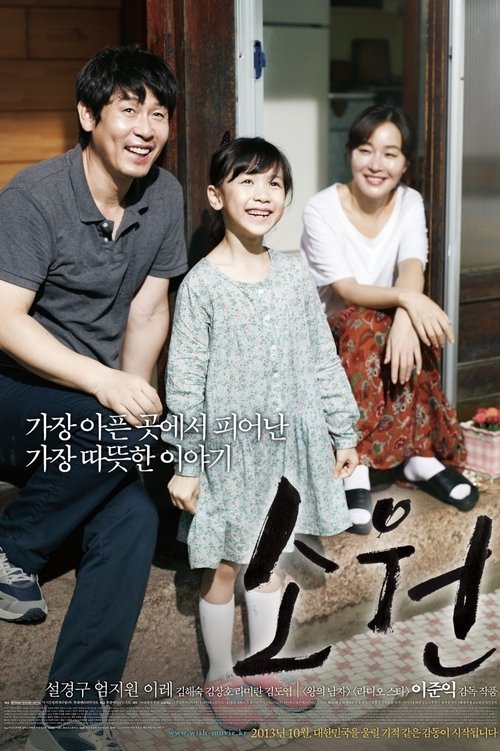
Hope
14 deep dives in total