The Reconstruction of Family and the Power of Empathy
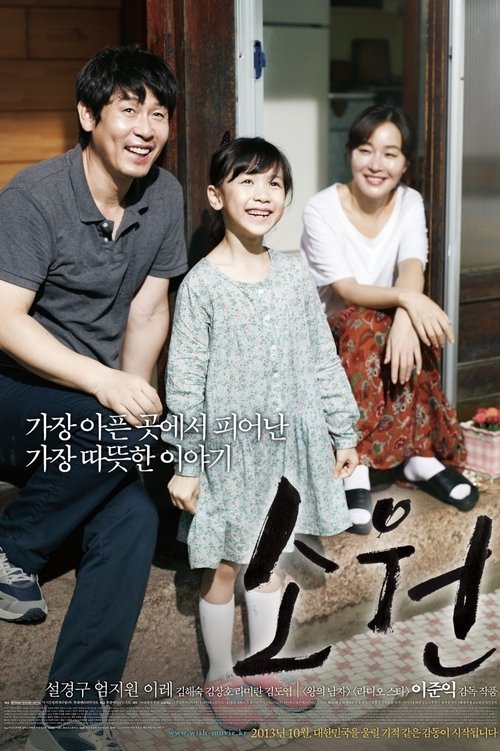
Hope goes beyond the simple framework of a crime thriller to examine, in depth, the 'reconstruction of relationships' experienced by So-won — a victim of the extreme trauma of child sexual violence — and her family. The film sensitively captures not merely So-won's individual healing, but the process by which each family member acknowledges loss and resentment, learns to empathize with one another, and ultimately recovers as a 'complete family,' underscoring the vital importance of relational restoration.
Rebuilding the Family System Through Trauma as Mediator
The trauma of So-won's experience left its mark not only on the victim's body and mind but on every member of the family. It acted as a catalyst, drawing to the surface relational deficiencies and resentment buried within the family. The film shows how, through this process, family members learn to acknowledge each other's pain, build empathy, and rebuild their relationships.
1. Each Member's Psychological Distance and Process of Healing
Mother Mi-hee: Restoring Pride and Trust
Mi-hee is a proud woman who runs a stationery shop, and after the accident she becomes suspicious and resentful of those around her — a projection of her trauma at losing control. Her healing comes gradually as, through external support (the counselor, friends), she begins to trust people again. Going beyond merely caring for So-won, accepting the family's wider support network signals her psychological maturity.
Father Dong-hoon: A Mediating Object That Overcomes Physical Distance
Dong-hoon struggles to find a way to get close to his daughter. Trauma created an invisible psychological gulf between father and daughter that simple expressions of affection could not bridge. The film uses the Cocomong mascot costume as the key device to fill this gap. This is a crucial detail: rather than attempting direct contact, the father establishes a zone of psychological safety by approaching through a 'mediating object' that So-won does not fear. This process leads to the decisive moment in which So-won acknowledges her father's efforts.
So-won: Courage and Empathy in the Path to Recovery
So-won suffers as a victim, but her recovery is not simply a matter of 'returning to normal.' She plays a crucial role in court, appearing as a witness and speaking courageously about her experience. This is the process by which she reclaims agency — acknowledging her own pain and sharing it with others. Her act of approaching the Cocomong mascot without fear is a manifestation of the empathy needed to accept her family's effort and love.
2. The Narrative Structure of Relational Recovery
The narrative power of this film lies not in the 'incident' itself but in 'the ordinary life that follows.' Rather than depicting explosive anger in the courtroom, the film shows healing in everyday spaces — the counselor's office, the stationery shop, the home. This conveys the message that trauma does not end with a single event; it heals gradually through small interactions and support woven into daily life.
- The Importance of the Support System: The surrounding figures (Jung-sook, Gwang-sik, Mi-ran, Officer Do-kyeong) serve not merely as helpers but as 'empathetic mirrors,' enabling the family to heal by their own strength. They offer the gaze, the support, and sometimes the uncomfortable truth that the family needs.
- The Language of Empathy: The detail that counselor Jung-sook speaks in dialect rather than standard Korean when counseling So-won shows how psychological barriers can be broken through linguistic intimacy. It symbolizes how empathy is sometimes expressed through the most private language and manner.
Why It Matters
Hope handles child sexual violence with rare delicacy and without the expected 'revenge narrative,' securing its unique artistic position. The film's most important quality is that it focuses not merely on the victim's personal recovery but on the 'rebuilding of relationships' — the psychological wounds of each family member and how they lean on one another. This reveals that trauma is not an individual problem but a systemic one affecting the whole family, and poses to audiences the fundamental question of 'how do we go on living?' It is precisely because relational recovery is the core engine of the narrative that Hope is valued as a psychological drama transcending the simple thriller.
Other Reading dives1
Back to the title
Hope
14 deep dives in total