A Narrative of Healing That Transcends Anger
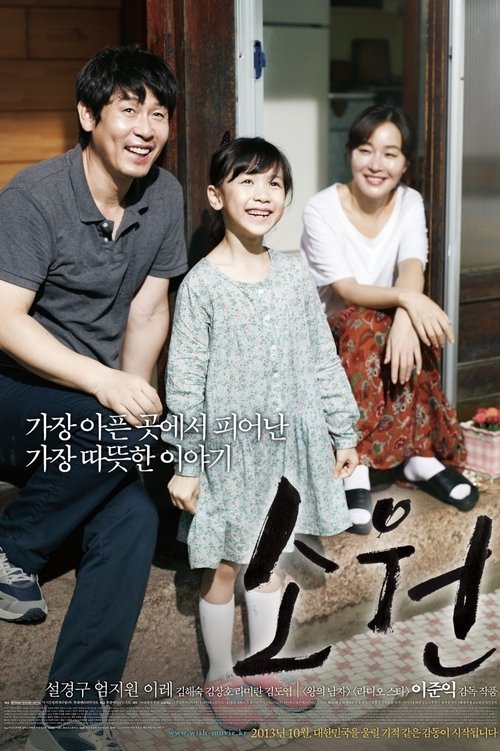
Hope occupies its singular narrative position because, while it deals with the deeply violent and infuriating subject of child sexual crime, it refuses to provide the traditional crime thriller catharsis of 'revenge' or 'retribution.' Instead, the film unfolds its narrative around the 'recovery' experienced by the victim and her family, and this process itself forms the work's core theme. It demonstrates that trauma is overcome not through a single incident but through gradual healing via social support networks and psychological care, and that the healing process itself is the most powerful narrative force.
A Narrative of Healing Beyond Anger and Retribution
The greatest reason Hope occupies a singular narrative position is that, while dealing with the extremely violent and infuriating subject of child sexual crime, it does not offer the audience the catharsis of 'revenge' or 'retribution' that is the traditional formula of the crime thriller. Instead, the film unfolds its narrative around the 'recovery' experienced by the victim and her family, and this process itself forms the work's central theme.
The film argues that trauma does not end simply as the result of the incident itself; rather, it is a process to be gradually overcome through social support networks and psychological care. The greatest violence comes not only from an external perpetrator, but from the inner suffering of losing oneself in loss and despair — and healing that suffering is Hope's most important message.
1. Building the Support Network: The Physical Space of Healing
In the midst of the family's despair, healing is impossible through individual willpower or the establishment of the truth alone. The warm gaze and empathy of those surrounding them acts as the most powerful 'healing force.'
- Mother Mi-hee's change: At first she mistrusts and resents those around her, but gradually comes to trust people and worry about Dong-hoon — the very process of her healing offers the audience consolation. The everyday space of the stationery shop becomes a structure of psychological refuge.
- Counselor Jung-sook's role: Because Jung-sook has experienced the tragedy of her own daughter suffering from sexual violence trauma and taking her life, she understands the necessity of psychological treatment better than anyone. She approaches So-won not with compulsion but with empathy and understanding, slowly and gently. The detail that she speaks in dialect rather than standard Korean during sessions with So-won is interpreted as a subtle device that induces inner intimacy beyond linguistic barriers.
- Father Dong-hoon's effort: Dong-hoon faces the situation in which So-won refuses even his touch. His use of the Cocomong mascot costume to bridge this gap is both a desperate attempt to build a zone of psychological safety while keeping physical distance, and the most tender expression of love possible.
2. The Reinterpretation of Courtroom Testimony: The Power to Turn Pain into Language
So-won's appearance as a witness in the courtroom does not function merely as a venue for 'establishing the truth' and realizing justice. It is the healing process itself — So-won courageously speaking her terrible experience aloud, reconstructing that pain into the form of 'testimony.' Speaking in the public space of a court is the act of breaking 'silence,' one of the greatest violences inflicted on victims, and reclaiming agency.
3. The Difference in Narrative Structure: 'How' Matters More Than 'What'
This film focuses on how the victim and family find their way back to what was ordinary life (how) rather than on punishing the perpetrator (what). This presents to the audience that 'the realization of justice' is not the end; 'the continuation of life' is the true goal of recovery. This approach is the decisive reason the film avoids the melodrama trap and earns high artistic recognition.
Why It Matters
Hope is evaluated as a work that breaks the conventions of the film genre dealing with child sexual violence. Where previous similar works led their narratives through the emotional explosion of 'anger' and 'revenge,' Hope foregrounds psychological elements of 'support' and 'empathy.' This is important as having opened a new horizon of victim-centric narrative. Going beyond merely reproducing the incident, by focusing on the resilience of human beings who have experienced trauma, the film is given a depth resembling a healing essay that transcends the simple thriller. It is this thematic consciousness that earns the film its high artistic and social value.
Other Reading dives1
Back to the title
Hope
14 deep dives in total