Production Background and Artistic Intent
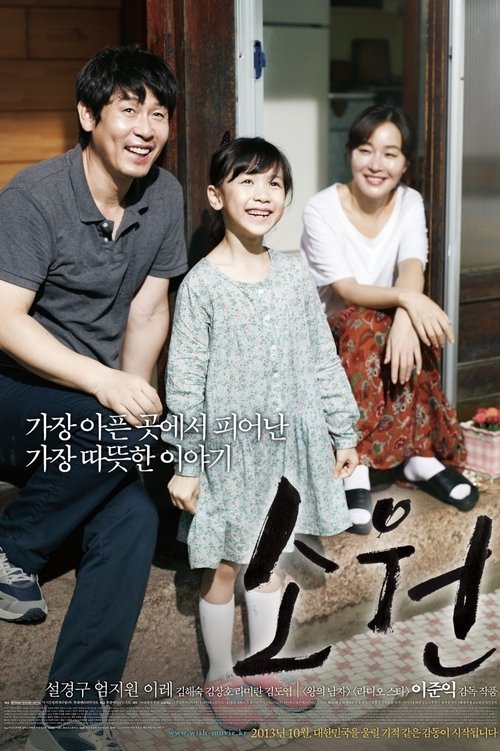
Hope is a work of high artistic and ethical value in that, despite taking a highly sensitive real-life incident — the Cho Doo-soon case — as its motif, it obtained the consent of the actual victim's family and underwent ethical monitoring by psychological experts during filming. Going beyond simply depicting the crime, it has presented a high ethical standard in Korean cinema for handling sensitive subject matter by delicately capturing the healing process of those who have experienced trauma.
Ethical Responsibility: The Production Principles of a Work Based on True Events
As Hope deals with the highly sensitive and shocking subject of child sexual violence, it demanded high ethical standards from the production stage. Going beyond merely reproducing the incident, in order to focus on the recovery of the victim and her family, the following special procedures were followed.
- Consent of the victim's family: The most important background that elevates the work's authenticity is that the film was produced with the consent of the actual victim's family after being inspired by the Cho Doo-soon case. This is a case showing that artistic freedom of expression and the protection of victims' human rights must coexist.
- Psychological safeguards: In order to prevent psychological after-effects for the child actor playing the victim, a psychology Ph.D. accompanied the shoot, and Lee Re's biological mother was present at the filming location — maintaining the highest ethical standards for the psychological stability of the child actor. This left an important precedent for the production of all films involving children dealing with shocking scenes.
Artistic Reproduction and Variations on Space
Hope's setting was the city of Changwon in South Gyeongsang Province, but the actual filming took place across several regions including Masan, Jinhae, and Busan, giving spatial variation. This setting contributed to heightening the work's sense of reality while also helping convey a universal healing message not confined to a particular region.
- The crossing of imagined space and reality: The 'So-won Stationery' in the film was inspired by an actual location but underwent the setting of an imagined space with the signboard changed for filming. This is an example of the direction that subtly handles the boundary between cinematic license and the recording of reality.
- Adaptation from the source material: In the original novel, Doraemon was used as the important mediating object in the interaction between So-won's father and So-won, but in the film that role was taken by the Cocomong mascot. This is interpreted as a deliberate adaptation taking into account the medium-specific characteristics (film) and the emotional resonance of child audiences. Cocomong functioned as a safe, warm medium through which So-won could approach her father without fear.
The Work's Message: Healing Beyond Anger
Hope, even while dealing with the subject of child sexual violence, does not descend into the typical revenge drama or an explosion of rage. Instead, the greatest artistic intention of this film is its focus on how the victim and her family find the 'hope' called ordinary life again through the support of those around them, psychological counseling, and time. This paradoxically shows the audience how important a supportive relationship and the healing process are, more than anger and the desire for revenge.
Why It Matters
Hope is a work that poses the ethical question of 'how should we handle this' rather than being simply a thriller dealing with an incident. The very production process — treating the consent of the victim's family and psychological safeguards as the highest priority while handling real-life subject matter — defines the work's identity. This has presented a high ethical standard that must be observed when dealing with sensitive subject matter in Korean cinema, and has succeeded in conveying to audiences the message of 'care' and 'responsibility' beyond emotional immersion. It is this production background and ethical attitude that is the core element elevating Hope from a mere crime film to a record of healing.
Other 기타 dives3
- arrow_outward
The Healing Process and Support System
The healing process in the film Hope is not merely a matter of time passing or emotions exploding, but is a psychological rebuilding process that takes place gradually through a surrounding support system. This essay deeply analyzes how So-won's overcoming of her trauma — through the systematic help of counselor Jung-sook and the continuous support of family and friends — recovers toward the everyday life called 'hope.'
- arrow_outward
Courtroom Testimony and Social Message
The courtroom testimony scene in the film Hope is the most symbolic and emotionally explosive moment running through the entire film. This scene gives enormous courage and meaning to the act of 'testimony' itself — a victim speaking aloud her most painful experience in the public domain — going far beyond the performance of legal procedure. It warmly and sensitively conveys the film's core message that it is more important how the victim and her family heal and recover toward everyday life, rather than anger or desire for revenge.
- arrow_outward
The Incident and Its Trauma
The core theme of the film Hope, 'the incident and its trauma,' goes beyond the simple crime thriller to delicately handle the complex psychological pain experienced by the victim and the healing process. The child sexual assault So-won experienced left indelible wounds on her body and mind, and this trauma even causes her to refuse her father's touch. The film focuses on how hope, called everyday life, is found again through the support of those around her and psychological therapy rather than anger or revenge.
Back to the title
Hope
14 deep dives in total