Reinterpreting the Western Through Historical Context
The Good, the Bad and the Ugly uses the monumental historical backdrop of the American Civil War not as a simple stage but as a 'fateful arena' that legitimizes the outlaws' survival and greed. The film deconstructs the traditional western myth of 'frontier spirit' and is elevated to an epic exploring the primal survival struggle and moral gray zone amid war's absurdity and ruins.
The Historical Backdrop: The Stage That Deconstructs the Western Myth
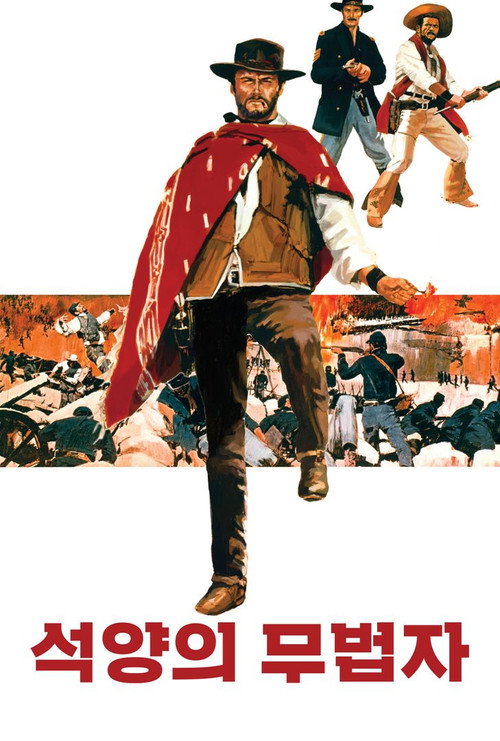
What most distinguishes The Good, the Bad and the Ugly from earlier westerns is its introduction of the concrete and monumental historical backdrop of the American Civil War. This war does not merely supply a temporal setting — it provides the outlaws with a 'legitimate chaos' within which they can justify their criminal acts. The outlaws are no longer simple thieves; they become 'survivors' struggling to endure the sweeping tide of history. This successfully replaces the western's long-standing mythic 'frontier spirit' with the weightier, more realistic theme of 'survival amid historical catastrophe.' (F1, F7)
1. The Absurdity of War and the Moral Gray Zone
The film constantly reveals the meaninglessness and absurdity of war through its Civil War setting. War is wrapped in cause and justification, yet its result is ruined towns and cemeteries. (F14, F15)
- Meaningless conflict: The image of a bridge that perpetually serves as a battleground symbolically captures how purposeless fighting and endless conflict dominate human lives and history. (F15)
- The priority of survival: Amid this chaos, characters are driven by the most primal desires of survival and money. In this process the boundaries of good and evil blur, and characters display moral ambiguity rooted in self-interest and desire. (F7)
- The weight of war: The film is set as the Civil War draws to a close; three outlaws targeting $200,000 in missing military funds pass through betrayal, alliance, and coercion on their way toward a legendary three-way duel. (F9) The gold was purchased with countless soldiers' lives, connecting the western backdrop to the tragic reality of modern warfare. (F18)
2. Ruins and Cemetery: The Physical Evidence of Greed
The ruins and cemeteries are not mere settings but tragic products of human greed. (F14)
- The cemetery: Sad Hill cemetery — the film's physical objective — is simultaneously the resting place of the war's victims. It starkly shows how greed for survival and money takes on the shape of violent western conflict. (F14)
- The exchange of information: Blondie and Tuco must combine their respective knowledge to reach the gold. This demonstrates that intellectual cooperation beyond simple gunfighting is required, underscoring the essentially human act of sharing information to survive. (F13, F16)
3. Conclusion: The Grant of Epic Gravity
Ultimately, the Civil War backdrop elevates The Good, the Bad and the Ugly from a simple frontier western into a grand epic speaking to human desire, survival, and the aesthetics of violence. (F7) The outlaws attempt to exploit the chaos of war — yet their end is the catastrophic ruin brought about by money and desire. By supplying this historical context, the film poses a profound question about the most primal human greed and the weight of survival lurking behind the spectacle of the gunfight.
Why It Matters
This theme is the central driving force behind the artistic achievement that elevates The Good, the Bad and the Ugly above mere genre filmmaking. Without this backdrop, the struggle of Blondie, Tuco, and Angel Eyes would have remained 'a fight between money-chasing outlaws.' But by invoking the grand historical tragedy of the Civil War, their greed acquires the weight of an era's sin that transcends individual crime. This imbues the characters' actions with moral gravity and makes it difficult for the audience to dismiss their deeds as simple wrongdoing. It is ultimately this historical context that allows the film to elevate 'an outlaw story' into 'an exploration of human nature set against an era's tragedy.'
Other Reading dives1
Back to the title
The Good, the Bad and the Ugly
13 deep dives in total