The $200,000 Gold Cache and the Division of Information
The premise that information about the location of $200,000 in gold exists as two separate pieces — the name of the cemetery and the name of the grave — is the most central plot device of this film. This division of information is the narrative engine showing how human greed and survival instinct destroy relationships and ultimately drive the most desperate cooperation.
The Division of Information: Two Truths About the Gold
The film's core conflict lies not in the gold itself but in the ownership of 'information' about where that gold is buried. This information exists like two pieces of a broken puzzle, and the division of information is the decisive catalyst that binds Blondie and Tuco together once more.
To precisely locate the gold, at least two pieces of crucial information are needed:
- The name of the cemetery: The broad categorical location of where the gold is buried.
- The name of the grave: The name of the specific grave within that cemetery where the gold lies.
The setup of these two pieces of information each being held by a different individual shows the meticulous design behind a film that does not merely rely on the spectacle of gunfights but has carefully engineered how an intangible resource — 'information' — can dictate human fate.
Jackson (Bill Carson)'s Final Legacy
The division of information is directly connected to the death of Bill Carson. At the threshold of death, Carson divides these two crucial pieces of information between two key figures. This scene serves as the detonator that explodes all of the film's conflicts.
- Information given to Tuco: The name of the cemetery — 'Sad Hill.' (Tells him the scope of the location)
- Information given to Blondie: The exact name of the grave. (Tells him the final target)
Tuco thus knows 'where' the gold is buried but not 'which' grave; Blondie knows 'which' grave but not 'where' it is buried.
The Forced Cooperation of Bitter Enemies
This asymmetry of information pushes the relationship of Blondie and Tuco to extremes. They are bitter enemies who have betrayed and driven each other to near death. And yet, to obtain the gold, each man's information is absolutely indispensable to the other. This situation forces on the two men the most dangerous and yet unavoidable choice: 'cooperation.'
- Information as a weapon: Neither man will hand over what he knows to the other. Information itself has become the weapon that determines survival and wealth.
- Maximization of tension: As a result, the two men's alliance is placed on a precarious tightrope that can break at any moment, serving as the core device that maintains the film's tension at its peak.
The Sharing of Information and the Recovery of Trust
Before the common goal of the gold, the two men forge a temporary alliance — but in this process they share each other's pasts and weaknesses, gradually recovering trust. Tuco opens up about his family history and past hardships, and Blondie in turn comes to recognize Tuco's survival instinct and cunning. Thus the sharing of information expands beyond knowledge of a geographical location into a process of sharing human vulnerabilities and truths.
In the end, this film paradoxically explores the value of the most fundamental of human resources: 'information' and 'trust.'
Why It Matters
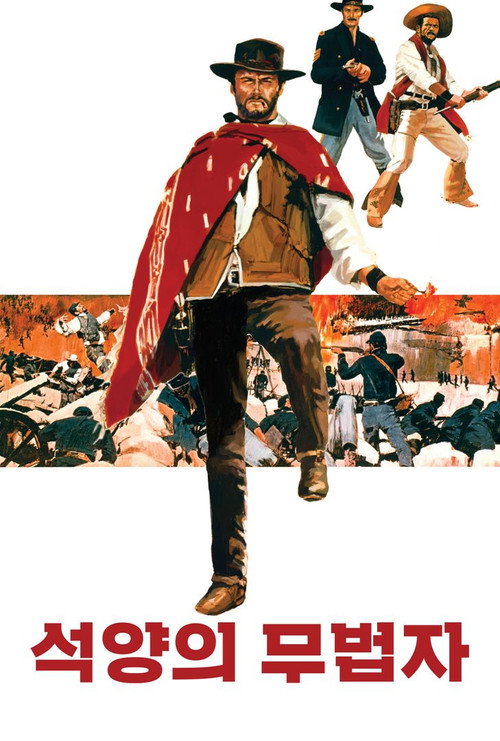
This division of information is the decisive reason The Good, the Bad and the Ugly is celebrated as an 'epic' beyond the western. Had both protagonists known all the information from the start, the film would have ended in a simple duel. But with the information divided, they become entangled in a complex psychological game of suspicion, deception, and cooperation. This prompts the audience to ask the ethical question 'who truly deserves this gold?' and is the key device completing the film's theme of 'deconstructing the outlaw myth.' The asymmetry of information is the asymmetry of human relationships — and this forms the deepest philosophical weight at the heart of the film.
Other 떡밥 dives4
- arrow_outward
Reinterpreting the Western Through the Backdrop of the Civil War
The Good, the Bad and the Ugly goes beyond borrowing the western backdrop to deconstruct the western myth itself — using the Civil War as its stage. Through the tragic premise that the cost of human lives in wartime is on par with gold, it shows that the outlaws' actions are not simple crimes but part of a vast historical tragedy, and is an epic exploring humanity's primal greed and the weight of survival.
- arrow_outward
The Bathhouse Ambush and Tuco's Survival Instinct
The bathhouse ambush scene maximally illustrates that Tuco is not a simple criminal but a man of primal, wild survival instinct who thrives in extreme situations. The scene proves his survival instinct and outstanding firearms skill, and is the pivotal moment showing how he redefines the western myth's archetype of the 'outlaw.'
- arrow_outward
Angel Eyes' Perfect Plan and Pursuit
Angel Eyes is not a simple outlaw but the apex predator of a thoroughly calculated criminal system. He focuses solely on gold without emotional disturbance, using informant interrogation, hostage coercion, and the structural environment of a prison camp to achieve his goals. His meticulous planning and pursuit prove that this film is an epic addressing the logic of organized crime.
Back to the title
The Good, the Bad and the Ugly
13 deep dives in total