Guido Orefice
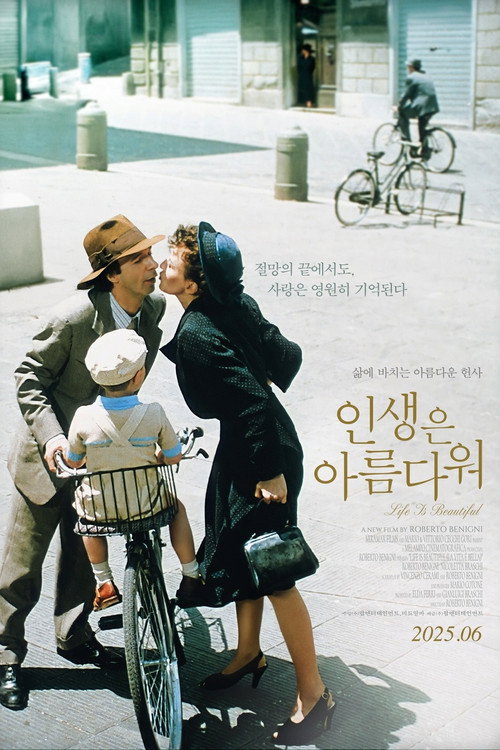
Guido Orefice is the symbol of an optimistic father who, against the backdrop of the extreme tragedy of the Holocaust, disguises everything as a 'game' to protect his son's childlike innocence. His character arc transforms from an ordinary Italian waiter into the director of the most brilliant performance in the darkest concentration camp in human history.
The Father's Performance, Armed with Optimism
Guido Orefice is not simply a man with a great sense of humor. He is a kind of 'spiritual survivor' — someone who endures the weight of tragic history with the most human of weapons: humor and optimism. His character arc transforms from an ordinary Italian waiter into the director of the darkest concentration camp in history.
1. A Life That Began with Wit and Love
Guido lived with discrimination from the late 1930s, as anti-Jewish policies were enforced in Italy. He blossomed as a hotel waiter with his innate gift for words and wit, falling into a fateful love with the local schoolteacher Dora. At this early stage, Guido builds his life through the brightest, most ordinary values of 'talent' and 'love.' His humor was both a defense mechanism for survival and the most powerful weapon for winning love.
2. Disguising Despair as a 'Game'
When war breaks out and the family is taken to the concentration camp, Guido's role changes dramatically. Faced with the most terrible reality imaginable, to protect his son Giosué's innocence, he describes the entire life of the camp as 'a game where you win a tank if you score 1,000 points.' This grand lie was not merely comfort — it was a survival strategy that gave his son a concrete goal called 'hope.'
This disguise is a continuation of his early attempts to turn even the act of being taken away into a 'secret trip' (F2). Reconstructing reality to his son's level of understanding was, for Guido, survival itself.
3. Small Threads of Hope Within the Camp
Camp life was a continuous stream of despair, but Guido never let go of the human connections within it.
- The Meeting with Dr. Lessing: Guido meets Dr. Lessing (F5) to exchange riddles, finding intellectual play and small threads of hope in the dark camp life. This encounter proves he has not yet lost his 'wit.'
- Delivering Love Through Music: Even in the desperate situation of not being able to find his wife (F4), Guido risks danger to secretly play her favorite music in the camp (F6). This act shows his desperate effort to maintain the emotional bond of 'love,' transcending physical distance and desperate circumstances.
4. The Final Performance: Choosing Laughter in the Face of Death
The most dramatic moment comes when Guido is confronted by the threat of death. Cornered at gunpoint by a guard, Guido — instead of being seized with terror — deliberately marches forward with jolly playfulness and a comic gait. This ludicrous performance continues until the moment he disappears from his son Giosué's line of sight, conveying the message: 'There is no need to be afraid.' This final laughter was the greatest gift he left his son — 'the beauty of life' itself.
Why It Matters
Guido Orefice is the film's thematic consciousness itself. He sublimates the historical tragedy of the Holocaust through the genre devices of comedy and optimism, offering audiences the complex emotional experience of laughter and tears. His humor is not mere escapism, but the most powerful and sublime survival tool for delivering the message to his son that 'life is beautiful.' Thanks to Guido's existence, the film transcends a simple tragic record and establishes itself as a work of art exploring the resilience of the human spirit and the value of hope.
Other Character dives4
- arrow_outward
Lessing
Lessing is a German doctor-turned-officer who provided Guido with intellectual intimacy — a complex figure that goes beyond a simple villain. He possesses the tools of knowledge and civilization but proves powerless before the most primal moral choices, symbolizing the 'moral paralysis' experienced by the intellectual class when witnessing extreme tragedy.
- arrow_outward
Dora Orefice
Dora Orefice is a woman who makes the most difficult of choices between survival and love, transcending the simple role of wife. She rejects a fiancé symbolizing wealth and honor to choose Guido instead — then, when her husband and son are taken to the concentration camp, voluntarily boards the same train, proving that 'being together' is the most important value in her life.
- arrow_outward
Eliseo Orefice
Eliseo Orefice is Guido's uncle and an important figure who helps Guido adjust to city life in the early part of the film. He accompanies the Guido family on their tragic journey to the concentration camp, functioning as a witness to the family's history — a presence that goes beyond a simple supporting role.
Back to the title
Life Is Beautiful
12 deep dives in total