Dora Orefice
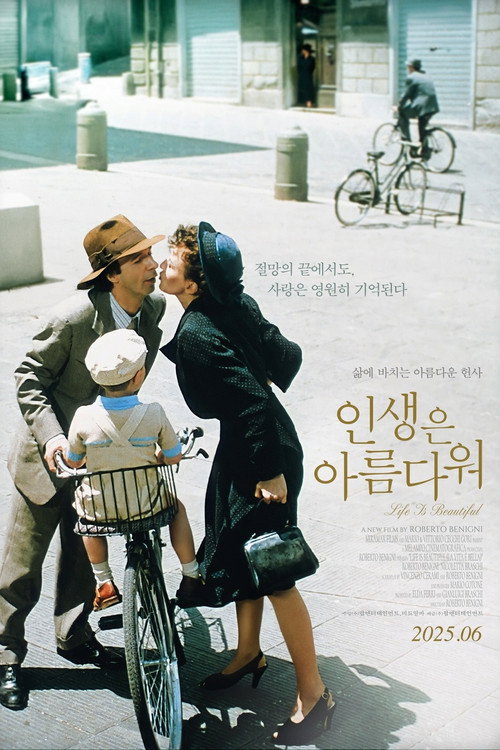
Dora Orefice is a woman who makes the most difficult of choices between survival and love, transcending the simple role of wife. She rejects a fiancé symbolizing wealth and honor to choose Guido instead — then, when her husband and son are taken to the concentration camp, voluntarily boards the same train, proving that 'being together' is the most important value in her life.
The Woman Who Chose Love: Dora Orefice's Character Arc
Dora Orefice is a character whose strong agency is evident from the film's early scenes. She does not remain confined to the role of a merely attractive schoolteacher. Her life is defined by a series of 'choices.' Early on, she has a wealthy, prestigious fiancé named Rodolfo, but Dora refuses that relationship. This means she was drawn not to outward conditions or social status, but to Guido — a man possessing genuine emotion and a witty soul. Her choice, beyond a simple love story, was a symbolic act showing that personal values take priority over social expectations or economic benefit.
A Fateful Choice: Voluntarily Entering the Camp
The most dramatic and important turning point occurs when the family is taken to the concentration camp. Although Dora is not Jewish, she does not turn away from the tragic fate of her imprisoned husband and son. She voluntarily boards the train to the camp, sharing her family's destiny. This act goes beyond simple family love — it proves that the experience of 'being together' itself was the most important value to her. Her voluntary accompaniment poses a deep question to the audience: What is the most rational choice for survival, and where is the boundary of risk one can accept to protect a loved one?
Solidarity for the Family's Survival
In the extreme environment of the concentration camp, Dora's presence contributes to maintaining the family's cohesion. As Guido disguises camp life as a 'game' to give his son Giosué hope, Dora becomes one of the key figures who joins in that theatrical lie. By participating in this grand performance, she helps protect the pure innocence of her son. This shows that survival is not simply a physical act — it is a process of building a system of spiritual support.
Dora's Meaning: The Continuity of Love
Dora's character embodies the film's central message — the optimism that 'life is beautiful' — in the most human way possible. Even in desperate circumstances, she does not let go of hope, accepting everything to protect the most private domain of the family. Her presence causes the audience to realize that, no matter how great the tragedy or violence of history, human love and bonds are the most powerful and sublime weapons for survival.
Why It Matters
Dora Orefice is a core pillar that supports the narrative weight of this film. Her character maximizes the work's themes through the act of 'choosing.' Her act of voluntarily entering the concentration camp despite not being Jewish draws the scale of this film's tragedy down to the personal, emotional dimension. This goes beyond simply creating a romantic ending — it proves that the essence of survival lies in 'individual will' and 'connection with those one loves.' Her dedicated figure presents the audience with the brightest and most sublime form of light the human spirit can emit, even in the darkest of moments.
Other Character dives4
- arrow_outward
Lessing
Lessing is a German doctor-turned-officer who provided Guido with intellectual intimacy — a complex figure that goes beyond a simple villain. He possesses the tools of knowledge and civilization but proves powerless before the most primal moral choices, symbolizing the 'moral paralysis' experienced by the intellectual class when witnessing extreme tragedy.
- arrow_outward
Eliseo Orefice
Eliseo Orefice is Guido's uncle and an important figure who helps Guido adjust to city life in the early part of the film. He accompanies the Guido family on their tragic journey to the concentration camp, functioning as a witness to the family's history — a presence that goes beyond a simple supporting role.
- arrow_outward
Giosué Orefice
Giosué Orefice represents the perspective of a pure child who survives the extreme tragedy of the Holocaust by believing his father Guido's 'game' lie. He is the most important medium through which the film's theme — that life is beautiful — is delivered to the audience, completing the story's circle through the adult narrator's recollection.
Back to the title
Life Is Beautiful
12 deep dives in total