The Father's Lie and the Value of Childlike Innocence
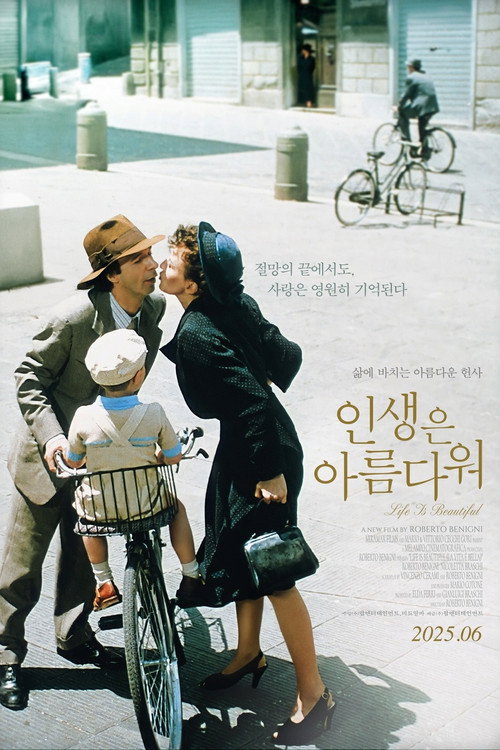
The core theme of Life Is Beautiful lies in the 'game' — the grand lie a father invented to protect his son's innocence against extreme tragedy. This 'game' goes beyond simple deception to become an active psychological defense mechanism: a noble act to preserve childlike purity, using the most human of weapons — humor and optimism.
The Father's Performance: Transforming Hell into a Playground
The concentration camp is an environment where human dignity is completely stripped away — the most violent and inhumane of places. Against this desperate backdrop, Guido's act of telling his son Giosué that all of it is a 'game' goes beyond simple deception or comfort. It is the most desperate psychological defense mechanism to preserve the most precious value Guido wished to pass on: the child's innocence itself.
1. The Rules of the 'Game': Substituting Terror
The reality of the camp is defined solely by survival and fear. The daily food ration, the guards' surveillance, the ever-present threat of violence — these are too heavy and overwhelming for a child. Guido substitutes all this terror with the rules of a game scaled to his son's understanding.
- Purpose in Reality: To survive (Survival)
- Purpose in the Game: To collect 1,000 points and get a tank (Completion)
This substitution causes Giosué to redefine his purpose — from the vague, enormous goal of 'escape from terror' to the specific, achievable goal of 'completing the game.' Within the rules his father has created, the child finds order, and within that order, gains temporary relief.
2. The Community That Joins the Lie
The most astonishing aspect of this lie is that the performance is not limited to Guido and Giosué alone. The people of the camp voluntarily join in the father's 'game.' This shows how powerfully humans can form collective psychological bonds in the face of the shared goal of survival. In the midst of despair, the act of everyone laughing together and counting points sublimates the tragedy into a 'shared amusement.'
3. The Completion of the Lie: The Arrival of the Real Tank
The film's climax is the moment this lie is perfectly reclaimed. Giosué watches as — just as his father promised — a tank led by American soldiers enters the camp courtyard. To the child, this is not a 'real' tank but the 'reward of the game.'
This moment completes the ultimate message the father's lie intended to convey. Though the backdrop was a terrible concentration camp, the child realizes he never lost the values of 'hope' and 'joy' within it. The father did not merely teach his son how to survive — he taught him how to never give up the bonds of the human spirit and optimism, no matter the circumstances.
4. Establishing the Theme Through Retrospection
The adult Giosué's narration at the film's end is the most important device for conveying all of this to the audience. The sentence — "This is my story. The story of my father's sacrifice. That day, my father gave me the greatest gift" — declares that the father's lie was not a simple survival strategy, but 'the greatest gift' carved into the son's soul. This dramatically proves how powerful a defense mechanism the bonds of the human spirit can be — stronger than physical violence.
Why It Matters
The reason the film's theme centers on 'the father's lie' is that it poses the most uncomfortable yet most beautiful question to the audience: 'In the most desperate situation, how can humans create hope?' Guido's lie crosses moral boundaries, but is sublimated to a noble dimension because its purpose is to protect his son's innocence. This interpretation elevates the film from a simple black comedy to a philosophical masterpiece about the resilience of the human spirit. What the father left his son was not a material object, but 'a way of seeing life' itself.
Other Reading dives2
- arrow_outward
The Weight of Time and Memory
Life Is Beautiful interprets time and memory not as a simple linear flow, but as an active process of reconstruction in the service of survival. The father's act of wrapping the camp's tragedy in a 'game' for his son demonstrates the most sublime mode of human survival — the mind's determined search for hope and meaning even amid extreme suffering — and argues that memory itself is the most powerful force sustaining life.
- arrow_outward
The Aesthetics of Tragedy Transcended Through Laughter
The 'aesthetics of tragedy transcended through laughter' that Life Is Beautiful presents is its most original and contested achievement: using the framework of black comedy to reinterpret the extreme tragedy of the Holocaust. Father Guido's laughter is the most powerful resistance of the human spirit against hopeless reality — the embodiment of an optimistic philosophy that insists: life is beautiful.
Back to the title
Life Is Beautiful
12 deep dives in total