Giosué Orefice
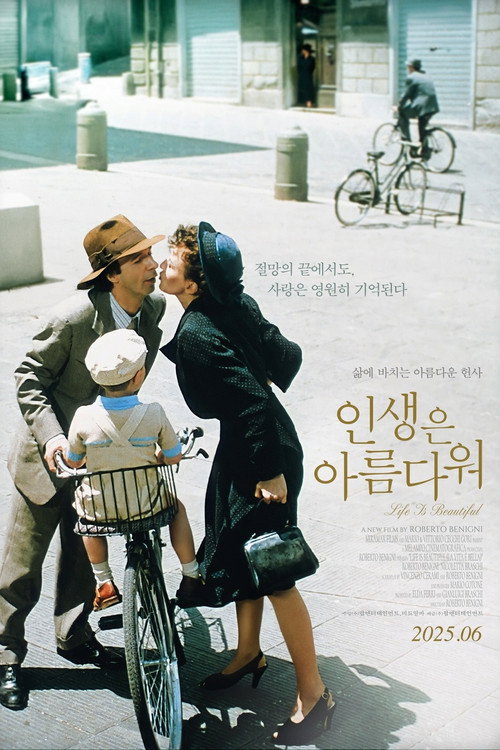
Giosué Orefice represents the perspective of a pure child who survives the extreme tragedy of the Holocaust by believing his father Guido's 'game' lie. He is the most important medium through which the film's theme — that life is beautiful — is delivered to the audience, completing the story's circle through the adult narrator's recollection.
The Shield of Innocence: Giosué Orefice's Role
Giosué Orefice is not a mere observer — he is the most important medium for conveying the film's thematic consciousness to the audience. He stands at the center of a family experiencing Jewish discrimination in late-1930s Italy. His innocence causes all the tragedy his parents experience to be interpreted through the filter called 'the game.'
1. Character Arc: Maintaining Belief
Giosué's arc is a precarious tightrope walk between 'perceiving reality' and 'father's lie.' The concentration camp is in itself a space of terror and death, but for Giosué, there exists the '1,000-point tank game' his father invented. This belief becomes a psychological shield that allows him to survive. The father's struggle to maintain this lie symbolizes the value of 'the beauty of life' he refuses to let go.
2. Key Scene Groupings: The Unfolding of the Game
The moments where Giosué's perspective operates most dramatically:
- The Start of the Game (F2): After arriving at the camp, the father disguises the terrible reality as a 'game' for his son. In this moment, Giosué receives the motivation to endure camp life by believing his father's words. This lie goes beyond simple reassurance — it becomes a kind of 'spiritual contract' for survival.
- The Father's Sacrifice and Truth (F7): The scene where the father risks danger attempting escape to protect his son, ultimately meeting his death, brings the greatest crack in Giosué's belief. But Giosué reinterprets this tragedy as a victory through the memory of 'the greatest gift' his father left. The father's fulfillment of his promise even in death is completed by the illusion of victory in the 'game.'
- Final Victory (F7): In the morning, as Giosué steps out into the camp courtyard, he witnesses the ground shaking as an American tank enters. He accepts this as the 'real tank' his father promised, reacting with childlike wonder. In this moment, the audience finally realizes that the 'hope' the father was trying to preserve has aligned with the salvation of reality.
3. Interpretation: The Greatest Gift
The film's final narration is delivered in the voice of the adult Giosué: "This is my story. The story of my father's sacrifice. That day, my father gave me the greatest gift." This sentence is the central theme running through the entire film. Here, the 'greatest gift' is not a material tank, but the 'father's love' and the 'optimism of the human spirit' that refused to give up even in desperate circumstances. Through the lie his father gave him, Giosué learns the greatest truth — that even in the most wretched reality, life can be beautiful.
Why It Matters
Giosué Orefice is the core axis that makes this film function not as a simple tragedy but as a black comedy and survival drama. His innocence causes the audience to experience the horrors of the Holocaust indirectly through the safe distance of the 'game,' rather than confronting them head-on. This delivers a complex emotional experience of laughter and tears, and is the most effective device for conveying the film's message — the sublime optimism that 'life is beautiful.' Thanks to Giosué's perspective, the human will to find light even in the darkest places is sublimated into art.
Other Character dives4
- arrow_outward
Lessing
Lessing is a German doctor-turned-officer who provided Guido with intellectual intimacy — a complex figure that goes beyond a simple villain. He possesses the tools of knowledge and civilization but proves powerless before the most primal moral choices, symbolizing the 'moral paralysis' experienced by the intellectual class when witnessing extreme tragedy.
- arrow_outward
Dora Orefice
Dora Orefice is a woman who makes the most difficult of choices between survival and love, transcending the simple role of wife. She rejects a fiancé symbolizing wealth and honor to choose Guido instead — then, when her husband and son are taken to the concentration camp, voluntarily boards the same train, proving that 'being together' is the most important value in her life.
- arrow_outward
Eliseo Orefice
Eliseo Orefice is Guido's uncle and an important figure who helps Guido adjust to city life in the early part of the film. He accompanies the Guido family on their tragic journey to the concentration camp, functioning as a witness to the family's history — a presence that goes beyond a simple supporting role.
Back to the title
Life Is Beautiful
12 deep dives in total