Cardarrow_outward
Non-Linear Time Structure and Editing
The non-linear time structure that is Memento's central device lets the audience experience the fragmentation of memory that protagonist Leonard Shelby undergoes. The dual timeline—color sequences in reverse, black-and-white sequences in forward order—gives viewers not merely the passive experience of following a story but the active intellectual puzzle of reassembling shards of time into a reconstructed truth. This is the film's greatest intellectual pleasure, and the device that poses fundamental questions about the reliability of memory.
Cardarrow_outward
The Truth About the Sammy Jankis Couple
The story of the Sammy Jankis couple is far more than an episode; it is the enormous fiction that protagonist Leonard Shelby constructs in order to rationalize his own guilt and trauma. The story is the most decisive evidence that Leonard is not 'remembering truth' but 'continuously reconstructing the story he wants to believe,' and the device that drives through the film's central theme of the 'reliability of memory.'
Cardarrow_outward
Teddy's Role and Motives
Teddy is not merely a helper to the protagonist Leonard Shelby; he is the supreme manipulator who exploits Leonard's hunger for revenge and his memory distortion. Using his authority as a police officer, he feeds Leonard fragments of 'truth' that appear real but exist only to allow Teddy to observe and exploit the very process of Leonard's search for truth—maximizing the film's central theme of the 'reliability of memory.'
Cardarrow_outward
Records Kept in Photographs and Tattoos
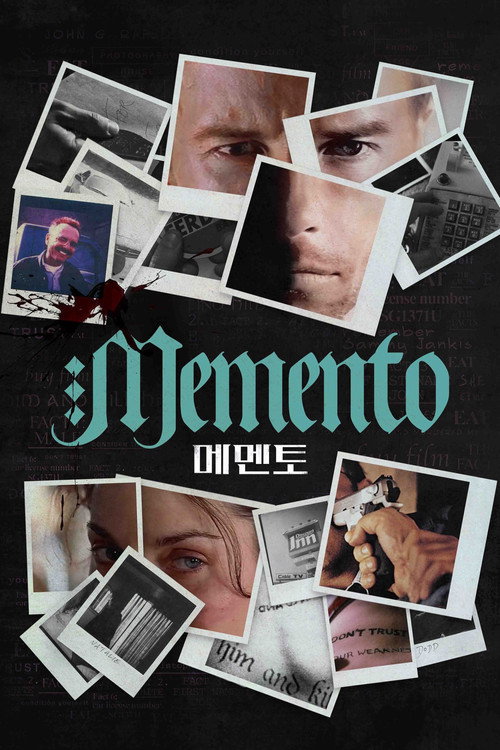
The photographs, notes, and tattoos that serve as Leonard Shelby's central tools in Memento are his only means of survival—the sole way to sustain himself without reliable memory. Although these physical records appear to be 'evidence of truth,' they are simultaneously 'substitutes for memory' that prop up Leonard's own distorted recollections. That contrast keeps the audience endlessly asking: what is truth, and what is fabricated memory?
Cardarrow_outward
The Truth of Leonard's Wife's Death
The wife's death that Leonard remembers is grounded in the dramatic trauma of rape and revenge, yet the real truth is a tragedy born from the entirely mundane and economic problem of a denied insurance claim and diabetes. This truth means that Leonard himself constructed the narrative 'John G did this' in order to flee his own guilt and evade reality—fundamentally undermining the film's central theme of the reliability of memory.
Characterarrow_outward
Leonard Shelby
Leonard Shelby is a character who lives under the extreme constraint of anterograde amnesia, reconstructing the trauma and hunger for revenge he carries with only fragmentary records to rely on. His journey in the film is far more than a thriller about chasing a killer; it is the central device for posing a philosophical question about how fragile and manipulable human memory itself is.
Characterarrow_outward
Natalie
Natalie is a key informant who supplies the amnesiac Leonard with vital information, yet her actions carry a complexity of purpose that goes beyond simple sympathy. She simultaneously imposes a temporary order on Leonard's life while casting a cold, calculating eye on him—deepening Memento's central theme that the boundary between 'truth' and 'help' is dangerously blurred.
Characterarrow_outward
Teddy
Teddy is the most cunning and corrupt figure in the film—on the surface an informant for Leonard, yet his actions are driven by a complex set of motives that go far beyond simple sympathy. He exploits the authority of the police to stoke Leonard's thirst for revenge while steering Leonard deeper into the labyrinth of truth, playing the role of master manipulator.
Quotearrow_outward
What you know is only the past version of yourself. Don't you think it's time to start investigating yourself?
The line Teddy delivers—'What you know is only the past version of yourself. Don't you think it's time to start investigating yourself?'—is more than a clue in a mystery plot. It is a philosophical declaration, aimed at both protagonist and audience, about the 'reliability of memory' that sits at the heart of the film. The line forces Leonard to break away from his pursuit of an external killer and instead excavate his own trauma and distorted memories as if they were a crime scene, playing a decisive role in elevating the film from a mere thriller to a psychological journey of self-inquiry.
Quotearrow_outward
I have to believe that the world still exists even when I close my eyes. Can I believe that? It must. It does.
'I have to believe that the world still exists even when I close my eyes. Can I believe that? It must exist. Yes, it does.' This is an ontological monologue delivered by protagonist Leonard Shelby at the moment when the most basic trust system of his memory collapses. The line is more than a psychological aside; it is a core device that amplifies the film's philosophical depth by posing fundamental questions about 'truth' and 'the grounds for existence' to the audience as well.
Readingarrow_outward
The Unreliability of Memory
Memento is a psychological thriller that critiques the human arrogance of treating memory as absolute truth. Protagonist Leonard Shelby relies on external evidence under the physical constraint of anterograde amnesia, yet the film shows that every clue he gathers can ultimately be distorted or fabricated by his own 'interpretation' and 'need.' The work proves that truth is not an objective arrangement of facts but a fluid concept endlessly reconstructed according to the psychological state of the one who receives it.
Readingarrow_outward
Guilt and Self-Justification
At the heart of Memento, guilt and self-justification govern every action of protagonist Leonard Shelby. Rather than facing the painful truth of his wife's death, he transfers responsibility to a powerful external figure (John G) and immerses himself in the role of 'the pursuer.' The film channels into the thriller genre the instinctive human mechanism of constructing the most dramatic, most comfortable 'story' rather than confronting painful truth.