Records Kept in Photographs and Tattoos
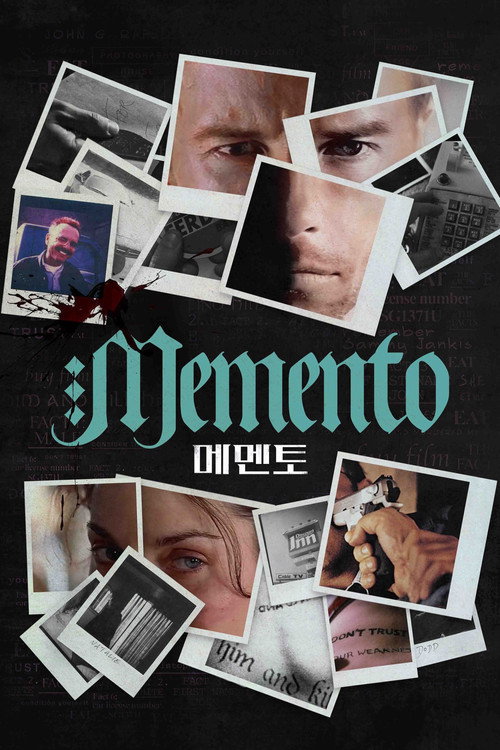
The photographs, notes, and tattoos that serve as Leonard Shelby's central tools in Memento are his only means of survival—the sole way to sustain himself without reliable memory. Although these physical records appear to be 'evidence of truth,' they are simultaneously 'substitutes for memory' that prop up Leonard's own distorted recollections. That contrast keeps the audience endlessly asking: what is truth, and what is fabricated memory?
External Storage for Memory: The Necessity of Records
The anterograde amnesia Leonard Shelby suffers makes him unable to trust the very passage of time. Losing memory every ten minutes is tantamount to losing himself, so external physical records are for Leonard not merely clues but essential 'external storage for memory'—necessary for survival.
He uses three methods to record information in response to this problem.
- Polaroid Photographs: He captures visual information—people, places, objects—in photographs and annotates them as evidence. This is his most common recording method.
- Notes and Written Memos: He organizes key facts (names, dates, outlines of events) in text to fill the gaps in his memory.
- Tattoos: The most permanent and hardest to erase method. The most important or suspicious information is etched directly onto his body. This symbolizes Leonard's obsession and compulsion.
The Duality of Records: Evidence or Substitute?
These physical records function as 'evidence of truth' inside the film, drawing the audience into deep engagement. But these records harbor a fatal duality.
1. Records as Substitutes for Memory:
Leonard temporarily maintains a sense of 'self' by recording what he cannot remember. The records give him psychological stability, but that is closely entangled with the process of his manipulating and correcting his own memory. Everything he records is grounded in 'the truth he wants to believe.'
2. The Possibility of Manipulation:
The most interesting point is that these records always carry the possibility of being manipulated. For example, all the 'truth' Leonard hears from Teddy is recorded—yet the very source of that truth passed through the mouth of an untrustworthy 'corrupt police officer.' Moreover, the story of the Sammy Jankis couple was nothing but a fiction Leonard tried to package as 'truth' to fill the gap in his memory. Records are a vessel for containing truth, but the vessel itself can be distorted.
Detail Analysis: Tattoos and Italic Text
The most layered details are found in the tattoos and photo annotations. Leonard tattoos his suspicions or adds specific phrases to photographs—sometimes in italics. These italics go beyond mere emphasis, functioning as a meta-level warning signal meaning 'unreliable' or 'suspicious information.' This is an act in which Leonard unconsciously sends himself the warning 'do not trust this information'—and it is simultaneously the device that makes the audience doubt the veracity of that information.
Why It Matters
Photographs and tattoos as records are at the philosophical core of Memento. This film is not simply a thriller about catching a criminal but an inquiry into the 'reliability of memory.' The very act of Leonard depending on physical records shows to an extreme degree how fragile and subjective human memory is. The audience, watching the Polaroid photographs Leonard has taken, asks 'could this be true?'—and that question expands into the fundamental question: 'Are all the memories and truths we believe actually objective?' These records are the driving force behind Leonard's revenge journey, and simultaneously the trap that pulls him deeper into the labyrinth.
Other 명장면 dives4
- arrow_outward
Non-Linear Time Structure and Editing
The non-linear time structure that is Memento's central device lets the audience experience the fragmentation of memory that protagonist Leonard Shelby undergoes. The dual timeline—color sequences in reverse, black-and-white sequences in forward order—gives viewers not merely the passive experience of following a story but the active intellectual puzzle of reassembling shards of time into a reconstructed truth. This is the film's greatest intellectual pleasure, and the device that poses fundamental questions about the reliability of memory.
- arrow_outward
The Truth About the Sammy Jankis Couple
The story of the Sammy Jankis couple is far more than an episode; it is the enormous fiction that protagonist Leonard Shelby constructs in order to rationalize his own guilt and trauma. The story is the most decisive evidence that Leonard is not 'remembering truth' but 'continuously reconstructing the story he wants to believe,' and the device that drives through the film's central theme of the 'reliability of memory.'
- arrow_outward
Teddy's Role and Motives
Teddy is not merely a helper to the protagonist Leonard Shelby; he is the supreme manipulator who exploits Leonard's hunger for revenge and his memory distortion. Using his authority as a police officer, he feeds Leonard fragments of 'truth' that appear real but exist only to allow Teddy to observe and exploit the very process of Leonard's search for truth—maximizing the film's central theme of the 'reliability of memory.'
Back to the title
Memento
12 deep dives in total