John Anderton
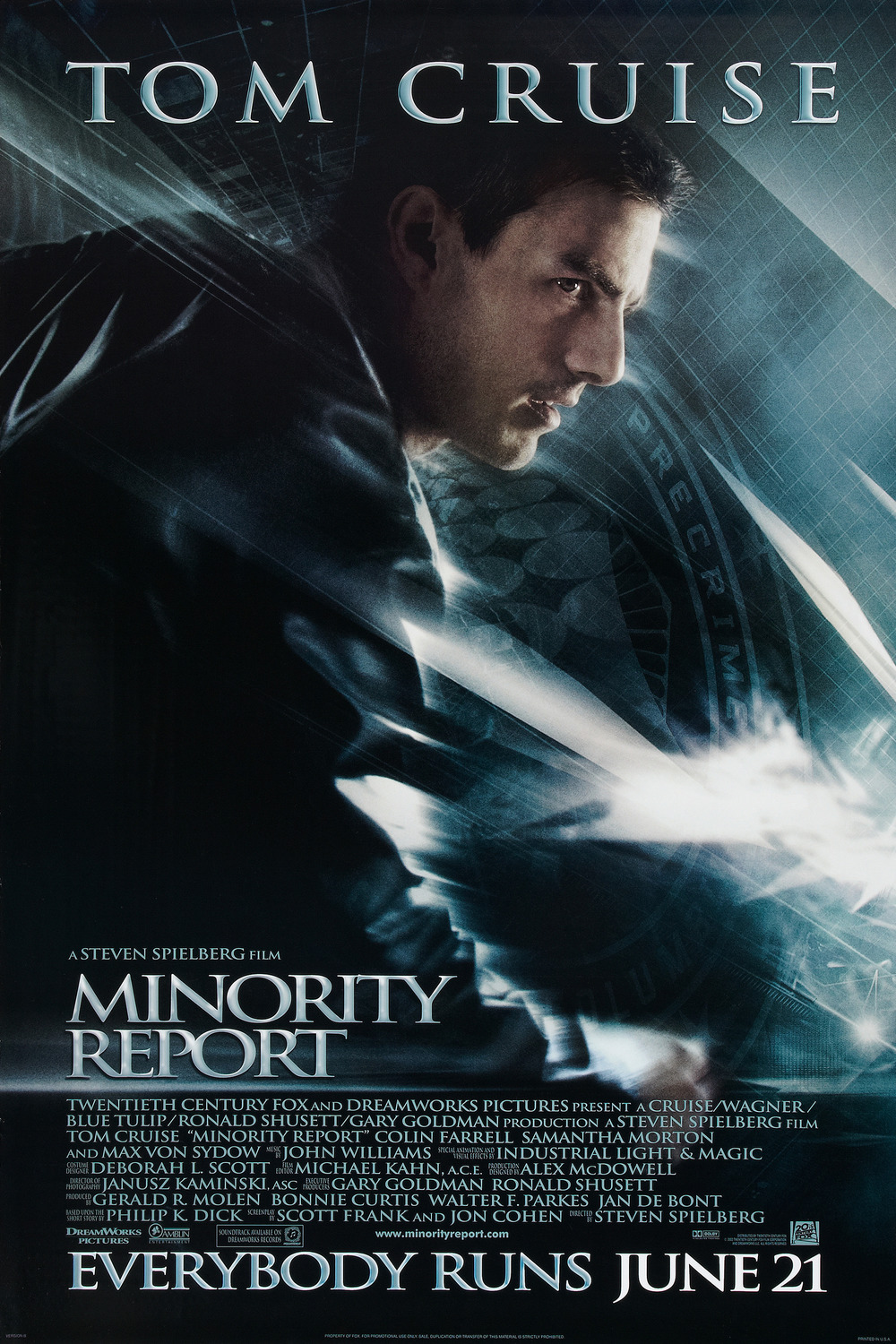
John Anderton was the central figure of the 'Pre-Crime' system — a man who believed it realized perfect law and order. But the personal trauma of his son's disappearance and his doubts about the system's fundamental flaws transform him from pursuer to fugitive. His journey poses the most powerful question about free will to the audience: is the future an already-fixed destiny, or a realm of choice that can be changed by human will?
John Anderton: The Crack in Perfect Order
John Anderton, as Chief of the Pre-Crime Division in the year 2054, symbolizes the system's perfection. He is at the heart of the 'Pre-Crime' system — predicting crimes before they happen and arresting perpetrators in advance. Yet his life begins under the weight of a personal trauma: his son's disappearance six years ago. This trauma becomes the most powerful motivator that drives him to question the system's perfection and dig for the truth.
1. John Anderton as Guardian of the System
At first, Anderton is a true believer in the system. He locates the reason for his devotion to Pre-Crime in a fierce sense of responsibility — an unwillingness to let anyone else suffer the pain he felt when he lost his son. He succeeds in stopping crimes guided by the precogs' reports, believing the system is the sturdy pillar supporting society.
Yet even within this perfect order, cracks appear. DOJ agent Danny Witwer points to the system's fundamental flaw — 'human imperfection' — and questions Anderton's faith. Anderton begins to suspect he has been ensnared in the system's trap, and this suspicion transforms him from pursuer to fugitive.
2. The Flight for Truth and the Transformation
To conceal his identity, Anderton undergoes illegal eye-replacement surgery. This process is more than a simple disguise — it is a physical and symbolic transformation that allows him to escape the system's surveillance net and be reborn as a being capable of 'choice.'
Together with precog Agatha Lively, he passes through crime scenes and begins to question the very operating principles of the system. Above all, he is stunned to learn from Dr. Iris Hineman that the origins of the Pre-Crime system lie in genetics research and drug addicts' children — and that the precogs' visions do not always converge.
The most decisive moment is learning of the existence of the 'Minority Report.' The fact that only the majority opinion is recognized by the system, while the minority opinion could cause the system's abolition — this discovery shatters the very concept of 'perfection' Anderton had believed in.
3. The Choice Called Free Will
Anderton engages in a desperate struggle to escape the precognition that marks him as a future killer. He is relentlessly pursued as he exploits the system's vulnerabilities and works to obtain Agatha's report.
Ultimately, Anderton realizes that everything he has experienced was part of a vast conspiracy. He uncovers the truth about Ann Lively's murder — that Agatha's mother was killed by the system — and Witwer discovers, by finding that 'the ripples created by river currents form different patterns,' that the system has a vulnerability.
In the end, Anderton is placed at a crossroads between the system's perfection and his own free will. He realizes his trauma over losing his son was exploited, rejects the system's logical conclusion (murder), and confronts the system head-on through 'choice.' His final action becomes not a proof of the system's perfection, but a proof of the chaos and imperfection created by human will.
Why It Matters
John Anderton's character arc transcends the typical crime thriller protagonist — it cuts through the philosophical themes of 'perfect order' and 'individual free will' in contemporary society. His personal trauma (his son's disappearance) becomes the emotional engine that drives him to question the system — a deeply human flaw audiences can identify with. His entire journey makes the audience ask: 'Is fate truly inescapable?' Anderton's story contains a warning that technological progress can suppress fundamental human freedom, completing the film's identity as its core axis.
Other Character dives5
- arrow_outward
Danny Witwer
Danny Witwer is the key intellectual who exposes the flaws of the perfect Pre-Crime system and the nature of human free will. From his vantage point as an outsider — a DOJ agent — he relentlessly probes the system's vulnerabilities, discovers minute errors in the 'afterimages' of precognized events, and ultimately exposes the vast conspiracy lurking behind the system. He symbolizes the philosophical fissure between scientific perfection and human imperfection in this film.
- arrow_outward
Dr. Iris Hineman
Dr. Iris Hineman is the creator of the Pre-Crime system — and a key ally who reveals to John Anderton the scientific foundation and hidden flaws of this seemingly perfect system. By explaining the precogs' origins in drug addiction, the reports' dual structure, and the process by which the Minority Report is suppressed, she deepens the film's central philosophical theme of free will vs. fatalistic determinism at a scientific level.
- arrow_outward
Leo Crow
Leo Crow is both the man Anderton is precognized to kill and a pivotal device in the film's climax that exposes a critical flaw in the system. He is not simply a criminal but a catalyst that fractures the belief in Pre-Crime's infallibility. His existence forces the audience to ask: is the future an already-fixed destiny, or a realm of choice that can be changed by an act of human will?
Back to the title
Minority Report
14 deep dives in total