If the rule you followed brought you to this, of what use was the rule?
Anton Chigurh's line to Carson Wells symbolizes the film's core philosophy: how powerless all human-made rules and order are before ultimate violence and chaos. More than mere mockery, it is a manifesto declaring the arrival of a 'ruleless age' in which modern civilization and law no longer function.
The Flaw in the Rules: Anton Chigurh's Philosophical Taunt
Anton Chigurh's line to Carson Wells — "If the rule you followed brought you to this, of what use was the rule?" — captures the film's most violent yet most philosophical moment. It is not merely a pre-killing threat but a fundamental negation of the very concept of 'order' and 'rules' that Wells represents.
1. Context: A Symbol of a Collapsing System
Carson Wells is a hired contractor employed by the Mexican cartel — a seasoned veteran with combat experience in Vietnam. He is a man who believes in his own survival methods and professional ethics, i.e., 'rules.' He tracks Llewelyn Moss, ascertains the location of the money bag, and believes he is within a domain he can control. His life is perfectly framed within 'rules.'
But Anton Chigurh ignores the boundaries of those rules. When Wells tries to offer the bag's location to defuse the situation, Anton invalidates all of his logic and rules. No matter how seasoned Wells is, no matter how much experience he has, none of it means anything before Anton's violence.
2. Narrative Placement: The Nullification of 'Rules'
Wells would have expected a rule-following resolution — securing the bag and completing the mission. But Anton does not touch the bag's final destination; he destroys only the very 'rule-governed way of life' that Wells pursues. To Anton, rules are nothing but weak constraints that human beings impose upon themselves. He follows neither the law nor the cartel's rules of engagement — only his own unpredictable violence.
3. Thematic Reach: The Violence and Disorder of an Age
Through this line, the audience is asked: can the laws, ethics, and social norms we take for granted truly be this powerless? This connects to Ed Tom Bell's powerlessness. Even as the representative of law and order, Bell is merely a helpless observer before Anton Chigurh. Ultimately, this film shows the eternal collision between those who try to uphold rules and those who destroy them — and leaves the tragic message that the outcome always ends in violence and disorder.
Why It Matters
This line is the film's narrative climax and the point that cuts through the work's philosophical core. Anton Chigurh is not simply a villain — he personifies the 'primal violence' that civilized society has suppressed. Wells exemplifies 'the professional who follows rules,' but Anton finds the flaw and eliminates him in the most contemptuous way possible. This line most vividly imprints on the audience how fragile the foundation of 'order' is, and what the essence of the disorder and violence that modern society faces truly is. This single sentence proves that the film is not merely a crime thriller but a critical essay on its age.
Other Quote dives1
Back to the title
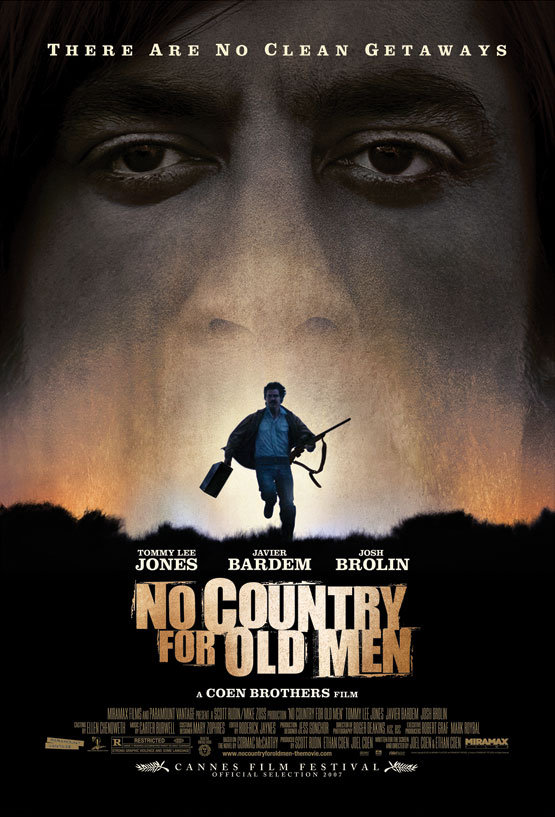
No Country for Old Men
16 deep dives in total