The Whereabouts of the $2 Million Bag
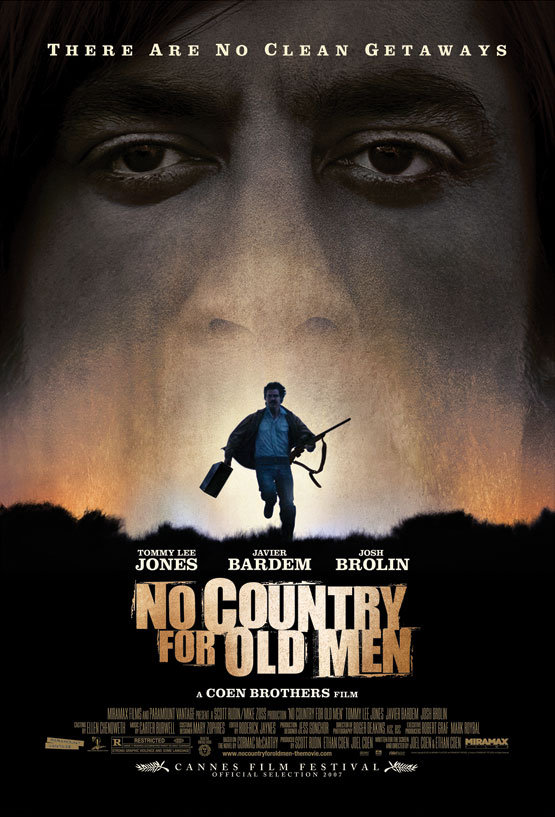
The $2 million money bag is the essential catalyst that triggers all the tragedy in No Country for Old Men. This bag is not simple cash but symbolizes 'excessive desire' itself — an abrupt intrusion into the dry order of the Texas desert. The moment Llewelyn Moss picks it up, he transforms from an ordinary hunter into a being placed at the center of great violence, and the bag's whereabouts expand into a question about the collapsing law and order of modern American society.
The $2 Million Money Bag: A Catalyst for Chaos
In No Country for Old Men, the bag containing $2 million is not a simple plot device. This bag symbolizes the very 'event' that shatters the 'dry peace' of the 1980 Texas desert backdrop. From the moment this bag is discovered by Moss, the film acquires the suspense of a chase and does not lose the meaning of its existence.
The Discovery of the Bag and Moss's Dangerous Intervention
Llewelyn Moss is hunting when he discovers the scene of a shootout. Multiple people are already dead at the scene. Moss at first has merely 'accidentally' discovered this enormous bag, but it becomes the decisive trigger making him a target of the cartel and the killer Anton Chigurh.
- Value beyond simple cash: Inside the bag, beyond the cash itself, a tracking device is hidden — meaning the bag's very contents act as a threat to Moss's survival. This implies that the bag holds evidence or secrets of a great crime.
- Moral dilemma: In the process of taking the bag, Moss finds himself in a situation he 'didn't want to be involved in.' This bag is the cause of his conflict between his original role as a hunter and the dangerous role of a witness to great crime.
The Mechanism of Violence Around the Bag: Pursuit and Threat
- The Mexican cartel: The bag's effective owners, the most direct threat pursuing Moss. They exercise organized violence and pursue him.
- Anton Chigurh: A being who perceives the bag's existence as a violation of 'rules.' To Chigurh, the bag is not a symbol of greed but evidence of arrogance — going against uncontrollable 'fate.' He is less interested in the bag's value and more intent on eliminating Moss's very 'act' of picking it up.
- Ed Tom Bell: The representative of law and order. Through this case, he is made to ask what 'justice in modern society' truly is.
The Disappearance of the Bag and the Symbolic Ending
The most important point is that the bag is never fully 'recovered' by anyone. Moss flees desperately to hide the bag, but ultimately meets a hollow end from the violence of the cartel and Chigurh. The bag disappears — buried in the desert sand, its fate unresolved.
- The aesthetics of the unresolved: The bag's whereabouts remaining shrouded in mystery means that this great violent event cannot reach any legal or moral conclusion.
- Moss's final rule: The reason Moss couldn't keep the bag shows that he was already a being broken by the system of great violence, beyond the 'material value' of the bag.
The Question the Bag Poses: The Collision of 'Rules' and 'Fate'
The bag poses the following questions to the audience: Does human greed always bring catastrophe? And no matter how solid law and order appear, how powerless are they before unpredictable 'fate'? The bag is the most perfectly mysterious device that prevents finding those answers.
Why It Matters
The bag is more than a simple plot device — it visualizes the film's core theme of 'the collapse of order.' The film does not define who is good and who is evil, insisting that only the cold mechanics of 'rules' and 'fate' exist. The bag is the trigger that sets those mechanics in motion. The act of picking it up symbolizes the most primordial and uncontrollable human force — 'desire' — and the shockwave of violence that arises as this desire collides with the strict order of the Texas desert is delivered to the audience in full. The mysterious disappearance of the bag completes the decisive device that achieves Cormac McCarthy's philosophical message: ultimately, in this world, there is no 'perfect escape route' or 'certain justice.'
Other 떡밥 dives4
- arrow_outward
The Source Novel and Production Secrets
No Country for Old Men is itself important as the Coen Brothers' first attempt to adapt a Cormac McCarthy novel. This piece examines the subtle differences between the source novel and the film, the actors' intense preparation process, and other production secrets — the depth of the adaptation. It shows a successful case of translating a literary text into the language of cinema.
- arrow_outward
Minimalism and the Use of Sound
The minimalism of No Country for Old Men goes beyond a mere style — it is a device that embodies the film's core theme of 'collapsed order' and 'the desolate spirit of the age.' The Coen Brothers restrain the use of music to an extreme, combining sound design with the sweeping Texas desert landscape to deliver suffocating dryness and overwhelming tension. This focuses attention not on violence itself but on the 'space' and 'silence' in which that violence occurs.
- arrow_outward
Anton Chigurh's Inhuman Code
Anton Chigurh's inhuman code goes beyond a mere pattern of violence — it is the philosophical question of 'fate' and 'rules' itself that this film poses. He is a psychopath who moves solely by the cold principle of what benefits himself, not by emotion or anger. His actions — coin flips, his extreme aversion to blood — ruthlessly prove that in a modern society where human will and moral judgment have been rendered powerless, only 'rules' are the sole order.
Back to the title
No Country for Old Men
16 deep dives in total