Alfredo
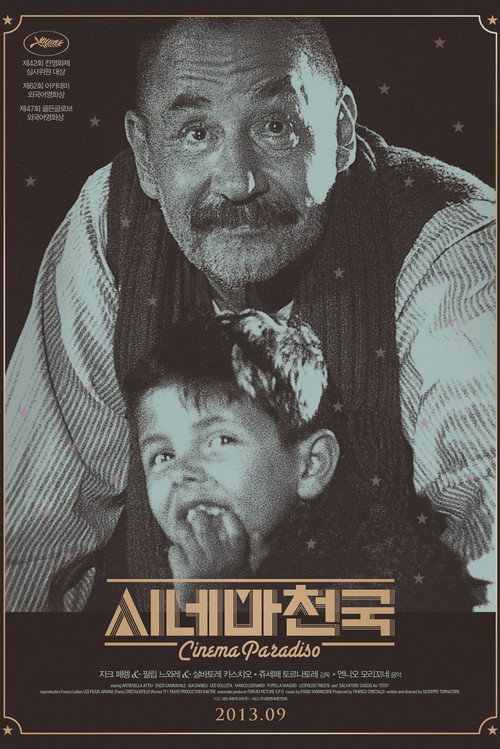
Alfredo transcends the role of a mere projectionist; he is the most important mentor who designs the arc of protagonist Totò's entire life. He accompanies Totò from the earliest stage of his passion — sometimes as a stern critic, sometimes as a warm teacher — and his presence is the backdrop of every stage of Totò's dreaming, stumbling, and maturing.
Alfredo: The Life Mentor Completed Through Cinema
Alfredo is the most important guide who designed the trajectory of Totò's life in Cinema Paradiso. He watches over Totò from the earliest moment the boy becomes entranced by film, functioning at times as a stern critic and at others as a warm teacher. His presence is the backdrop against which Totò dreams, fails, and at last matures.
1. The Early Phase: The Boundary Between Passion and Reality
When Totò is still a boy running wild over movies, Alfredo does not easily validate that passion. He describes life at the cinema as 'alone all the time, like a slave,' warning against blind obsession with art. In this early phase, Alfredo plays the role of 'reality-checker,' indirectly teaching Totò how grueling and unstable the life of an artist can be.
But this criticism soon transforms into positive guidance. His decision to begin teaching Totò projection means that Totò has moved beyond merely watching films to 'learning a craft' and 'acquiring a livelihood.' This symbolizes Alfredo recognizing Totò's talent and beginning to see him not simply as a dreamer but as a promising artist.
2. The Decisive Event: The Teaching of Sacrifice and Farewell
The most dramatic turning point in Alfredo's life is the fire at the cinema and the counsel that follows. In the crisis of the burning theater, Totò races into the flames to save Alfredo. This event brings Alfredo a physical loss (his sight), yet paradoxically gives Totò a decisive new beginning.
Afterward, Alfredo counsels Totò to 'leave this village with no hope, go to Rome, find your work.' This advice is not a simple farewell. It is the message of 'independence' — that to protect his dreams and grow into a greater artist, Totò must leave behind the comfortable sanctuary of 'home.' This counsel becomes the entire driving force behind Totò's success as a renowned director in the great city of Rome.
3. The Final Gift: The Explosion of Censored Memory
Thirty years later, when Totò returns to the village and faces the ruined theater, Alfredo's bequest — a single reel of film — appears. This reel is assembled from the countless kisses and romantic scenes that the priest's censorship had cut. The scene is Alfredo's final message to Totò and his artistic legacy.
Alfredo preserved in film the most pure and beautiful 'moments of memory' that Totò had forgotten or had suppressed. These kisses are not merely romantic scenes; they are a 'sanctuary' in which the full emotional experience of Totò's youth, his love, and his journey as an artist is condensed. Through this reel, Totò at last realizes that every emotional journey he has undertaken has never truly vanished — and weeps, as the film draws to its close.
Why It Matters
Alfredo is the figure who physically embodies this film's theme of 'memory and loss.' He teaches Totò to 'leave' as a form of growth, then at the end uses 'the censored film' to restore the suppressed beauty of memory. He is both the 'guardian of memory' and the 'guardian of Totò's life.'
Other Character dives3
- arrow_outward
Totò / Salvatore Di Vita
Totò transcends the figure of a mere film enthusiast; he is a man who builds his identity and the destiny of his life through the medium of cinema. His life — set against the backdrop of a ruined hometown movie house — embodies artistic passion, loss, and the power of unforgettable memory.
- arrow_outward
Elena
Elena is the first love who defines Totò's youth and serves as the emotional axis of Cinema Paradiso. Her meeting and parting with Totò prove decisive to his growth, while their reunion thirty years later is not a simple romance but an unraveling of long-buried truths about time and memory.
- arrow_outward
Maria Di Vita
Maria Di Vita is more than a supporting character — she is the most powerful 'wall of reality' in protagonist Salvatore Di Vita (Totò)'s artistic life. Her life, losing her husband to war and raising Totò alone, makes her experience Totò's immersion in cinema as a direct threat to their survival.
Back to the title
Cinema Paradiso
13 deep dives in total