You're alone all the time, like a slave. Watching the same film a hundred times, talking to Greta Garbo! No days off — not Christmas, not Easter. Only Good Friday, and if Jesus hadn't died on the cross, we wouldn't even get that.
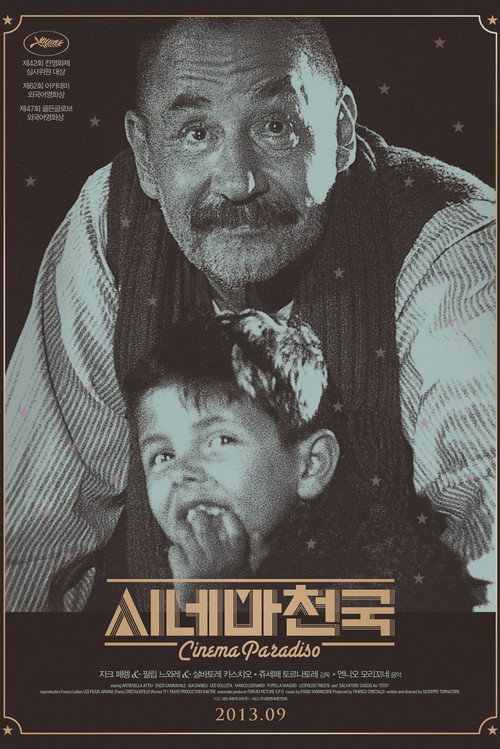
The line Alfredo delivers to Totò transcends mere career advice — it symbolizes the loneliness, unending labor, and personal sacrifice inherent in the life of an artist. In Cinema Paradiso, this line is the moment when a fanatical passion for cinema becomes the full weight a human life must carry.
The Artist's Fate: Alfredo's Warning
The line Alfredo delivers to Totò is the definition of 'the artistic life' — something anyone who loves cinema can understand, yet something no one easily attains. It is delivered at the moment when Totò is brimming with pure passion for film, casting a sardonic yet affectionate light on the real-world weight that passion will one day bring.
Context: The Gap Between Passion and Reality
The scene in which these lines are exchanged comes just before Alfredo leads Totò — watching the boy run wild over movies — not merely as a 'film fanatic' but toward the path of 'an artist.' Totò treats the movie house as his whole world, accepting the act of watching films as the entirety of his existence.
Alfredo acknowledges Totò's pure passion yet warns him in advance of the pain that passion will encounter when it meets the constraints of reality. 'Alone all the time, like a slave' evokes the isolation and endless cycle of labor hidden behind the rapture cinema offers. Film is not entertainment — it is a daily obligation and a means of livelihood.
Position in the Story: The Line as a Turning Point
This line serves as a decisive 'inflection point' in Totò's character arc. Through it, Totò realizes that the world of cinema he dreams of cannot remain pure fantasy. Rapturous moments follow — finding his father's image in films, meeting Elena for the first time — yet Alfredo's warning forces Totò to find a balance between 'dream' and 'reality.'
The metaphor of 'only Good Friday off, and if Jesus hadn't died on the cross we wouldn't even get that' carries a philosophical weight: the act of artistic creation can bring even the most fundamental human rest and life rhythm to a halt. It implies that the moment art becomes part of life, life itself risks becoming subordinate to art.
Audience Response: Empathy and Consolation
This line forges deep resonance with film-loving audiences. In it they project their own experience of the rapture of fandom and the realms of life they had to sacrifice in its pursuit. Because it poses a universal question about the 'price of passion' — beyond a mere celebrated line — fans interweave it with Totò's ultimate success as a director and Alfredo's devoted counsel, generating deeply moving interpretations.
Downstream Impact: The Editing and Completion of Memory
The themes of 'sacrifice' and 'solitude' raised in this line are dramatically recovered in the film's final scene — the reel that is Alfredo's bequest. The scene in which Totò weeps watching the unending stream of kisses symbolizes how precious the 'memories' Alfredo left in his life are, and at the same time how much sacrifice it took to complete them. Alfredo's warning ultimately leads Totò to realize the value of that sacrifice and resolve to carry those memories forever.
Why It Matters
This line is the core philosophy that runs through the identity of Cinema Paradiso. The film is not simply 'about cinema' — it is about 'passion,' the most primal human emotion. Alfredo's warning makes the audience confront the fact that pursuing what one loves is never free of cost. That is why the line resonates far beyond film enthusiasts.
Back to the title
Cinema Paradiso
13 deep dives in total