Totò / Salvatore Di Vita
Totò transcends the figure of a mere film enthusiast; he is a man who builds his identity and the destiny of his life through the medium of cinema. His life — set against the backdrop of a ruined hometown movie house — embodies artistic passion, loss, and the power of unforgettable memory.
The Boy Obsessed with Cinema, Totò: A Wanderer Between Memory and Destiny
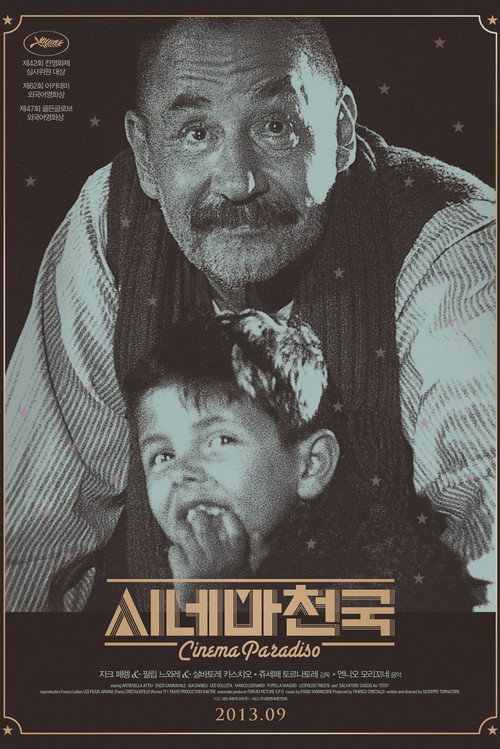
Totò (Salvatore Di Vita) is both the central axis of the film and the very embodiment of 'nostalgia' with which the audience most deeply identifies. He is a man who does not merely watch cinema but immerses himself completely in the world cinema creates. His life unfolds around the physical space of the movie house, and that space was for him not a simple entertainment venue but a 'sanctuary' that defined who he was.
The Character Arc: Three Phases of Passion
Totò's growth passes through three phases of dramatic transformation.
1. Childhood: Fanatical Immersion in Cinema (The Obsession)
To young Totò, cinema is a magic that makes him forget the pain and tedium of reality. He treats going to the movie house as the most important daily ritual. His relationship with projectionist Alfredo is the heart of this period. Alfredo understands Totò's passion yet simultaneously warns that it is 'too slave-like' and unrealistic. This conflict is the point where Totò first feels a fracture between his artistic dream and his real life. When Totò stores collected film reels near a stove and nearly causes a fire, his passion is depicted as an 'uncontrollable energy' that can sometimes bring danger to those around him.
2. Young Adulthood: Dreams, Loss, and Departure (The Departure)
Totò becomes a successful film director in Rome, finally realizing his dream. This means he has shaken off all the emotional burdens tied to the old hometown movie house and seized the realistic goal called 'success.' Alfredo's injunction — 'Never come back' — becomes a kind of 'growth command' for him. He leaves his hometown and achieves success, but paradoxically this success results in his being permanently separated from the past of his homeland.
3. Middle Age: Retrospection and Confrontation (The Confrontation)
Returning to his hometown after thirty years, Totò experiences the crumbling of the walls of success he has built. What confronts him is the ruined theater — and Elena, his first love, transformed by the passage of time. In this phase, Totò struggles to reclaim the meaning of 'his true self' and 'true love' that he had forgotten. His tears are not simple nostalgia but an explosion of complex emotion: remorse over the pitilessness of time and over the choices he made.
The Complexity of Relationships: Fateful Connections
The figures who sustain Totò's life are more than supporting characters — they shape his fateful trajectory. Particularly as YouTube digests emphasize, the encounters connected to Totò carry a 'special meaning' that transcends mere chance. Totò's very existence feels as though it encompasses some 'mission' or 'destiny.' This implies that his life is connected to the universal themes of art and memory, beyond a personal success story.
The reunion with Elena demonstrates this fateful connection most dramatically. The two, meeting after thirty years, finally reach complete understanding through the misunderstandings of the past and the hidden truth Alfredo concealed. Through Elena, Totò recovers his former self — pure and whole — which he had lost.
The Meaning of the Ending: The Explosion of the Final Film
The film's final scene condenses the entirety of Totò's emotional journey. The theater demolished to rubble, and the reel by Alfredo that he holds. That reel is packed with the countless kisses that were edited out by the priest's censorship. It is the 'perfect film' Totò has craved all his life — the 'most beautiful trace Alfredo left in his life.' That Totò weeps watching it is because in that moment he reconfirms, through cinema, his reason for being and the meaning of his life. The film ultimately concludes with the message that even if the most beautiful memories are suppressed by external forces (censorship, time), the power of those memories themselves shines eternally.
Why It Matters
Totò is the character who personifies this film's thematic consciousness — 'the power of memory.' Every loss he endures (the ruined theater, the parting from his first love) symbolizes the relentlessness of time and the harshness of reality. By having Totò find meaning through cinema, the film asks us: what is it that we, too, are trying to preserve?
Other Character dives3
- arrow_outward
Alfredo
Alfredo transcends the role of a mere projectionist; he is the most important mentor who designs the arc of protagonist Totò's entire life. He accompanies Totò from the earliest stage of his passion — sometimes as a stern critic, sometimes as a warm teacher — and his presence is the backdrop of every stage of Totò's dreaming, stumbling, and maturing.
- arrow_outward
Elena
Elena is the first love who defines Totò's youth and serves as the emotional axis of Cinema Paradiso. Her meeting and parting with Totò prove decisive to his growth, while their reunion thirty years later is not a simple romance but an unraveling of long-buried truths about time and memory.
- arrow_outward
Maria Di Vita
Maria Di Vita is more than a supporting character — she is the most powerful 'wall of reality' in protagonist Salvatore Di Vita (Totò)'s artistic life. Her life, losing her husband to war and raising Totò alone, makes her experience Totò's immersion in cinema as a direct threat to their survival.
Back to the title
Cinema Paradiso
13 deep dives in total