The Tragic Cycle of the American Dream
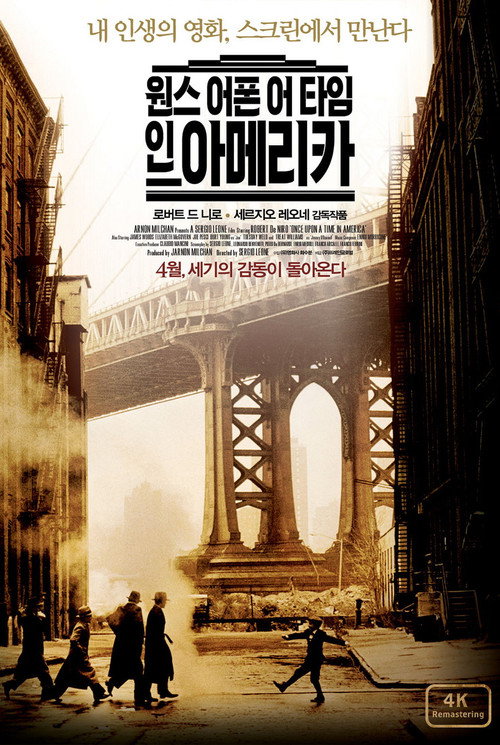
Once Upon a Time in America transcends a mere gangster film to become an epic that anatomizes—through the eyes of gangsters—how the great myth of the American Dream operates and how it collapses. The success and glory the protagonists pursue is not a matter of reaching the top; it is merely the repetition of an emotional cycle of betrayal and guilt, carrying the nihilistic metaphor of a pinnacle of material success ultimately discarded as waste.
The Myth and Collapse of the American Dream: A 30-Year Circular Structure
The most central theme of this film is to dissect—through the eyes of gangsters—how the myth of the "American Dream" operates and how it collapses. The success and glory the protagonists pursue is not a matter of reaching the top; it is merely the repetition of an emotional cycle of betrayal and guilt accumulated along the way. The film grandly illustrates this circular structure through the passage of time (1920s slums → 1960s Hollywood).
1. The Beginning of Innocence and Desire: Youthful "Loyalty" and the "Fund"
In the film's opening act, the boyhood period in which Noodles's gang operates is framed as the beginning of crime wrapped in the values of "loyalty" and "innocence." They make a living pickpocketing under Bugsy's gang, but their activities are still grounded in shared purpose and camaraderie. During this time, the friends—Max, Patsy, Cockeye, and the others—collectively earn money and bank it in a station locker as a "fund for the future." This money is not merely capital; it symbolizes the "dream of the future" they are building together. The romance with Deborah also begins within this pure emotional bond.
But this innocence changes rapidly with the arrival of Max. Max infuses new capital and ambition into the gang, yet this ambition soon mutates into the desire for "personal success." The race toward his own private "top"—rather than a goal shared with friends—begins.
2. The Peak of Desire and Betrayal: The Federal Reserve Robbery
The climax of young adulthood takes shape in the Federal Reserve robbery. With the repeal of Prohibition ending the "stable crime" of bootlegging, Max dreams of greater "material success" and proposes the bank job. This is the most archetypal form of the American Dream—the desire for "bigger, higher." The process by which Noodles refuses the plan and, persuaded by Carol, tips off the police, reveals the tragic truth: that the success they pursue can only be achieved at the cost of "moral compromise" and "betrayal."
The result is catastrophic. Patsy and Cockeye are shot dead, and Max's body is burned beyond recognition. This disaster graphically demonstrates how fragile and temporary their dream had been. The experience of this betrayal and death burdens Noodles with guilt he will carry for the rest of his life.
3. Disposal and Circulation: The Garbage Truck and the Ocean Dump
In the film's final act, the illusion of the American Dream is expressed in its most extreme form. The scene in which Max meets his end—consumed by a garbage truck as the price of his corruption—is a nihilistic metaphor: even the pinnacle of material success is ultimately "discarded as waste." The message is that the fruits of success produced by capitalist society are ultimately nothing more than a pile of garbage to be processed.
Furthermore, the suggestion that Noodles's future—having fallen and disappeared into the sea—is an "ocean waste dump" implies that his life is "wandering" itself: drifting without a clear destination. Floating between the glory of the past and the frustration of the present, unable to find a foothold—this is the portrait of a soul that has lost the American Dream.
Ultimately, all of Noodles's experiences unfold across two axes—flashback and reality—and this structure itself poses a fundamental question to the audience—"What is the truth?"—demonstrating that everything is trapped in the cycle of memory, illusion, and repeating tragedy.
Why It Matters
This thematic interpretation is the central axis that determines the film's narrative depth. Once Upon a Time in America does not merely chronicle the rise and fall of gangsters; it deconstructs the very concept of 'success.' Max's ambition is the most archetypal embodiment of the American Dream, but the premise that his end is the wretched conclusion of a garbage truck is interpreted as a profound nihilistic metaphor for modern capitalist society, in which even the pinnacle of material success ultimately becomes waste. Noodles's life is an eternal wanderer bearing the failure of this myth, compelling audiences to reflect on the emotional shackle of human nature itself: dreams, memory, and guilt.
Other Reading dives1
Back to the title
Once Upon a Time in America
12 deep dives in total