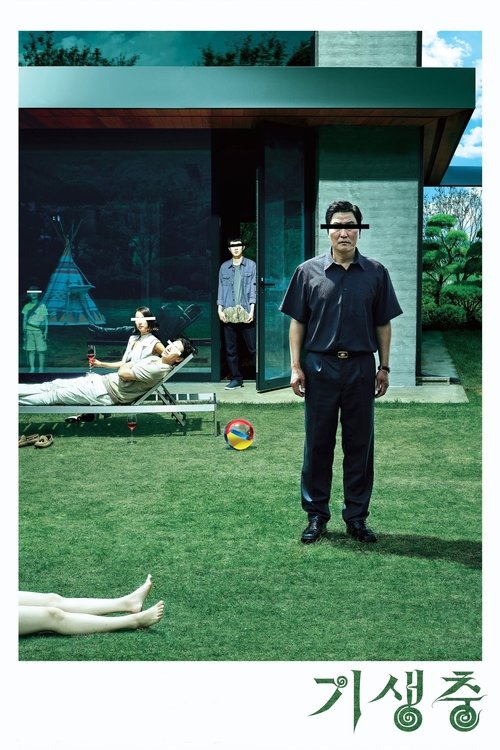
Mr. Park (Lee Sun-kyun)
Mr. Park is more than a wealthy patriarch — he embodies the perfectly controlled life of the upper class and the boundary of class itself. His mansion is the stage of class friction, and his offhand remark about 'smell' explodes the structural and instinctive wall of class that the poor can never cross, driving the film toward its tragic climax.
Perfect Control and Its Cracks: The Upper-Class Surface That Mr. Park Embodies
As CEO of a global IT company, Mr. Park's life literally embodies 'the perfectly controlled life of the upper class'. His mansion is not just a setting — it is the front line of class boundaries and an 'ideal' space where everything is ordered and predictable. The structure and atmosphere of the mansion visualize how meticulously his class is managed and how isolated it is from outside contamination.
During the Kim family's infiltration, the Park family moves through life as if performing a polished play — everything smooth and graceful. Their lifestyle, taste, and topics of conversation rest on a high level of cultural capital and economic ease. The Kim family could infiltrate under the pretext of 'art therapy' precisely because they exploited this 'perfection' as a vulnerability.
The Decisive Moment: 'Smell' as the Symbol of the Class Wall
The moment the narrative spirals into unstoppable tragedy comes in a single sentence Mr. Park utters when he becomes aware of the Kim family's presence: "The smell crosses the line...". The line goes beyond mere disdain — it is the strongest and most tragic symbol that runs through the entire film.
1. Smell as an Instinctive Sense:
Smell is humanity's most primal and most difficult-to-conceal sense. It signifies a 'mark of origin' that status, money, education, or even effort cannot fully cover. By using this word, Mr. Park nullifies, in a single stroke, all of the Kim family's effort, disguised plan, and even the 'joy' they had savored in the mansion. It exposes that the gap between classes is measured not only in sums of money or differences in elevation but penetrates humanity's most instinctive area — 'body odor' and 'mode of being'.
2. Uncontrollable Humiliation:
For the Kim family, this remark is both a threat to survival and the moment their dream of 'upward mobility' shatters. To them, this smell is an indelible brand that signifies their poverty and lack. In that moment, every 'con' they built collapses, and they are violently expelled back to their original position. It conveys to the audience the structural humiliation of capitalist society: no matter how hard one strives, one cannot escape one's fundamental class background.
Mr. Park's Functional Role
Mr. Park is less a 'villain' narratively and more a personification of 'the system itself'. He is not a figure of personal malice; he represents the 'rules' and 'boundaries' the bourgeoisie builds and maintains. His existence performs the following functions:
- A class mirror: Mr. Park's mansion and lifestyle mirror the 'perfect life' that the Kim family wished to reach but can never possess. The mirror is so perfect that, the moment a crack (smell) is found inside it, everything collapses.
- A narrative catalyst: His offhand remark instantly converts the film's comic tension into tragic suspense. Without this remark, the film would have remained a mere black comedy.
Ultimately Mr. Park puts a question to the audience. Can effort and talent alone cross the wall of class? And does that wall really exist as visible 'stairs' or 'doors'? Or is it intangible — primal and imperceptible — like 'smell'?
Why It Matters
Mr. Park is not just a wealthy patriarch — he is the device that most clearly visualizes the film's core theme of 'class contradiction'. His existence converts the abstract and immense concept of 'class' into the concrete, instinctive sense of 'smell'. This smell symbolizes a structural and essential class wall that money or status cannot conceal, and becomes the sharpest evidence for the film's social critique. The depiction of his perfect life paradoxically proves how fragile and contradictory that perfection is.
Other Character dives4
- arrow_outward
Ki-jung (Park So-dam)
Ki-jung wears the professional mask of art therapy to infiltrate the private domain of the wealthy Park family. She is more than a daughter playing rich — she symbolizes the refinement and intellectual sophistication of class, and provides the most 'legitimate' channel for the Kim family to penetrate deepest. Her presence is the decisive device that intensifies the film's black-comedy tension.
- arrow_outward
Moon-gwang (Lee Jung-eun)
Moon-gwang, the Park family's former housekeeper, is the pivotal figure who brings unforeseen variables and explosive threats to the Kim family's perfect con. Her existence shows how fragile class boundaries really are and embodies the most primal, raw energy that lights the film's climax.
- arrow_outward
Yeon-kyo (Choi Yeon-kyo)
Yeon-kyo is more than a wealthy madam — she is the 'access point' that lets the Kim family infiltrate the Park mansion, and a figure who embodies class friction. Outwardly the very image of a perfect, elegant upper class, beneath the surface she carries subtle tension and secrets — efforts to keep class boundaries intact. Her presence renders the wall between classes both most alluring and most dangerous.
Back to the title
Parasite
15 deep dives in total