Visualizing Class Through Vertical Space
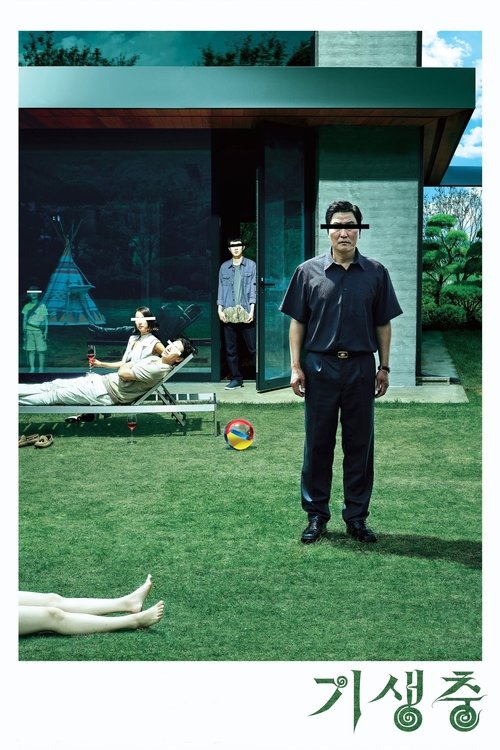
In Parasite, space is not a mere backdrop but the most powerful and meticulous device determining class hierarchy. The damp of the semi-basement is set against the light of the mansion, and movement up and down the stairs visualizes the boundary between classes. Even a tiny detail like the toilet installed above the residential level exposes the contradictions and precarity of upper-class life — making space itself the core engine of a black comedy that triggers class humiliation.
The Vertical Classing of Space: Light, Damp, and the Staircase
In Parasite, space is a vast stage apparatus that projects characters' psychological states and social standing. Bong Joon-ho uses physical elevation (vertical structure) to maximize, visually, the gap between poverty and wealth. This structure does more than provide setting — it becomes a core metaphor that constitutes the work's thematic consciousness.
1. The Semi-Basement: A Space of Damp and Confinement
The semi-basement where the Kim family lives functions, from the film's opening, as a symbol of 'damp' and 'confinement'. It is wholly cut off from the ground above — short on light and forever vulnerable to the outside. This physically realizes the unemployment and instability of the Kim family. The torrential rain scene shows the extremity of the semi-basement's fragility, etching into the audience that poverty is not just a lack of money but a structural disaster that threatens survival itself.
2. The Mansion: A Space of Control and Contradiction
The Park family's mansion symbolizes 'light' and 'control'. Every space inside is perfectly arranged, constructing the image of orderly life that wealth bestows. And yet this perfection ironically harbors contradiction. The most symbolic example is the placement of the toilet. Installed above the residential level, the toilet shows that even the high-up life of the upper class — even their most private domain — is precariously controlled and observed from a 'higher place'.
3. The Basement and the Staircase: Corridors of Boundary and Secret
The 'staircase' that links the two worlds is the film's most important symbol. The staircase is not just a means of movement — it is at once an uncrossable boundary and a corridor that can be penetrated. The Kim family's infiltration of the mansion is, itself, the act of ascending and descending these stairs. But the secret space below the stairs (the basement) exposes that the gap between classes is not a matter of 'height' but of 'whether something exists at all' on an entirely different plane.
The basement is the darkest, the most secretive, and the place where the most violent events unfold. It symbolizes that behind the light and order of upper-class life lies a dark, primal secret that one wants to hide.
4. The Marriage of 'Smell' and Space
Alongside spatial analysis, 'smell' is the key element that completes class friction. The damp odor of the semi-basement — the scent of poverty — works as a 'mark of existence' that no perfect disguise can erase. It delivers the message: however well one infiltrates a wealthy space, class humiliation is perceived not through physical space but through humanity's most primal sense (smell).
Why It Matters
Reading space vertically elevates Parasite into a structuralist parable beyond mere black comedy. Rather than displaying poverty and wealth only through 'horizontal' contrast (poor neighborhood vs. wealthy enclave), the film uses 'vertical' drops to treat class hierarchy like a physical law. The movement from semi-basement to mansion, and then down to the basement, makes audiences feel how structural and violent the desire for upward mobility is. Through sensory contrasts of light and dark, damp and dry, the film persuasively argues that capitalist contradictions are not just economic problems but a 'spatial violence' surrounding human life — and this is the source of the work's strongest identity.
Other Reading dives2
- arrow_outward
Smell and Sensory Class Division
In Parasite, 'smell' is more than body odor — it is the core device that embodies the boundary of class in the most violent and sensory way. This smell is the residue of poverty, and the unconscious rejection of being itself, sensed by the upper class. Through this sensory barrier the film shows that the gap between classes cannot be measured in economic figures alone, leaving the audience with an uncomfortable and painful social question.
- arrow_outward
Plan vs. No Plan: The Cyclical Structure of Capitalism
The paradox of 'plan vs. no plan' — one of the central themes of Parasite — examines where the human will to survive collides with the colossal structural contradictions of capitalism. Every plan the Kim family devises is ultimately frustrated or reset by outside forces, and the film reveals, with brutal clarity, that only true self-sufficient subjectivity can serve as an exit.
Back to the title
Parasite
15 deep dives in total