Characterarrow_outward
Tadokoro
Tadokoro, the talent agency president managing protagonist Mima's career, serves in the work as a symbol of capitalist logic and the commodification process of popular culture. He judges Mima's worth solely by 'sexual image' and commercial success, utterly disregarding her mental anguish and human dignity. His presence represents the cold, dehumanising pressure of the industrial system lurking behind artistic creation.
Cardarrow_outward
The Stalker's Online Surveillance Network
Kirigoe Mima's online homepage 'Mima's Room' goes far beyond a mere stalking record—it is a central device symbolising how popular culture and media surveil and define an individual's existence. The site endlessly observes Mima's private life, presents 'evidence' of her 'corruption,' and is the source of the psychological violence that causes Mima to experience confusion between reality, fantasy, and her own identity.
Cardarrow_outward
Sexual Commodification and the Violence of Exposure
This section deals with the violence of 'sexual commodification'—one of the central themes of Perfect Blue. It traces the process by which protagonist Mima is endlessly commodified against capitalist logic, her body and image offered up in order to succeed as an actress. This goes beyond a simple thriller to sharply criticise the culture of exposure in Japan's entertainment industry in the 1990s and the violence created by the public gaze.
Cardarrow_outward
The Boundary Between Idol and Actress
In Perfect Blue, the boundary between idol and actress is not merely a career transition but a central setting that symbolises the process by which 'the self' becomes commodified. Mima, attempting to rebuild a career as an actress after leaving the perfect persona of the glamorous stage, loses her identity and is destroyed under the enormous pressure of her agency's capitalist logic and the public gaze. This setting sharply criticises the existential crisis that individuals face in contemporary media society.
Cardarrow_outward
The Direction of Crossing Reality and Fantasy
The key directorial technique in Perfect Blue—the intercutting of reality and fantasy—is a device that forces the audience into Mima's subjective perspective. By repeatedly using scene transitions in which characters wake with a sharp gasp of surprise, viewers are thrown into constant confusion about what is a dream and what is reality. This direction visually embodies the extreme mental chaos Mima experiences, serves as a cinematic trick that guides viewers to reconstruct 'the truth' themselves, and is a device that maximises the film's central theme: the violence of the gaze.
Cardarrow_outward
Rumi's Betrayal and the Truth
Hidaka Rumi is not merely a manager but the most dangerous 'observer' who seeks to control and reconstitute Mima's identity. Under the guise of protecting Mima, she tries to confine Mima's life within the framework of 'the phantom of idol Mima.' Rumi's betrayal is the central device showing how the violence of 'the gaze' that this film addresses operates in the closest relationships.
Readingarrow_outward
Critique of the Violence of The Gaze
The central theme of Perfect Blue, 'The Gaze,' goes beyond the physical act of someone watching you—it signifies the violent mechanism by which modern capitalism and media consume and control the lives of individuals as 'observable content.' The film sharply dissects how various forms of gaze—the obsession of idol fandom, the coercive demand for exposure from the press, the voyeuristic fixation of a stalker—'objectify' protagonist Mima and ultimately destroy her.
Characterarrow_outward
Shibuya Takao
Shibuya Takao, the screenwriter of the in-film drama Double Bind, is one of the key perpetrators of the trauma and identity confusion experienced by protagonist Mima. He symbolises the capitalist logic that commodifies Mima as an actress, and by designing the disturbing scenes she was forced to perform, he is most responsible for accelerating her psychological deterioration.
Characterarrow_outward
Ochiai Eri
Ochiai Eri is a seasoned actress whom the protagonist Mima admires—a character who symbolises the ideal vision of what it means to be an actress. She provides Mima with realistic advice and warm support, and in the midst of Mima's identity confusion and madness, serves the role of reminding her of the essential value of the acting profession. Her existence functions as a benchmark for the successful career Mima seeks.
Quotearrow_outward
I am a victim, a witness, and a culprit.
'I am a victim, a witness, and a culprit' is a phrase that encapsulates the fundamental identity crisis experienced by Kirigoe Mima. Beyond mere psychological confusion, this line shows how a being who becomes the object of 'the gaze' in popular culture comes to redefine and destroy itself. It is the central thematic consciousness that runs through the process by which Mima loses the boundary between reality and performance, between victim and perpetrator.
Characterarrow_outward
Hidaka Rumi
Hidaka Rumi initially appears as Mima's supportive manager and a former idol who deeply understands the industry's pressures. Yet she is deeply implicated in Mima's tragedy, having in truth developed the persona of the 'true Mima' in order to reclaim and control Mima's image. Far from a mere ally, Rumi is a surrogate of the system—determined to destroy and reconstitute Mima's identity.
Characterarrow_outward
Kirigoe Mima
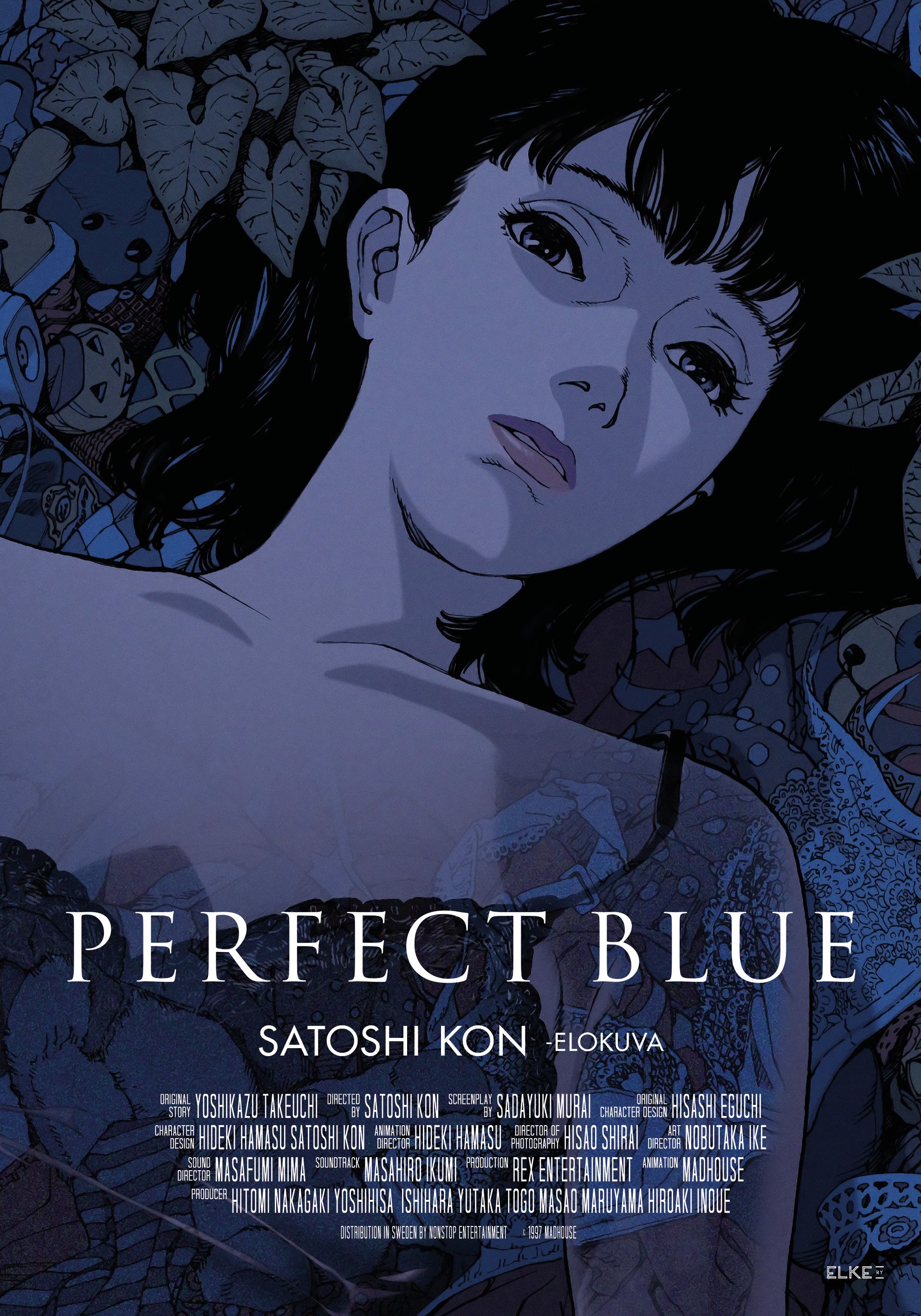
Kirigoe Mima suffers severe identity confusion caused by the violence of the 'gaze' that modern media demands, as she tries to find a new identity as an actress after leaving her role as a glamorous idol. Her journey goes beyond a simple thriller—it is a psychological exploration questioning how individuals in popular culture navigate the boundaries of their own self, asking what 'the real me' truly means.
Characterarrow_outward
Uchida Mamoru
Uchida Mamoru is a severely disturbed stalker who obsessively observes Mima's every move throughout the film, and a figure who symbolises the violence of 'the gaze' from start to finish. Unlike the artistic gaze of the glamorous entertainment world, he physically embodies how destructive a private and compulsive voyeuristic fixation can be, maximising the protagonist's psychological terror.
Readingarrow_outward
The Tragedy of Capitalism and the Entertainment Industry
Perfect Blue, set in the entertainment industry, sharply dissects the tragedy of modern capitalism in which commercial profit takes precedence over artistic value. The body and image of protagonist Mima are treated endlessly as 'sellable commodities,' and in this process human dignity is eroded and Mima experiences catastrophic confusion between reality, fantasy, and her own identity.
Readingarrow_outward
Deconstruction of Persona and Identity
The core theme of Perfect Blue—the deconstruction of persona and identity—explores the psychological breakdown of protagonist Mima as she passes through three fabricated selves: the idol, the actress, and the object of a stalker's gaze. The film sharply interrogates the violent collision between 'the real self' and 'the social image,' asking how media-manufactured gazes commodify and destroy an individual's identity.