I am a victim, a witness, and a culprit.
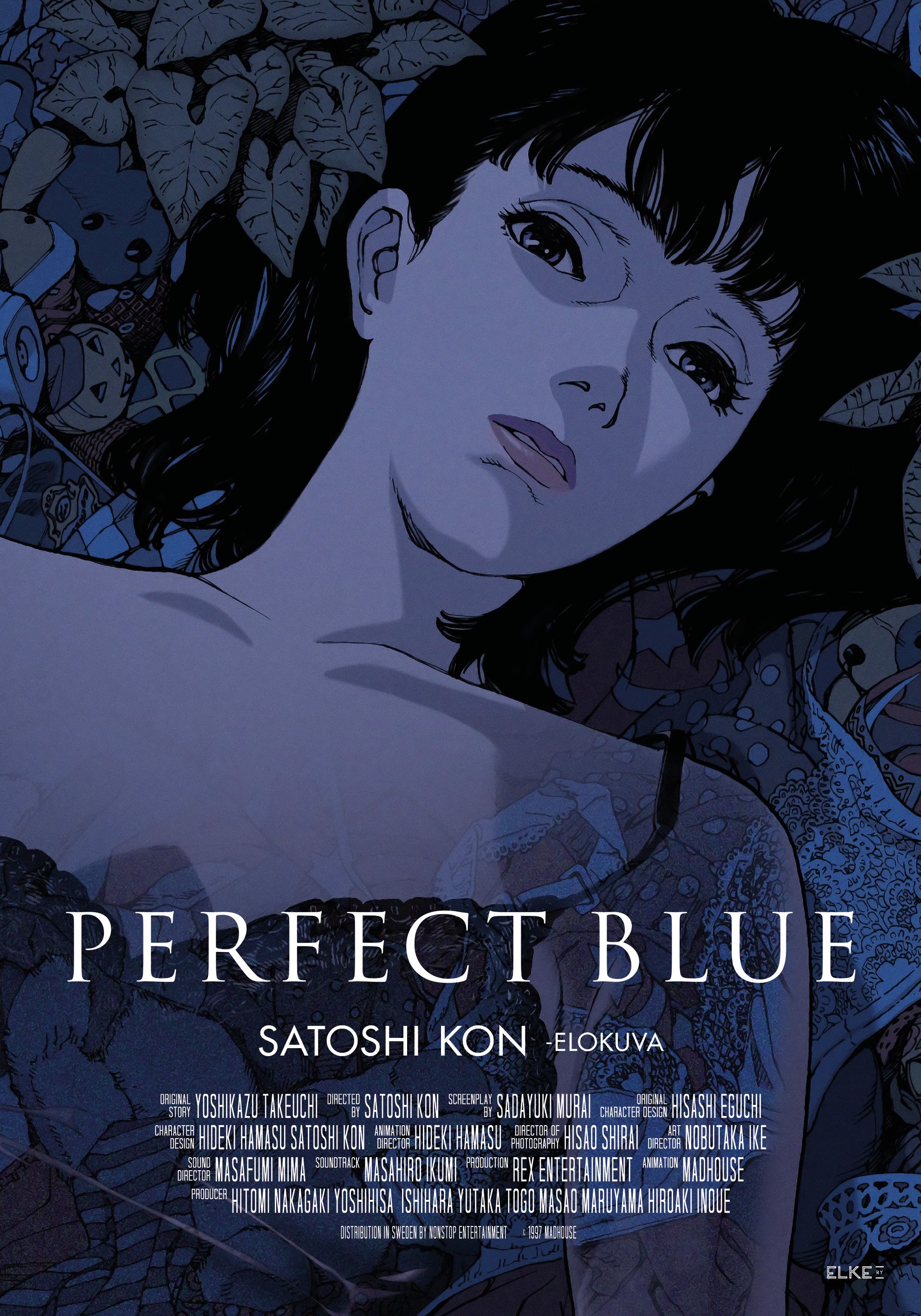
'I am a victim, a witness, and a culprit' is a phrase that encapsulates the fundamental identity crisis experienced by Kirigoe Mima. Beyond mere psychological confusion, this line shows how a being who becomes the object of 'the gaze' in popular culture comes to redefine and destroy itself. It is the central thematic consciousness that runs through the process by which Mima loses the boundary between reality and performance, between victim and perpetrator.
'I Am a Victim, a Witness, and a Culprit': The Declaration of a Self Whose Boundaries Have Collapsed
This phrase is the most powerful thematic consciousness running through the film Perfect Blue and the ultimate summary of the psychological collapse experienced by protagonist Kirigoe Mima. In the process of pivoting from 'idol' as a 'commodity' to 'actress' as an 'artist,' Mima endlessly questions who she is and what is true. This line is the cry of someone who has declared herself lost between the 'false self' defined by external gazes (the stalker, the agency, the public) and the 'true self' she must construct on her own.
1. Context of the Utterance: The External Gaze That Accelerates the Identity Crisis
The process leading Mima to this phrase is progressively eroded by 'the external gaze.' In this process she is coerced into three roles.
- The Role of Victim: The role of the pure and innocent image from her idol days, and the 'sacrifice' who must perform a rape scene in the drama. She suffers psychological pain performing this role, yet simultaneously falls into the contradiction of having to package that pain as 'experience as an actress.'
- The Role of Witness: As people around her (screenwriter Shibuya, photographer Murano, etc.) are murdered one by one, Mima wants to believe she is a safe observer. Yet these events are so closely intertwined with her daily life that she cannot distinguish whether everything she witnessed is 'real' or 'phantom.'
- The Possibility of Culprit: The most terrifying thing is the 'evidence' Mima finds in her own wardrobe. The moment she directs a murder scene in a dream, or is suspected of being the culprit herself, she comes to perceive herself as an existence that includes even the possibility of 'culprit.'
These external pressures and contradictory coercive roles pile up, leading Mima to finally reach the conclusion that no matter what role she takes on, all of those roles are merely 'fakes' projected onto her.
2. Position in the Work: The Self-Destructive Truth Completed in the Confrontation with Rumi
The point at which this phrase is completed most dramatically is the climax in which Mima confronts manager Hidaka Rumi. Rumi appears as the phantom of Mima's idol days—in the form of 'Mima's Room'—seeking to destroy Mima. Rumi reproduces the image of 'idol Mima' that Mima wants to forget and denies all achievements Mima has gained as an actress.
At this moment Mima realises that all the confusion she has experienced—the murders, the rape scene, the stalker's obsession—does not originate from an external entity but from the 'identity deficit' within herself. She reaches the tragic conclusion that she cannot remain only in the role of victim, and that in order to put an end to all this confusion she must take on the role of 'culprit' herself. This phrase is not merely a report on a psychological state, but a desperate self-declaration that she will take responsibility for all the tragedy she has experienced.
3. Viewer/Fandom Reaction: Questions About the Subject and Object of 'The Gaze'
This line poses to the audience the fundamental question: 'Who is watching whom?' Audiences follow Mima's gaze, feeling the confusion she experiences as if it were their own. Through this phrase, fandom reconfirms that the film is not simply a thriller but a sharp critique of how modern media and capitalism commodify and control the individual self. Mima's madness is interpreted as resistance against 'the public gaze' and as a desperate struggle to break free from that gaze.
4. Subsequent Influence: The Absence of the 'True Self' and the Eternal Performance
Ultimately, through this phrase, Mima comes to accept that something called a 'true self' does not exist. She is always a being who performs a 'role.' The scene in the film's final moments where Mima looks in the rearview mirror and declares 'No—I'm the real one' is the paradoxical completion of this phrase. She declares herself 'real,' but that declaration of being 'real' is itself yet another performance—the last persona for survival. This line runs through Mima's tragic denouement, leaving room for interpretation that all artistic creation and life itself is ultimately 'performance.'
Why It Matters
This line is the central device that compresses the thematic consciousness of *Perfect Blue*. Mima's identity confusion is not merely the problem of a mentally ill character—it is a critique of the 'commodified self' forced on individuals by late 20th-century capitalist popular culture and the media environment. Mima is coerced into multiple 'roles'—idol, actress, victim, culprit—and loses her self, and through this phrase ultimately admits she is the aggregate of all those roles. This is what causes audiences to question the gap between 'the you I see' and 'the real you'—the philosophical core of the work.
Back to the title
Perfect Blue
15 deep dives in total