Sexual Commodification and the Violence of Exposure
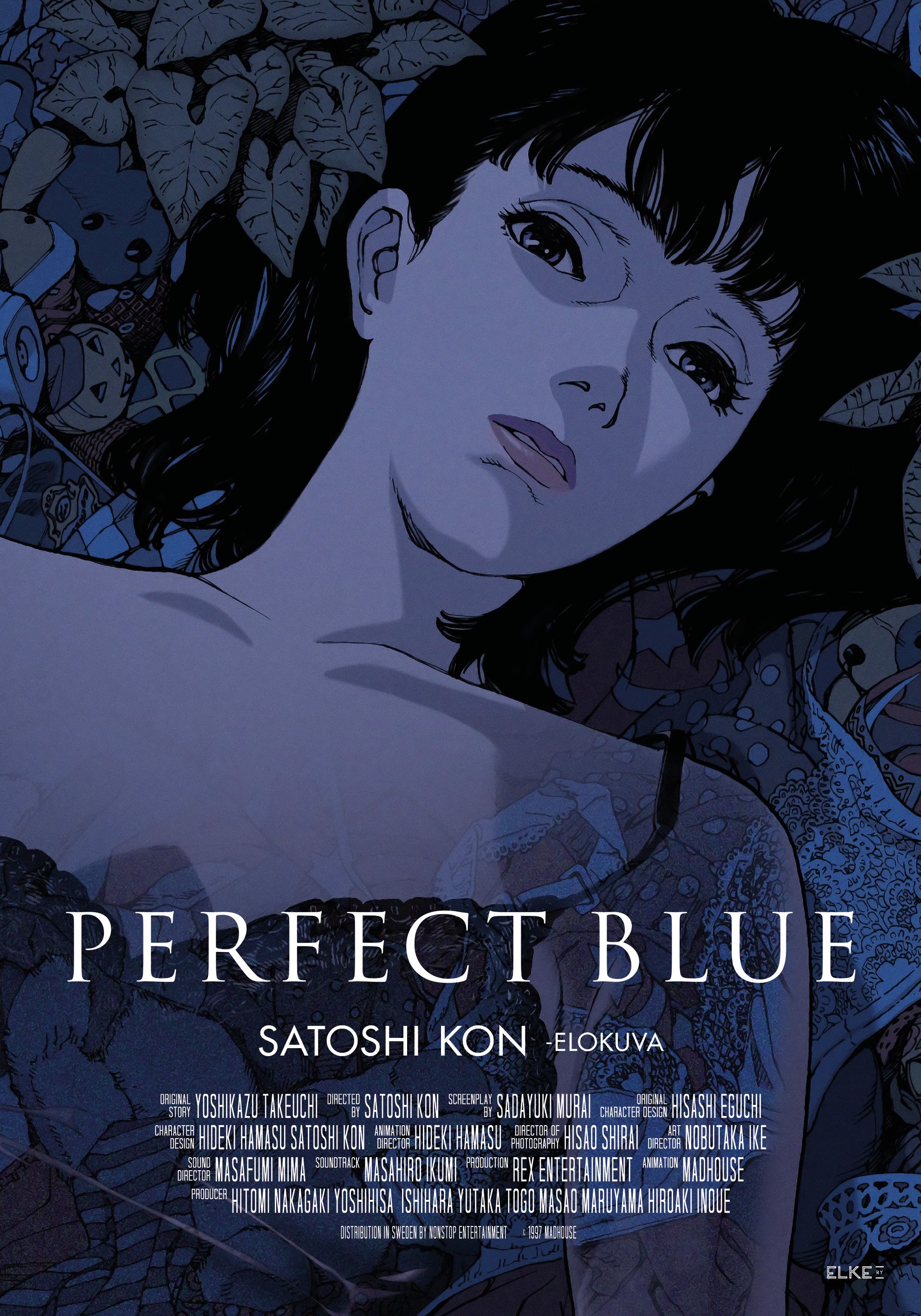
This section deals with the violence of 'sexual commodification'—one of the central themes of Perfect Blue. It traces the process by which protagonist Mima is endlessly commodified against capitalist logic, her body and image offered up in order to succeed as an actress. This goes beyond a simple thriller to sharply criticise the culture of exposure in Japan's entertainment industry in the 1990s and the violence created by the public gaze.
The Commodified Body: The 'Perfect Commodity' Demanded by Capitalist Logic
The greatest psychological pressure Mima experiences in Perfect Blue is 'sexual commodification.' Mima had the pure, bright image of idol group CHAM's member, but as she enters the world of acting, this image rapidly degrades. Her body and image are no longer a means of artistic expression but are treated as a 'commodity'—purely for driving public consumption.
1. The Mechanism of Coerced Exposure
The pressure from president Tadokoro that Mima must raise her profile as an actress drives her progressively into high-exposure roles. This is not simply a question of acting ability—it shows a structure in which she is coerced to succeed through 'exposure' with assured marketability.
- The Rape Scene Performance: The rape scene Mima is made to perform in the drama Double Bind is the most symbolic scene. This shows in the most extreme way the process by which Mima is coerced to cross her physical boundaries in performance for the sake of success as an actress. Rumi's sight of weeping and leaving as she watches this scene implies that even people around Mima feel discomfort about this violent demand.
- The Nude Photo Spread Wave: Mima is also put through a nude photo shoot. This is directly connected to the wave of explicit nude photo books that was rampant in Japan's entertainment industry at the time of the film's release. This process is not consuming Mima's artistic value or inner narrative—it is an act that extracts only the 'image' for visual stimulation and the profits of capital.
2. Commodification as the Violence of 'The Gaze'
The most important concept in this film is 'The Gaze.' The process by which Mima's body is commodified is the same as the process of having her agency stripped from her by the public gaze. The public does not see Mima as a 'human called Mima' but only as 'an appealing image capable of performing some role.' This gaze endlessly demands of Mima 'more, more explicitly,' and in the process of responding to those demands Mima gradually loses her identity.
This structure becomes the root cause of Mima's psychological confusion—her inability to distinguish between reality, fantasy, and performance. She begins to feel a gap between the 'false self' she performs and the 'self as commodity' that the public desires.
3. External Background and Critical Perspective
This setting, going beyond a simple thriller device, critically reflects the dark side of Japan's popular culture and entertainment industry in the late 1990s. The background in which nude photo books were so pervasive in Japan's entertainment industry at the time that they became a social issue functions as a powerful device connecting Mima's pain to a real social problem. Mima's tragedy is a warning about how public desire for consumption and capitalist logic can destroy an individual's life.
Why It Matters
Sexual commodification and the violence of exposure are the central axis making *Perfect Blue* a contemporary cultural critique rather than a simple mystery thriller. The process by which Mima's body degrades to a commodity causes audiences to question how violent 'the gaze we direct at others' itself can be. This theme is the most powerful driving force explaining Mima's psychological collapse, and is the basis justifying the existence of the doppelganger—Rumi trying to replace Mima—in the film's finale. Ultimately, Mima's madness is not because of an external stalker, but is the result of a desperate struggle to become the 'commodity' demanded by the very system she belongs to.
Other 설정 dives4
- arrow_outward
The Stalker's Online Surveillance Network
Kirigoe Mima's online homepage 'Mima's Room' goes far beyond a mere stalking record—it is a central device symbolising how popular culture and media surveil and define an individual's existence. The site endlessly observes Mima's private life, presents 'evidence' of her 'corruption,' and is the source of the psychological violence that causes Mima to experience confusion between reality, fantasy, and her own identity.
- arrow_outward
The Boundary Between Idol and Actress
In Perfect Blue, the boundary between idol and actress is not merely a career transition but a central setting that symbolises the process by which 'the self' becomes commodified. Mima, attempting to rebuild a career as an actress after leaving the perfect persona of the glamorous stage, loses her identity and is destroyed under the enormous pressure of her agency's capitalist logic and the public gaze. This setting sharply criticises the existential crisis that individuals face in contemporary media society.
- arrow_outward
The Direction of Crossing Reality and Fantasy
The key directorial technique in Perfect Blue—the intercutting of reality and fantasy—is a device that forces the audience into Mima's subjective perspective. By repeatedly using scene transitions in which characters wake with a sharp gasp of surprise, viewers are thrown into constant confusion about what is a dream and what is reality. This direction visually embodies the extreme mental chaos Mima experiences, serves as a cinematic trick that guides viewers to reconstruct 'the truth' themselves, and is a device that maximises the film's central theme: the violence of the gaze.
Back to the title
Perfect Blue
15 deep dives in total