Kirigoe Mima
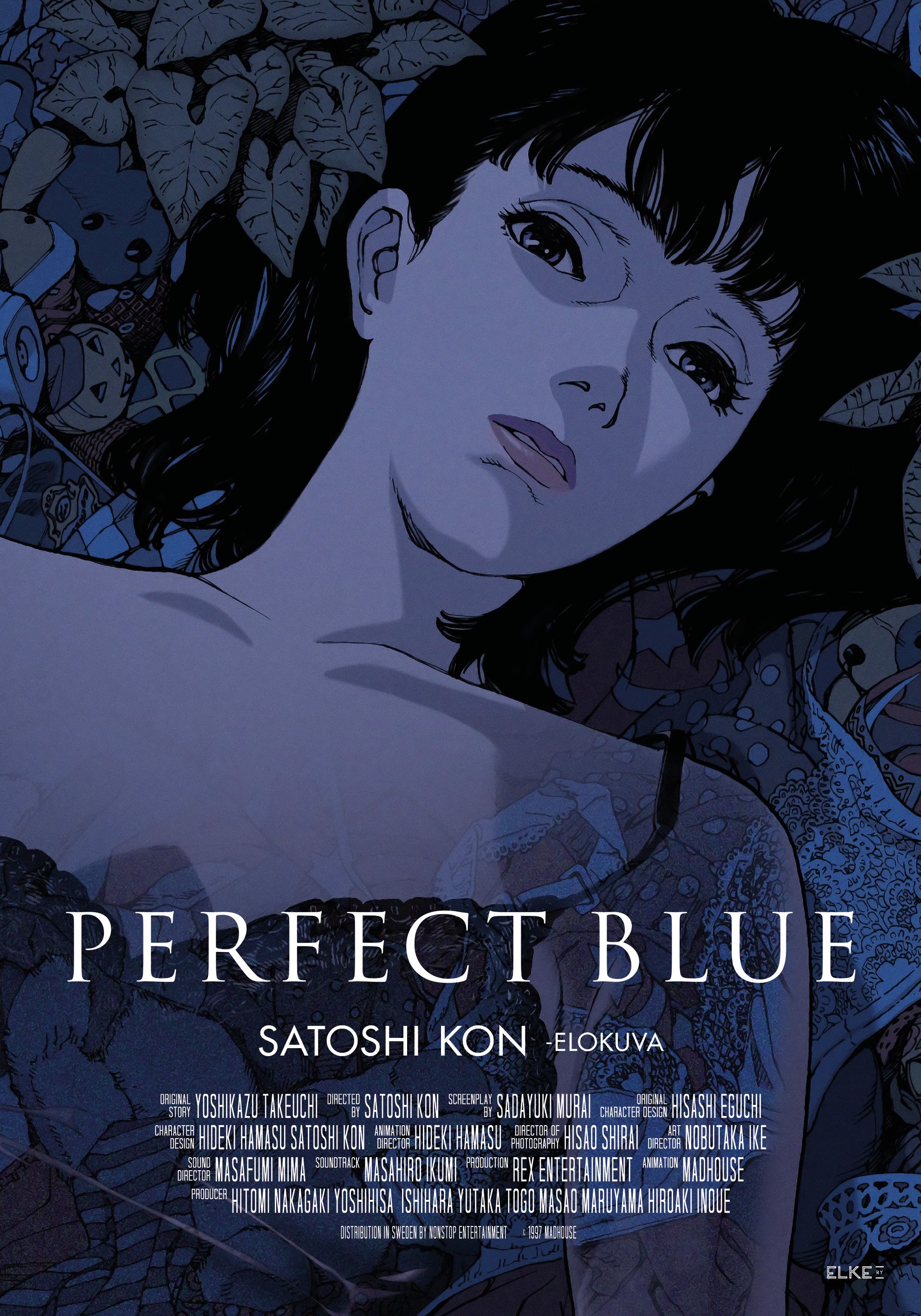
Kirigoe Mima suffers severe identity confusion caused by the violence of the 'gaze' that modern media demands, as she tries to find a new identity as an actress after leaving her role as a glamorous idol. Her journey goes beyond a simple thriller—it is a psychological exploration questioning how individuals in popular culture navigate the boundaries of their own self, asking what 'the real me' truly means.
From the Idol's Persona to the Actress's Self: The Pain of Identity Transition
The journey of Kirigoe Mima is itself the process of a forced transition from the collective persona of 'idol' to the individual profession of 'actress.' Once the leader of the popular idol group CHAM, she is placed in a transitional period in which she must re-establish her identity following the group's disbandment. Through this process, Mima becomes a commodity driven not by her own will but by the capitalist logic of figures such as agency president Tadokoro.
- The Phantom of the Idol: Mima possessed the perfectly packaged persona of 'Mima-rin' that shone on stage, but as she begins her life as an actress she starts to feel the gap between this phantom and reality. Her life is depicted through the stark contrast between her appearance on stage and her everyday existence (grocery shopping, taking the subway), and this double life itself accelerates her psychological deterioration. (F17)
- The Expectations and Pressure of Those Around Her: Those around her (Rumi, Tadokoro, etc.) work to protect Mima's career, but that effort does not resolve the psychological conflict in which she is not sure that the path she is on is what she truly wants. On the contrary, it functions as pressure driving her to even greater heights. (F3)
The Gaze and Observation: Online Stalking and Psychological Collapse
Mima's identity crisis is triggered not only by external physical threats but by an invisible yet enormous force called 'the gaze.' This is a sharp critique of social media and fandom culture in contemporary society.
- Online Surveillance: Discovering an online homepage recording her every move in minute detail, Mima experiences extreme terror. This symbolises the anxiety of knowing that someone is endlessly watching her—fear of a 'voyeuristic gaze.' (F2)
- The Fusion of Fantasy and Delusion: Mima's psychological confusion spirals when it merges with manager Rumi's delusions. Rumi is driven to eliminate those who have damaged Mima (stalkers, those who have caused her to lose herself), and Mima endlessly questions whether she is the victim, a witness, or the perpetrator of all this tragedy. (F5)
- The Threat to the Persona: Interacting online with fans who support her, Mima feels that a fake version of her is interfering, and experiences a severe identity crisis in which her very existence clashes with a virtual version of herself. (F11)
Core Theme: The Question of 'Who Are You'
All of Mima's suffering ultimately comes back to the fundamental question: 'Who am I?' Through this question, the film critiques the persona culture of contemporary society and the logic of capital.
- The Commodification of Persona: To succeed as an actress, Mima mentally deteriorates as she commodifies herself—even performing high-exposure roles such as a rape scene or nude photo shoot. This shows how the acting profession exploits an individual's body and image. (F10, F15)
- The Collapse of Boundaries: Mima experiences a psychological breakdown in which the boundary between her stage persona and her everyday real appearance becomes blurred, and the boundaries between reality and fantasy, dream and waking, collapse. (F4, F12)
- Reaffirmation of the True Self: Ultimately, Mima suffers under Rumi's rampage and the stalker's obsession, but the final moment shows the process of her finding her true self—surviving through her own choice. She declares 'No—I'm the real one,' announcing herself as a subject who defines herself, not a being defined by an external gaze. (F6, F13, F14)
Why It Matters
Mima is the central device that embodies the thematic consciousness of this work with her whole being. Her identity confusion is not merely a personal trauma—it is a critical mirror of how modern consumer capitalism and the media industry commodify and control the bodies and images of individuals. The collapse of the boundary between reality and fantasy that Mima experiences questions audiences about 'the way we look at others through media'—whether that very act of looking might be violent—and maximises the work's artistic depth.
Other Character dives5
- arrow_outward
Tadokoro
Tadokoro, the talent agency president managing protagonist Mima's career, serves in the work as a symbol of capitalist logic and the commodification process of popular culture. He judges Mima's worth solely by 'sexual image' and commercial success, utterly disregarding her mental anguish and human dignity. His presence represents the cold, dehumanising pressure of the industrial system lurking behind artistic creation.
- arrow_outward
Shibuya Takao
Shibuya Takao, the screenwriter of the in-film drama Double Bind, is one of the key perpetrators of the trauma and identity confusion experienced by protagonist Mima. He symbolises the capitalist logic that commodifies Mima as an actress, and by designing the disturbing scenes she was forced to perform, he is most responsible for accelerating her psychological deterioration.
- arrow_outward
Ochiai Eri
Ochiai Eri is a seasoned actress whom the protagonist Mima admires—a character who symbolises the ideal vision of what it means to be an actress. She provides Mima with realistic advice and warm support, and in the midst of Mima's identity confusion and madness, serves the role of reminding her of the essential value of the acting profession. Her existence functions as a benchmark for the successful career Mima seeks.
Back to the title
Perfect Blue
15 deep dives in total