Tadokoro
Tadokoro, the talent agency president managing protagonist Mima's career, serves in the work as a symbol of capitalist logic and the commodification process of popular culture. He judges Mima's worth solely by 'sexual image' and commercial success, utterly disregarding her mental anguish and human dignity. His presence represents the cold, dehumanising pressure of the industrial system lurking behind artistic creation.
The Logic of Capital: The Gaze That Defines Mima as a Commodity
Tadokoro is the talent agency president who manages Mima. He focuses not on Mima's talent or artistic value, but exclusively on how 'sellable an image' she can offer the market. His actions perfectly embody the logic of a modern capitalist system that treats Mima not as an artist or a human being, but as a 'commodity' constantly required to prove its value.
1. Initial Stage: The Mask of Protector and Manager
Early in the work, Tadokoro plays the role of a responsible manager overseeing Mima's career. He takes her out for a good meal after a hard shoot, or shows concern when news of a photographer's death breaks, appearing on the surface to be considerate of Mima. This initial persona is packaged as 'opportunity' and 'support' that lets Mima adapt to a new environment and dream of success. Yet all this consideration is merely a stepping stone to maximise Mima's value and set the stage for the next stage of exploitation.
2. Core Conflict: The Coerced Shift to a 'Sexual Image'
Tadokoro's true nature is revealed in his belief that a 'high-exposure image' is essential for Mima to succeed as an actress. The most glaring manifestation is the process of casting for the drama Double Bind. Leveraging Mima's weakness—her inexperience as an actress given her idol background—Tadokoro lobbies the producers to give her a larger role. But the 'larger role' he demands crosses Mima's mental and physical boundaries.
- Coerced Exposure: To succeed as an actress, Mima is made to film a rape scene. This is the symbolic moment when Mima says goodbye to her purity as an idol, and the decisive moment when Tadokoro fixes her image as a 'sexual commodity.' Those around her, including Rumi, protest and point out the inappropriateness of this scene, but Tadokoro dismisses their concerns in sole pursuit of commercial success.
3. What Tadokoro Represents: The Indifference of Capital
Tadokoro never once feels genuine empathy or responsibility for Mima's emotional pain or psychological deterioration. To him, Mima is merely a tool that produces the outcome called 'success.' His existence poses the following questions:
- The Standard of Value Judgement: By what standard does the media and industry measure an individual's worth? (Talent vs. degree of exposure)
- The Structure of Exploitation: How many individuals does a system packaged under the name of 'success' sacrifice?
Ultimately, Tadokoro is the figure who symbolises the cold, indifferent logic of enormous capital underlying all the tragedy Mima experiences. He is the device through which audiences observe, most dispassionately, the process by which Mima transforms from 'the true herself' into 'a commodified Mima.'
Why It Matters
Tadokoro goes beyond a simple villain to concretise the violence of 'The Gaze'—the central theme of this work. The identity confusion and psychological deterioration Mima experiences stem not only from the actions of an external stalker or killer, but from the industrial system itself that endlessly defines and consumes Mima as a 'commodity.' Tadokoro is the most representative face of this system, symbolically showing the 'price' Mima must pay to succeed as an actress. His actions force audiences to confront uncomfortable questions about the way we look at and consume others through media.
Other Character dives5
- arrow_outward
Shibuya Takao
Shibuya Takao, the screenwriter of the in-film drama Double Bind, is one of the key perpetrators of the trauma and identity confusion experienced by protagonist Mima. He symbolises the capitalist logic that commodifies Mima as an actress, and by designing the disturbing scenes she was forced to perform, he is most responsible for accelerating her psychological deterioration.
- arrow_outward
Ochiai Eri
Ochiai Eri is a seasoned actress whom the protagonist Mima admires—a character who symbolises the ideal vision of what it means to be an actress. She provides Mima with realistic advice and warm support, and in the midst of Mima's identity confusion and madness, serves the role of reminding her of the essential value of the acting profession. Her existence functions as a benchmark for the successful career Mima seeks.
- arrow_outward
Hidaka Rumi
Hidaka Rumi initially appears as Mima's supportive manager and a former idol who deeply understands the industry's pressures. Yet she is deeply implicated in Mima's tragedy, having in truth developed the persona of the 'true Mima' in order to reclaim and control Mima's image. Far from a mere ally, Rumi is a surrogate of the system—determined to destroy and reconstitute Mima's identity.
Back to the title
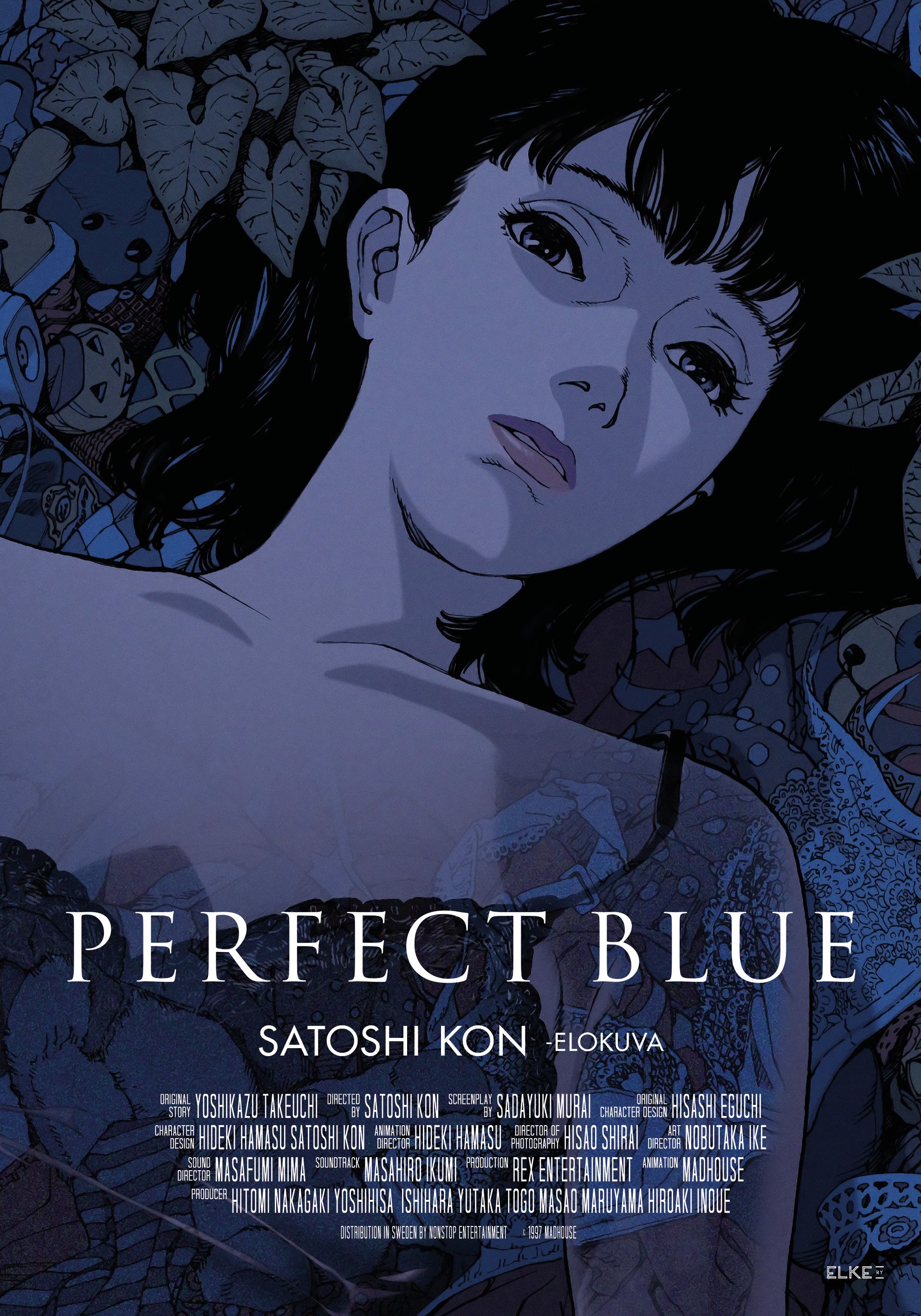
Perfect Blue
15 deep dives in total