The Tragedy of Capitalism and the Entertainment Industry
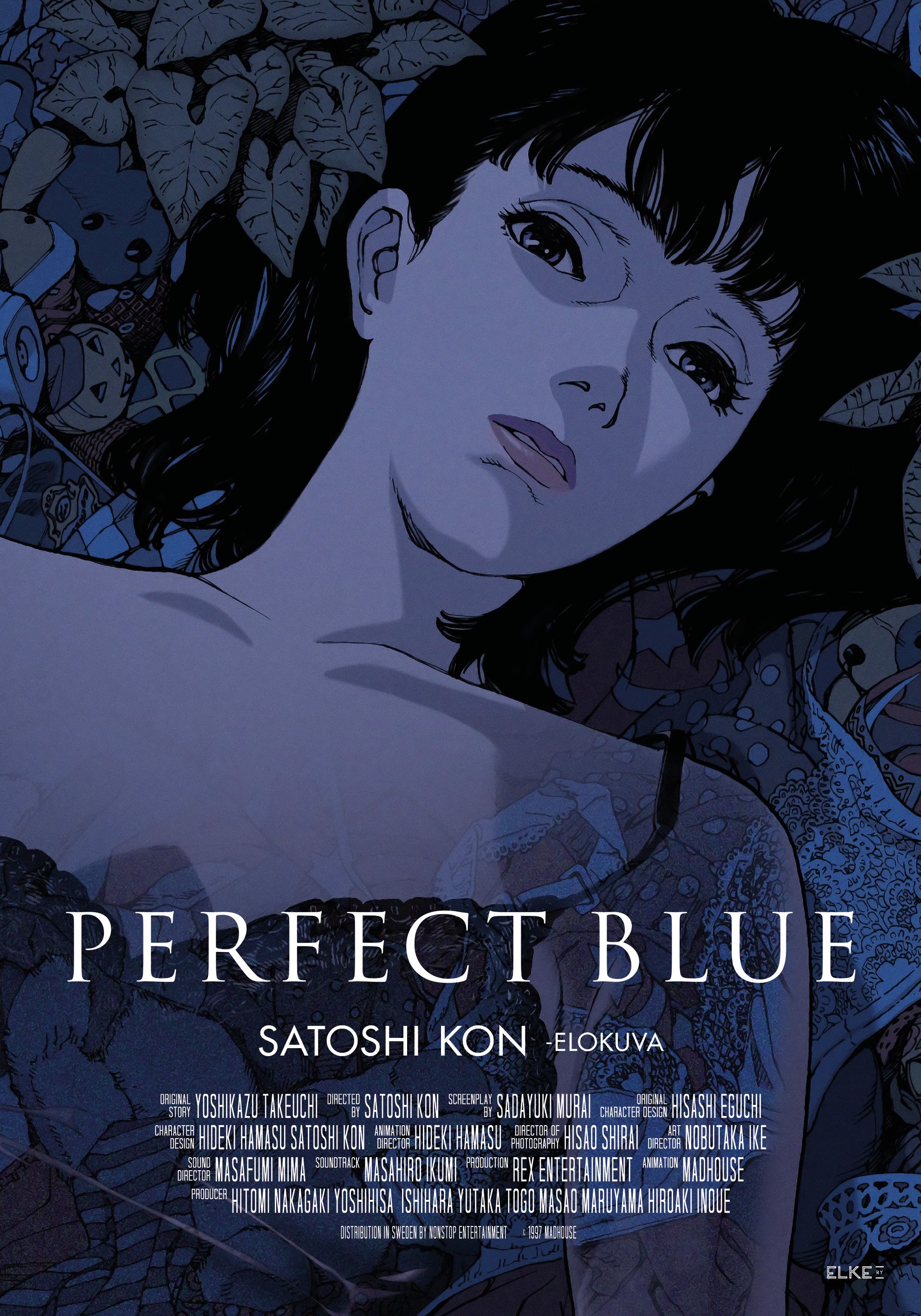
Perfect Blue, set in the entertainment industry, sharply dissects the tragedy of modern capitalism in which commercial profit takes precedence over artistic value. The body and image of protagonist Mima are treated endlessly as 'sellable commodities,' and in this process human dignity is eroded and Mima experiences catastrophic confusion between reality, fantasy, and her own identity.
Artistic Value vs. Capitalist Logic: The Commodified Body
The most central thematic consciousness in Perfect Blue is a critique of 'how the human body and image are commodified by capitalist logic.' Through the entirety of Mima's path to success, the film shows how violent commercial interests and the public gaze can be compared to pure artistic creation.
1. Mima as 'Commodity'
Mima was a member of idol group CHAM and therefore already a consumer good, but the attribute of 'commodity' does not disappear the moment she pivots to acting. Agency president Tadokoro seeks to evaluate and exploit Mima solely through a 'sexual image' lens. This starkly reveals a cross-section of capitalism in which commercial 'appeal' and 'exposure' are the standard of value—rather than artistic talent or inner maturity.
- Coerced Role: The process by which Mima is made to perform a rape scene in the drama Double Bind is the apex of this critique. This symbolises that the role of an actor has fallen beyond the depth of storytelling into 'exposure' itself—designed to shock and stimulate viewers. The sight of Rumi weeping and leaving when she sees the scene, or opposing it, implies that Mima's pain is not merely a difficulty in performance but a process in which human dignity is eroded.
- The Nude Photo Spread Wave: The nude photo shoot sequence in the film is interpreted in connection with the wave of explicit nude photo books rampant in Japan's entertainment industry in the 1990s. This reflects the social pressure of a media industry that at the time continuously sought to 'sell' parts of an artist's body in the most stimulating, most easily consumable form.
2. The Dissolution of Identity and Fantasy
The psychological confusion Mima experiences is the process in which external violence (stalking, coerced performance) penetrates inward to dissolve the self. Mima endlessly questions whether she is victim, witness, or perpetrator, and the boundary between reality and fantasy collapses.
- The Role of 'Mima's Room': The online homepage 'Mima's Room' created by the stalker records Mima's private life and every move, symbolising the violence of a 'gaze' that surveys and defines her. This site causes Mima to objectify herself and experience being denounced as a 'fallen actress' by the gaze of others. This is a metaphor showing how media endlessly surveils individuals and tailors them as 'ideal commodities' to match that gaze.
- Rumi's 'Perfect Mima': At the climax, the fact that Rumi pursues Mima and embodies the phantom of 'Mima as idol' shows that the 'perfect image' the system demands of Mima is ultimately the most powerful violence that destroys Mima herself. Rumi tries to restore the 'true self' of Mima, but the very process is nothing more than an attempt to replace her with a 'commodity.'
3. Conclusion: The Recovery of the Subjective Self
The scene in which Mima physically subdues Rumi and declares 'No—I'm the real one' signifies the process of breaking free from the external capitalist gaze and the system's coerced image, and re-establishing her own subjective self. This film, going beyond a mere thriller, is a powerful piece of social criticism that poses questions about how individuals in contemporary society define their own value and how they should resist the violence of capital.
Why It Matters
The reason *Perfect Blue* is evaluated as a masterpiece transcending a simple psychological thriller is the sharp critical interpretation underlying it: a 'capitalist gaze.' The film deals with Mima's personal trauma, but the source of that trauma lies not in an individual's flaw but in the system itself—the system of popular culture and media that treats an artist's body and image as 'consumable commodities.' The identity confusion Mima experiences is precisely the gap between 'the real me' and 'the me I must show' experienced by modern individuals, and this point is the central axis running through the work's thematic consciousness. This interpretation elevates the film from a mere mystery genre to an artistic declaration criticising contemporary popular culture and social structures.
Other Reading dives2
- arrow_outward
Critique of the Violence of The Gaze
The central theme of Perfect Blue, 'The Gaze,' goes beyond the physical act of someone watching you—it signifies the violent mechanism by which modern capitalism and media consume and control the lives of individuals as 'observable content.' The film sharply dissects how various forms of gaze—the obsession of idol fandom, the coercive demand for exposure from the press, the voyeuristic fixation of a stalker—'objectify' protagonist Mima and ultimately destroy her.
- arrow_outward
Deconstruction of Persona and Identity
The core theme of Perfect Blue—the deconstruction of persona and identity—explores the psychological breakdown of protagonist Mima as she passes through three fabricated selves: the idol, the actress, and the object of a stalker's gaze. The film sharply interrogates the violent collision between 'the real self' and 'the social image,' asking how media-manufactured gazes commodify and destroy an individual's identity.
Back to the title
Perfect Blue
15 deep dives in total